Tesla's Transformation Looms as Optimus Robots Near Launch
Written by Emily J. Thompson, Senior Investment Analyst
Updated: 1 hour ago
0mins
Should l Buy TSLA?
Source: Fool
- Declining EV Deliveries: Tesla delivered 406,227 vehicles in Q4 2025, with over 97% being Model 3 and Model Y, indicating insufficient demand for other models like S and X, prompting a strategic shift to focus on more marketable products.
- Robot Production Plans: Tesla plans to shut down Model S and Model X production lines to repurpose its Fremont, California factory space for Optimus robot production, aiming to enhance manufacturing efficiency and meet future market demands.
- Market Expectations Rise: Dan Ives from Wedbush predicts Tesla's market cap could reach $2 trillion by year-end and $3 trillion by the end of 2027, driven by growth in FSD and robotics, which would push stock prices up 25% this year and 87% by 2027.
- Full Self-Driving Software Progress: Tesla is intensifying investment in its full self-driving software, which, if approved by regulators, would allow owners to monetize their vehicles as robotaxis, fundamentally altering investor valuation perspectives on the company.
Trade with 70% Backtested Accuracy
Stop guessing "Should I Buy TSLA?" and start using high-conviction signals backed by rigorous historical data.
Sign up today to access powerful investing tools and make smarter, data-driven decisions.
Analyst Views on TSLA
Wall Street analysts forecast TSLA stock price to fall
30 Analyst Rating
12 Buy
11 Hold
7 Sell
Hold
Current: 417.070

Low
25.28
Averages
401.93
High
600.00
Current: 417.070
Low
25.28
Averages
401.93
High
600.00
About TSLA
Tesla, Inc. designs, develops, manufactures, sells and leases high-performance fully electric vehicles and energy generation and storage systems, and offers services related to its products. Its segments include automotive, and energy generation and storage. The automotive segment includes the design, development, manufacturing, sales and leasing of high-performance fully electric vehicles, and sales of automotive regulatory credits. It also includes sales of used vehicles, non-warranty maintenance services and collisions, part sales, paid supercharging, insurance services revenue and retail merchandise sales. The energy generation and storage segment include the design, manufacture, installation, sales and leasing of solar energy generation and energy storage products and related services and sales of solar energy systems incentives. Its consumer vehicles include the Model 3, Y, S, X and Cybertruck. Its lithium-ion battery energy storage products include Powerwall and Megapack.
About the author

Emily J. Thompson
Emily J. Thompson, a Chartered Financial Analyst (CFA) with 12 years in investment research, graduated with honors from the Wharton School. Specializing in industrial and technology stocks, she provides in-depth analysis for Intellectia’s earnings and market brief reports.

Tesla Plans 100 GW Solar Manufacturing Capacity Amid Geopolitical Shifts

- Strategic Long-Term View: Tesla's plan to develop 100 GW of solar manufacturing capacity reflects a long-term strategic perspective shaped by geopolitical factors, supply chain risks, and rising demand from data centers, which could enhance the company's vertical integration in the energy sector.
- Potential Value Increase: Morgan Stanley analysts suggest that Tesla's solar ambitions could add $25–$50 billion ($6–$14 per share) to its current $140 billion Tesla Energy valuation, indicating strong market potential and investor interest.
- Revenue and Profit Expectations: Once scaled, Tesla Solar is expected to generate $25 billion in revenue and an additional $3–$4 billion in EBIT, significantly boosting the company's financial performance and market position.
- Capital Investment Requirements: Although the 100 GW build-out could require $30–$70 billion in capital investment, Morgan Stanley believes the long-term benefits may justify this expenditure, particularly due to its strategic link to Tesla's energy storage business.
See More

Tesla's Transformation Looms as Optimus Robots Near Launch
- Declining EV Deliveries: Tesla delivered 406,227 vehicles in Q4 2025, with over 97% being Model 3 and Model Y, indicating insufficient demand for other models like S and X, prompting a strategic shift to focus on more marketable products.
- Robot Production Plans: Tesla plans to shut down Model S and Model X production lines to repurpose its Fremont, California factory space for Optimus robot production, aiming to enhance manufacturing efficiency and meet future market demands.
- Market Expectations Rise: Dan Ives from Wedbush predicts Tesla's market cap could reach $2 trillion by year-end and $3 trillion by the end of 2027, driven by growth in FSD and robotics, which would push stock prices up 25% this year and 87% by 2027.
- Full Self-Driving Software Progress: Tesla is intensifying investment in its full self-driving software, which, if approved by regulators, would allow owners to monetize their vehicles as robotaxis, fundamentally altering investor valuation perspectives on the company.
See More

Tesla's Transformation: From EVs to Robotics
- Sales and Revenue Decline: Tesla's electric vehicle sales are down, with auto revenue falling 9.1% in 2025 and net income plummeting 46%, indicating significant challenges in a competitive market that necessitate strategic adjustments to maintain market position.
- Robotics Vision: Musk's Optimus robot initiative is advancing, with Tesla planning to shutter Model S and Model X production lines to repurpose factory space for Optimus manufacturing, a transformation expected to redefine Tesla's corporate identity and enhance its competitive edge in future markets.
- Market Expectations and Stock Price: Despite current sales declines, Tesla's stock has risen 20% over the past year, and analyst Dan Ives predicts that based on the growth of FSD and robotics, Tesla's market cap could reach $2 trillion by year-end and $3 trillion by 2027, reflecting strong investor confidence in future prospects.
- Full Self-Driving Software Progress: Tesla's full self-driving software (FSD) is set for widespread release this year, and if approved by regulators, it will allow Tesla owners to monetize their vehicles as robotaxis, further driving revenue growth and enhancing market valuation.
See More
Rivian's Future Outlook in the EV Market

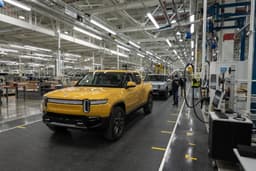
- Competitive Edge: Rivian plans to launch its R2 model in 2026, priced under $50,000, which is expected to enable it to compete with Tesla in the mass market, thereby opening new sales channels and increasing market share.
- Market Demand Opportunity: Surveys indicate that nearly 70% of American consumers want their next vehicle priced under $50,000, and Rivian's R2 model will meet this demand, potentially driving significant sales growth.
- AI Technology Strategy: Rivian's recent key announcements in artificial intelligence indicate that the company is positioning its AI platform at the core of its growth strategy, which is expected to enhance its competitiveness in the future EV market.
- Advancements in Autonomous Driving: With the rapid development of AI technologies, Rivian is poised to improve its self-driving capabilities over the next three years, narrowing the gap with Tesla and securing a more advantageous position in the electric vehicle industry.
See More

Ferrari's Potential in the Electric Vehicle Market

- EV Market Share Shift: In 2022, Ferrari's shipments consisted of 78% internal combustion engines and 22% hybrids, but by the first half of 2025, this has shifted to approximately 55% internal combustion and 45% hybrids, indicating a proactive approach to EV transition despite profitability challenges for full-electric vehicles.
- Hybrid Profitability Gains: As Ferrari accelerates its hybrid vehicle shipments, it continues to enhance profitability, suggesting that its strategic positioning in the EV market not only maintains profit growth but also lays a foundation for future full-electric models.
- Strategic Importance of Elettrica: The upcoming full-electric model, Elettrica, will be pivotal for Ferrari's EV strategy, as entering the market too quickly could incur high adjustment costs, while delaying could risk missing the opportunity to cultivate future enthusiasts, reflecting a cautious approach to the EV market.
- Investment Timing and Market Positioning: Although Ferrari's stock is priced at a premium compared to mainstream automakers, recent low price-to-earnings ratios present an opportunity for investors, and given its strong brand demand and competitive advantages, Ferrari may be an overlooked potential stock in the EV sector.
See More

Impact of AI on the Job Market

- Increased Workload: Research from UC Berkeley indicates that while employees had free access to enterprise generative AI technology, their workload significantly increased due to task expansion, leading to higher work intensity and longer hours, ultimately resulting in burnout and diminished decision-making capabilities.
- Blurred Task Boundaries: The study found that AI lowered the entry barriers for many tasks, causing employees to engage in work during breaks, which blurred the lines between work and non-work, reducing natural pauses in the workday and increasing continuous work involvement.
- Heightened Multitasking: Employees were observed attempting to manage multiple tasks simultaneously while using AI, such as manually coding while AI generated alternative versions, leading to short-term productivity boosts but also sowing the seeds for long-term issues.
- Employer Strategies: Researchers recommend that employers implement more intentional pauses and dedicated break periods during the transition to generative AI use, helping employees regulate their work pace and avoid isolation and efficiency declines due to over-reliance on AI.
See More
Tesla Plans 100 GW Solar Manufacturing Capacity Amid Geopolitical Shifts
- Strategic Long-Term View: Tesla's plan to develop 100 GW of solar manufacturing capacity reflects a long-term strategic perspective shaped by geopolitical factors, supply chain risks, and rising demand from data centers, which could enhance the company's vertical integration in the energy sector.
- Potential Value Increase: Morgan Stanley analysts suggest that Tesla's solar ambitions could add $25–$50 billion ($6–$14 per share) to its current $140 billion Tesla Energy valuation, indicating strong market potential and investor interest.
- Revenue and Profit Expectations: Once scaled, Tesla Solar is expected to generate $25 billion in revenue and an additional $3–$4 billion in EBIT, significantly boosting the company's financial performance and market position.
- Capital Investment Requirements: Although the 100 GW build-out could require $30–$70 billion in capital investment, Morgan Stanley believes the long-term benefits may justify this expenditure, particularly due to its strategic link to Tesla's energy storage business.
See More
Tesla's Transformation Looms as Optimus Robots Near Launch
- Declining EV Deliveries: Tesla delivered 406,227 vehicles in Q4 2025, with over 97% being Model 3 and Model Y, indicating insufficient demand for other models like S and X, prompting a strategic shift to focus on more marketable products.
- Robot Production Plans: Tesla plans to shut down Model S and Model X production lines to repurpose its Fremont, California factory space for Optimus robot production, aiming to enhance manufacturing efficiency and meet future market demands.
- Market Expectations Rise: Dan Ives from Wedbush predicts Tesla's market cap could reach $2 trillion by year-end and $3 trillion by the end of 2027, driven by growth in FSD and robotics, which would push stock prices up 25% this year and 87% by 2027.
- Full Self-Driving Software Progress: Tesla is intensifying investment in its full self-driving software, which, if approved by regulators, would allow owners to monetize their vehicles as robotaxis, fundamentally altering investor valuation perspectives on the company.
See More
Tesla's Transformation: From EVs to Robotics
- Sales and Revenue Decline: Tesla's electric vehicle sales are down, with auto revenue falling 9.1% in 2025 and net income plummeting 46%, indicating significant challenges in a competitive market that necessitate strategic adjustments to maintain market position.
- Robotics Vision: Musk's Optimus robot initiative is advancing, with Tesla planning to shutter Model S and Model X production lines to repurpose factory space for Optimus manufacturing, a transformation expected to redefine Tesla's corporate identity and enhance its competitive edge in future markets.
- Market Expectations and Stock Price: Despite current sales declines, Tesla's stock has risen 20% over the past year, and analyst Dan Ives predicts that based on the growth of FSD and robotics, Tesla's market cap could reach $2 trillion by year-end and $3 trillion by 2027, reflecting strong investor confidence in future prospects.
- Full Self-Driving Software Progress: Tesla's full self-driving software (FSD) is set for widespread release this year, and if approved by regulators, it will allow Tesla owners to monetize their vehicles as robotaxis, further driving revenue growth and enhancing market valuation.
See More
Rivian's Future Outlook in the EV Market
- Competitive Edge: Rivian plans to launch its R2 model in 2026, priced under $50,000, which is expected to enable it to compete with Tesla in the mass market, thereby opening new sales channels and increasing market share.
- Market Demand Opportunity: Surveys indicate that nearly 70% of American consumers want their next vehicle priced under $50,000, and Rivian's R2 model will meet this demand, potentially driving significant sales growth.
- AI Technology Strategy: Rivian's recent key announcements in artificial intelligence indicate that the company is positioning its AI platform at the core of its growth strategy, which is expected to enhance its competitiveness in the future EV market.
- Advancements in Autonomous Driving: With the rapid development of AI technologies, Rivian is poised to improve its self-driving capabilities over the next three years, narrowing the gap with Tesla and securing a more advantageous position in the electric vehicle industry.
See More
Ferrari's Potential in the Electric Vehicle Market
- EV Market Share Shift: In 2022, Ferrari's shipments consisted of 78% internal combustion engines and 22% hybrids, but by the first half of 2025, this has shifted to approximately 55% internal combustion and 45% hybrids, indicating a proactive approach to EV transition despite profitability challenges for full-electric vehicles.
- Hybrid Profitability Gains: As Ferrari accelerates its hybrid vehicle shipments, it continues to enhance profitability, suggesting that its strategic positioning in the EV market not only maintains profit growth but also lays a foundation for future full-electric models.
- Strategic Importance of Elettrica: The upcoming full-electric model, Elettrica, will be pivotal for Ferrari's EV strategy, as entering the market too quickly could incur high adjustment costs, while delaying could risk missing the opportunity to cultivate future enthusiasts, reflecting a cautious approach to the EV market.
- Investment Timing and Market Positioning: Although Ferrari's stock is priced at a premium compared to mainstream automakers, recent low price-to-earnings ratios present an opportunity for investors, and given its strong brand demand and competitive advantages, Ferrari may be an overlooked potential stock in the EV sector.
See More
Impact of AI on the Job Market
- Increased Workload: Research from UC Berkeley indicates that while employees had free access to enterprise generative AI technology, their workload significantly increased due to task expansion, leading to higher work intensity and longer hours, ultimately resulting in burnout and diminished decision-making capabilities.
- Blurred Task Boundaries: The study found that AI lowered the entry barriers for many tasks, causing employees to engage in work during breaks, which blurred the lines between work and non-work, reducing natural pauses in the workday and increasing continuous work involvement.
- Heightened Multitasking: Employees were observed attempting to manage multiple tasks simultaneously while using AI, such as manually coding while AI generated alternative versions, leading to short-term productivity boosts but also sowing the seeds for long-term issues.
- Employer Strategies: Researchers recommend that employers implement more intentional pauses and dedicated break periods during the transition to generative AI use, helping employees regulate their work pace and avoid isolation and efficiency declines due to over-reliance on AI.
See More