Reevaluating TSMC (NYSE:TSM) Valuation Following Recent Stock Price Changes
Stock Performance: Taiwan Semiconductor Manufacturing (TSM) has experienced a nearly 5% dip in stock price over the past month, but long-term investors have seen a 46% return over the past year, indicating strong overall performance despite recent fluctuations.
Valuation Insights: TSM's fair value is estimated at $310, significantly higher than its recent closing price of $275.06, suggesting potential upside if the company's growth strategies succeed.
Market Position: TSM is a key player in the global semiconductor industry, benefiting from record profits and a strong client base, although it faces risks from geopolitical tensions and cost pressures related to global expansion.
Investment Opportunities: The analysis highlights TSM's lower price-to-earnings ratio compared to industry averages, indicating it may be undervalued, while also suggesting that investors explore other opportunities in fast-growing sectors and undervalued stocks.
Trade with 70% Backtested Accuracy
Analyst Views on TSM

About TSM
About the author


TSMC Reports Continued Growth in Q4 Earnings

- Significant Revenue Growth: TSMC's Q4 revenue reached $33.73 billion, reflecting a 25.5% year-over-year increase, demonstrating strong demand in the semiconductor market and reinforcing its leadership position.
- Strong Profit Margins: The company reported a profit margin of 48.3%, indicating its competitive advantage in high-end chip manufacturing, effectively controlling costs while achieving high returns.
- Advanced Process Technology: In 2023, over half of TSMC's revenue came from chips larger than 7nm, with significant increases in the production of 3nm and 5nm chips, as 3nm chips accounted for 28% of total shipments, showcasing ongoing investment in technological innovation.
- Robust Market Demand: With the rapid advancement of artificial intelligence technologies, TSMC is experiencing increasing customer demand, solidifying its status as the world's largest chip foundry and is expected to benefit from the growth in AI infrastructure investments.

TSMC: The Winner in the AI Era
- Market Growth Potential: According to Fortune Business Insights, the AI market is projected to grow from $375.9 billion this year to $2.48 trillion by 2034, representing a compound annual growth rate of 26.6%, which presents significant opportunities for related companies.
- TSMC's Industry Position: As the world's largest semiconductor foundry, TSMC produced over 11,800 products across 288 different processes in 2024, demonstrating its unparalleled influence and customer base in the industry.
- Strong Financial Performance: TSMC reported fourth-quarter revenue of $33.73 billion, a 25.5% increase year-over-year, with a profit margin of 48.3%, indicating robust profitability in a rapidly growing market.
- Technological Advancements and Market Demand: TSMC derived over half of its revenue from chips larger than 7 nanometers in 2023, but has significantly increased production of 3nm and 5nm chips, which now account for 28% and 35% of total shipments respectively, showcasing its agility in adapting to technological advancements and market demand shifts.
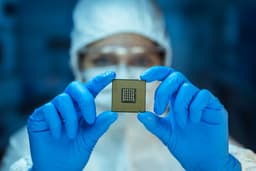
Intel CEO Discusses Future Growth and Tech Investments

- Surging Market Demand: Intel's server CPU demand is skyrocketing due to the proliferation of AI applications, and although management anticipates a sequential decline in shipments for Q1 due to undersupply, new supply is expected to come online by the end of Q1, driving rapid growth in the data center business.
- Price Increase Strategy: Intel plans to raise server CPU prices by 10% for Chinese customers, which will not only boost revenue but also reflect the company's pricing power and competitiveness, especially against the backdrop of surging AI demand.
- Capacity Improvement and Customer Confidence: By recruiting external suppliers to assist with production, Intel has improved yields by 7% to 8% monthly on its 18A node, enhancing customer confidence in its foundry services and likely attracting more clients for collaboration.
- Ongoing Technology Investments: Despite cost-cutting measures, Intel continues to invest in GPUs and new materials, particularly glass substrates and potentially diamond materials, indicating the company's commitment to innovation while still prioritizing the traditional CPU market's demands.

Intel CEO Discusses Future Growth Opportunities
- Surging Market Demand: Intel's server CPU demand is skyrocketing as AI applications shift from model training to executing everyday tasks, with CEO Tan noting that customer demand is outpacing production capacity, leading to expectations of higher sales volumes and prices in 2026.
- Price Increase Strategy: Intel plans to raise server CPU prices by 10% for Chinese customers, which will help boost revenue in its Data Center and AI (DCAI) segment, despite generating only $16.9 billion in 2025, significantly lower than the $26.1 billion peak in 2020.
- Capacity Improvement Plans: Tan revealed that Intel is improving yields for its 18A node by recruiting outside suppliers, with current yields increasing by 7% to 8% per month, which will enhance customer confidence in Intel's foundry services and attract more external clients.
- Future Technology Investments: Despite streamlining operations through layoffs, Tan committed to ongoing investments in GPUs and novel materials, including glass substrates and diamond materials, to enhance future chip performance, demonstrating Intel's continued dedication to technological innovation.

Tesla's Transition Risks vs. AI Investment Opportunities

- Tesla's Transition Challenges: Tesla's stock has surged 3,500% over the past decade, but it is currently undergoing a significant shift from electric vehicles to robotics and autonomous vehicles, facing dual pressures from slowing core EV sales and rising costs.
- Deteriorating Financials: Tesla's sales declined in Q4, with annual revenue falling for the first time to $94.8 billion, operating expenses rising 39% to $3.6 billion, and net income dropping 60% to $0.24 per share, indicating financial strain during this transition.
- AI Stock Potential: In contrast to Tesla, Micron and TSMC are benefiting from a surge in demand for AI infrastructure, with Micron's Q1 revenue rising 56% to $13.6 billion and adjusted EPS up 167% to $4.78, while TSMC's sales increased nearly 26% to $33.7 billion, showcasing strong growth potential.
- Valuation Advantage: Micron and TSMC have P/E ratios of 39 and 33, respectively, compared to Tesla's 390, highlighting their relative value in the current market environment, making them more attractive investment options for shareholders.

Nvidia's AI Revolution and Risks Ahead

- Market Value Surge: Since the beginning of 2023, Nvidia has added $3.9 trillion in market value, becoming Wall Street's most valuable public company, reflecting its strong competitive advantages and market demand in the AI sector.
- GPU Dominance: Nvidia's GPUs account for over 90% of the market in AI data centers, ensuring the company's leading position in technological innovation with superior computing capabilities and a gross margin of 70%.
- Innovation Cycle Risks: While Nvidia's strategy of launching a new GPU annually aims to maintain its competitive edge, this rapid innovation could lead to a depreciation of older chips by 30% to 50%, potentially affecting customer upgrade decisions and future demand.
- Software Platform Support: The CUDA software platform enhances customer loyalty to Nvidia's products, and ongoing technological advancements keep older chips highly efficient, which may slow down demand for new GPUs.
TSMC Reports Continued Growth in Q4 Earnings
- Significant Revenue Growth: TSMC's Q4 revenue reached $33.73 billion, reflecting a 25.5% year-over-year increase, demonstrating strong demand in the semiconductor market and reinforcing its leadership position.
- Strong Profit Margins: The company reported a profit margin of 48.3%, indicating its competitive advantage in high-end chip manufacturing, effectively controlling costs while achieving high returns.
- Advanced Process Technology: In 2023, over half of TSMC's revenue came from chips larger than 7nm, with significant increases in the production of 3nm and 5nm chips, as 3nm chips accounted for 28% of total shipments, showcasing ongoing investment in technological innovation.
- Robust Market Demand: With the rapid advancement of artificial intelligence technologies, TSMC is experiencing increasing customer demand, solidifying its status as the world's largest chip foundry and is expected to benefit from the growth in AI infrastructure investments.
TSMC: The Winner in the AI Era
- Market Growth Potential: According to Fortune Business Insights, the AI market is projected to grow from $375.9 billion this year to $2.48 trillion by 2034, representing a compound annual growth rate of 26.6%, which presents significant opportunities for related companies.
- TSMC's Industry Position: As the world's largest semiconductor foundry, TSMC produced over 11,800 products across 288 different processes in 2024, demonstrating its unparalleled influence and customer base in the industry.
- Strong Financial Performance: TSMC reported fourth-quarter revenue of $33.73 billion, a 25.5% increase year-over-year, with a profit margin of 48.3%, indicating robust profitability in a rapidly growing market.
- Technological Advancements and Market Demand: TSMC derived over half of its revenue from chips larger than 7 nanometers in 2023, but has significantly increased production of 3nm and 5nm chips, which now account for 28% and 35% of total shipments respectively, showcasing its agility in adapting to technological advancements and market demand shifts.
Intel CEO Discusses Future Growth and Tech Investments
- Surging Market Demand: Intel's server CPU demand is skyrocketing due to the proliferation of AI applications, and although management anticipates a sequential decline in shipments for Q1 due to undersupply, new supply is expected to come online by the end of Q1, driving rapid growth in the data center business.
- Price Increase Strategy: Intel plans to raise server CPU prices by 10% for Chinese customers, which will not only boost revenue but also reflect the company's pricing power and competitiveness, especially against the backdrop of surging AI demand.
- Capacity Improvement and Customer Confidence: By recruiting external suppliers to assist with production, Intel has improved yields by 7% to 8% monthly on its 18A node, enhancing customer confidence in its foundry services and likely attracting more clients for collaboration.
- Ongoing Technology Investments: Despite cost-cutting measures, Intel continues to invest in GPUs and new materials, particularly glass substrates and potentially diamond materials, indicating the company's commitment to innovation while still prioritizing the traditional CPU market's demands.
Intel CEO Discusses Future Growth Opportunities
- Surging Market Demand: Intel's server CPU demand is skyrocketing as AI applications shift from model training to executing everyday tasks, with CEO Tan noting that customer demand is outpacing production capacity, leading to expectations of higher sales volumes and prices in 2026.
- Price Increase Strategy: Intel plans to raise server CPU prices by 10% for Chinese customers, which will help boost revenue in its Data Center and AI (DCAI) segment, despite generating only $16.9 billion in 2025, significantly lower than the $26.1 billion peak in 2020.
- Capacity Improvement Plans: Tan revealed that Intel is improving yields for its 18A node by recruiting outside suppliers, with current yields increasing by 7% to 8% per month, which will enhance customer confidence in Intel's foundry services and attract more external clients.
- Future Technology Investments: Despite streamlining operations through layoffs, Tan committed to ongoing investments in GPUs and novel materials, including glass substrates and diamond materials, to enhance future chip performance, demonstrating Intel's continued dedication to technological innovation.
Tesla's Transition Risks vs. AI Investment Opportunities
- Tesla's Transition Challenges: Tesla's stock has surged 3,500% over the past decade, but it is currently undergoing a significant shift from electric vehicles to robotics and autonomous vehicles, facing dual pressures from slowing core EV sales and rising costs.
- Deteriorating Financials: Tesla's sales declined in Q4, with annual revenue falling for the first time to $94.8 billion, operating expenses rising 39% to $3.6 billion, and net income dropping 60% to $0.24 per share, indicating financial strain during this transition.
- AI Stock Potential: In contrast to Tesla, Micron and TSMC are benefiting from a surge in demand for AI infrastructure, with Micron's Q1 revenue rising 56% to $13.6 billion and adjusted EPS up 167% to $4.78, while TSMC's sales increased nearly 26% to $33.7 billion, showcasing strong growth potential.
- Valuation Advantage: Micron and TSMC have P/E ratios of 39 and 33, respectively, compared to Tesla's 390, highlighting their relative value in the current market environment, making them more attractive investment options for shareholders.
Nvidia's AI Revolution and Risks Ahead
- Market Value Surge: Since the beginning of 2023, Nvidia has added $3.9 trillion in market value, becoming Wall Street's most valuable public company, reflecting its strong competitive advantages and market demand in the AI sector.
- GPU Dominance: Nvidia's GPUs account for over 90% of the market in AI data centers, ensuring the company's leading position in technological innovation with superior computing capabilities and a gross margin of 70%.
- Innovation Cycle Risks: While Nvidia's strategy of launching a new GPU annually aims to maintain its competitive edge, this rapid innovation could lead to a depreciation of older chips by 30% to 50%, potentially affecting customer upgrade decisions and future demand.
- Software Platform Support: The CUDA software platform enhances customer loyalty to Nvidia's products, and ongoing technological advancements keep older chips highly efficient, which may slow down demand for new GPUs.