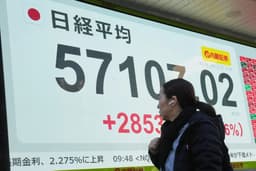
Asia stocks rise as US tech gains spill over; Japan unperturbed by hot CPI By Investing.com
Written by Emily J. Thompson, Senior Investment Analyst
Updated: Apr 25 2025
0mins

Should l Buy BIDU?
Source: Investing.com
Asian Markets Performance: Most Asian stocks advanced, particularly in Japan, driven by strong earnings from Alphabet and optimism over U.S.-China trade talks, despite rising inflation in Tokyo that may lead to interest rate hikes by the Bank of Japan.
Chinese Market Concerns: Chinese markets lagged behind due to investor worries about the long-term economic impact of ongoing trade tensions with the U.S., amid mixed signals regarding trade negotiations.
Trade with 70% Backtested Accuracy
Stop guessing "Should I Buy BIDU?" and start using high-conviction signals backed by rigorous historical data.
Sign up today to access powerful investing tools and make smarter, data-driven decisions.
Analyst Views on BIDU
Wall Street analysts forecast BIDU stock price to rise over the next 12 months. According to Wall Street analysts, the average 1-year price target for BIDU is 160.67 USD with a low forecast of 100.00 USD and a high forecast of 215.00 USD. However, analyst price targets are subjective and often lag stock prices, so investors should focus on the objective reasons behind analyst rating changes, which better reflect the company's fundamentals.
13 Analyst Rating
11 Buy
2 Hold
0 Sell
Strong Buy
Current: 138.960

Low
100.00
Averages
160.67
High
215.00
Current: 138.960
Low
100.00
Averages
160.67
High
215.00
About BIDU
Baidu Inc is a Chinese language Internet search provider. The Company operates its businesses through two segments, Baidu Core segment and iQIYI segment. Baidu Core segment mainly provides search-based, feed-based, and other online marketing services, as well as products and services from the Company’s new artificial intelligence (AI) initiatives, such as display advertisement and based on performance criteria other than cost-per-click, cloud services, smart devices and services, non-marketing consumer-facing services such as membership, and intelligent driving. iQIYI segment produces, aggregates and distributes a wide variety of professionally produced content, as well as a broad spectrum of other video content, in a variety of formats, including a variety of products and services encompassing online video, online games, online literature, comics and others.
About the author

Emily J. Thompson
Emily J. Thompson, a Chartered Financial Analyst (CFA) with 12 years in investment research, graduated with honors from the Wharton School. Specializing in industrial and technology stocks, she provides in-depth analysis for Intellectia’s earnings and market brief reports.
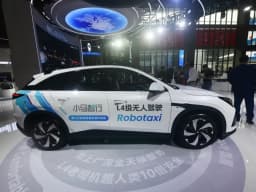
Pony.ai and Toyota Launch Mass Production of bZ4X Robotaxi


- Production Launch: The first mass-produced bZ4X Robotaxi developed by Pony.ai and Toyota has rolled off the production line, marking the start of scaled production and commercial deployment in China, with plans to produce over 1,000 vehicles by 2026, supporting Pony.ai's goal of expanding its fleet to 3,000.
- Cost Reduction: Pony.ai reported that the bill of materials for its seventh-generation autonomous driving system has decreased by approximately 70% compared to the previous generation, which not only improves deployment economics but also provides stronger financial backing for future commercial operations.
- Feature Enhancements: The new generation of Robotaxis includes features such as Bluetooth-based automatic unlocking, in-cabin voice interaction, online music, and pre-trip climate control, aimed at enhancing passenger experience and reducing motion sickness, thereby increasing market competitiveness.
- Intensifying Market Competition: As competitors like Tesla and Baidu rapidly advance in the Robotaxi sector, Pony.ai's commercial deployment will face greater market pressure, particularly in the fiercely competitive landscape of China's Tier-1 cities.
See More
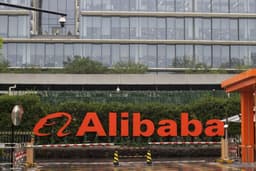
Alibaba Unveils Qwen AI Tools for 2026 Olympics

- Global Rollout: Alibaba Cloud has launched a suite of Qwen AI tools, marking the first integration of a large language model into the digital infrastructure of the 2026 Milano Cortina Winter Olympics, which signifies the company's strategic positioning in the global AI market.
- User Incentive Campaign: To drive adoption of Qwen, Alibaba initiated a $420 million cash incentive program during the Lunar New Year, aimed at boosting downloads and usage, resulting in over 100 million monthly active users within just two months.
- Infrastructure Strain: The surge in demand from the incentive campaign caused system crashes, preventing many users from accessing the campaign entry page, prompting Alibaba to urgently increase resources to ensure smooth system operations.
- Technological Upgrades and Competition: Alibaba is continuously enhancing Qwen's capabilities, including the relaunch of its AI chatbot and the introduction of the Zhenwu 810E processor, which offers performance comparable to Nvidia's China-focused H20 chip, thereby strengthening its competitive edge in the consumer AI market.
See More

Four Strategies for Tesla's Stock Recovery

- Underperformance Noted: Despite positive developments in self-driving technology, Tesla is underperforming in 2026, with a 12% decline compared to a 2% drop in the Nasdaq 100, indicating significant market pressure and investor skepticism.
- Safety Monitor Removal Proposal: Investor Gary Black suggests that Tesla should remove safety monitors from its robotaxis to alleviate doubts about its unsupervised self-driving capabilities, which could enhance market confidence in the company's future.
- New Pickup Truck Design: Black emphasizes that launching a new pickup truck that aligns more closely with conventional designs could help Tesla recover its stock performance, projecting that even a 10% market share could add $1.20 per share to earnings, reflecting a 40% increase in 2027 earnings.
- Musk's Stock Purchase: Black also highlights that if CEO Elon Musk were to purchase additional shares, it would send a strong confidence signal to investors, potentially boosting both investor sentiment and Tesla's stock performance.
See More
The Rise and Transformation of Physical AI


- Physical AI Transformation: Bank of America analyst Martyn Briggs highlights that the rise of Physical AI is underway, projected to drive a trillion-dollar market shift as value transitions from digital models to physical machines like robots, autonomous vehicles, and drones, marking a significant shift of intelligence from screens to machines.
- Humanoid Robot Production: Over 50 companies are developing humanoid robot platforms, with shipments expected to grow from tens of thousands today to millions annually over the next decade, driven by labor shortages and falling component costs, which will transform operations in manufacturing and logistics.
- Autonomous Driving Adoption: Robotaxis are operational in multiple cities, and advanced driver-assistance systems are set to achieve mass adoption in China by 2030, with hardware cost reductions significantly lowering ride-hailing and freight costs, thus transforming mobility into a software-defined, AI-driven platform.
- Investment Opportunities: Bank of America has highlighted 15 publicly traded companies exposed to Physical AI, including Nvidia, Tesla, and Qualcomm, which are leading in chips, robotics, mobility, and sensing, expected to spearhead this transformative wave.
See More
Baidu Announces $5 Billion Share Buyback Program and Dividend Policy

- Share Buyback Program: Baidu's board has authorized a $5 billion share repurchase program effective until December 31, 2028, aimed at enhancing shareholder value and boosting market confidence.
- First Dividend Policy: The board has approved a dividend policy for ordinary shares for the first time, with the first dividend payment expected in 2026, indicating a commitment to shareholder returns.
- Cash Flow Pressure: Despite holding $41.64 billion in cash and equivalents as of September 30, 2025, Baidu reported a concerning $302 million outflow in free cash flow, primarily due to heavy investments in AI, highlighting financial strain.
- AI Investment and Layoffs: Baidu's ongoing investments in AI have led to over 200 million monthly active users, but the company has also downsized its workforce by up to 40% in some departments, reflecting the challenges of balancing innovation with cost control.
See More
Baidu Approves $5B Share Repurchase Program
- Share Buyback Initiated: Baidu has approved a $5 billion share repurchase program effective through December 31, 2028, aimed at enhancing shareholder value and boosting market confidence.
- Dividend Policy Adopted: The company also approved a dividend policy for its ordinary shares, which may include regular and/or special distributions, reflecting a commitment to shareholder returns and attracting investor interest.
- Strong Market Performance: With a current market cap of $49 billion, Baidu's Q3 results exceeded market estimates, indicating robust growth in a competitive landscape.
- Positive Future Outlook: The company is expected to release its Q4 earnings on February 26, with the market generally optimistic about its future performance, particularly in the areas of AI and autonomous driving innovations.
See More
Pony.ai and Toyota Launch Mass Production of bZ4X Robotaxi
- Production Launch: The first mass-produced bZ4X Robotaxi developed by Pony.ai and Toyota has rolled off the production line, marking the start of scaled production and commercial deployment in China, with plans to produce over 1,000 vehicles by 2026, supporting Pony.ai's goal of expanding its fleet to 3,000.
- Cost Reduction: Pony.ai reported that the bill of materials for its seventh-generation autonomous driving system has decreased by approximately 70% compared to the previous generation, which not only improves deployment economics but also provides stronger financial backing for future commercial operations.
- Feature Enhancements: The new generation of Robotaxis includes features such as Bluetooth-based automatic unlocking, in-cabin voice interaction, online music, and pre-trip climate control, aimed at enhancing passenger experience and reducing motion sickness, thereby increasing market competitiveness.
- Intensifying Market Competition: As competitors like Tesla and Baidu rapidly advance in the Robotaxi sector, Pony.ai's commercial deployment will face greater market pressure, particularly in the fiercely competitive landscape of China's Tier-1 cities.
See More
Alibaba Unveils Qwen AI Tools for 2026 Olympics
- Global Rollout: Alibaba Cloud has launched a suite of Qwen AI tools, marking the first integration of a large language model into the digital infrastructure of the 2026 Milano Cortina Winter Olympics, which signifies the company's strategic positioning in the global AI market.
- User Incentive Campaign: To drive adoption of Qwen, Alibaba initiated a $420 million cash incentive program during the Lunar New Year, aimed at boosting downloads and usage, resulting in over 100 million monthly active users within just two months.
- Infrastructure Strain: The surge in demand from the incentive campaign caused system crashes, preventing many users from accessing the campaign entry page, prompting Alibaba to urgently increase resources to ensure smooth system operations.
- Technological Upgrades and Competition: Alibaba is continuously enhancing Qwen's capabilities, including the relaunch of its AI chatbot and the introduction of the Zhenwu 810E processor, which offers performance comparable to Nvidia's China-focused H20 chip, thereby strengthening its competitive edge in the consumer AI market.
See More
Four Strategies for Tesla's Stock Recovery
- Underperformance Noted: Despite positive developments in self-driving technology, Tesla is underperforming in 2026, with a 12% decline compared to a 2% drop in the Nasdaq 100, indicating significant market pressure and investor skepticism.
- Safety Monitor Removal Proposal: Investor Gary Black suggests that Tesla should remove safety monitors from its robotaxis to alleviate doubts about its unsupervised self-driving capabilities, which could enhance market confidence in the company's future.
- New Pickup Truck Design: Black emphasizes that launching a new pickup truck that aligns more closely with conventional designs could help Tesla recover its stock performance, projecting that even a 10% market share could add $1.20 per share to earnings, reflecting a 40% increase in 2027 earnings.
- Musk's Stock Purchase: Black also highlights that if CEO Elon Musk were to purchase additional shares, it would send a strong confidence signal to investors, potentially boosting both investor sentiment and Tesla's stock performance.
See More
The Rise and Transformation of Physical AI
- Physical AI Transformation: Bank of America analyst Martyn Briggs highlights that the rise of Physical AI is underway, projected to drive a trillion-dollar market shift as value transitions from digital models to physical machines like robots, autonomous vehicles, and drones, marking a significant shift of intelligence from screens to machines.
- Humanoid Robot Production: Over 50 companies are developing humanoid robot platforms, with shipments expected to grow from tens of thousands today to millions annually over the next decade, driven by labor shortages and falling component costs, which will transform operations in manufacturing and logistics.
- Autonomous Driving Adoption: Robotaxis are operational in multiple cities, and advanced driver-assistance systems are set to achieve mass adoption in China by 2030, with hardware cost reductions significantly lowering ride-hailing and freight costs, thus transforming mobility into a software-defined, AI-driven platform.
- Investment Opportunities: Bank of America has highlighted 15 publicly traded companies exposed to Physical AI, including Nvidia, Tesla, and Qualcomm, which are leading in chips, robotics, mobility, and sensing, expected to spearhead this transformative wave.
See More
Baidu Announces $5 Billion Share Buyback Program and Dividend Policy
- Share Buyback Program: Baidu's board has authorized a $5 billion share repurchase program effective until December 31, 2028, aimed at enhancing shareholder value and boosting market confidence.
- First Dividend Policy: The board has approved a dividend policy for ordinary shares for the first time, with the first dividend payment expected in 2026, indicating a commitment to shareholder returns.
- Cash Flow Pressure: Despite holding $41.64 billion in cash and equivalents as of September 30, 2025, Baidu reported a concerning $302 million outflow in free cash flow, primarily due to heavy investments in AI, highlighting financial strain.
- AI Investment and Layoffs: Baidu's ongoing investments in AI have led to over 200 million monthly active users, but the company has also downsized its workforce by up to 40% in some departments, reflecting the challenges of balancing innovation with cost control.
See More
Baidu Approves $5B Share Repurchase Program
- Share Buyback Initiated: Baidu has approved a $5 billion share repurchase program effective through December 31, 2028, aimed at enhancing shareholder value and boosting market confidence.
- Dividend Policy Adopted: The company also approved a dividend policy for its ordinary shares, which may include regular and/or special distributions, reflecting a commitment to shareholder returns and attracting investor interest.
- Strong Market Performance: With a current market cap of $49 billion, Baidu's Q3 results exceeded market estimates, indicating robust growth in a competitive landscape.
- Positive Future Outlook: The company is expected to release its Q4 earnings on February 26, with the market generally optimistic about its future performance, particularly in the areas of AI and autonomous driving innovations.
See More