Li Auto Experiences Increased Negative Sentiment Before Q3 Earnings as Tesla Competitor Struggles

Analyst Sentiment: Analysts are predicting a significant 38% year-on-year revenue decline for Li Auto Inc., marking its largest drop since its NYSE listing in 2020, primarily due to increased competition in the EREV sector.
Q3 Deliveries: Li Auto delivered over 93,211 vehicles in Q3, reflecting a 39% year-on-year decline, which has contributed to the bearish outlook from analysts.
Recent Challenges: The company has faced challenges including layoffs following a recall of its Mega MPV due to battery fire risks, which involved over 11,411 units due to coolant leakage issues.
Strategic Partnerships: Li Auto has signed a deal with Hesai Technology to become its sole supplier of LiDAR technology for upcoming models, indicating a shift in product strategy to enhance competitiveness.
Trade with 70% Backtested Accuracy
Analyst Views on TSLA

About TSLA
About the author


Musk's Wealth Tied to Tesla and SpaceX Ownership

- Source of Wealth: Musk stated that his $849.3 billion fortune is overwhelmingly tied to his ownership stakes in Tesla and SpaceX, with less than 0.1% in cash, indicating that his wealth is primarily derived from equity rather than cash flow.
- Employee Incentives: He noted that employees at both Tesla and SpaceX receive stock and options, which not only enhances employee engagement but also boosts the overall value creation capacity of the companies.
- Market Predictions: Following the merger of SpaceX with Musk's AI firm xAI, the market has raised the odds of him reaching a $1 trillion net worth by 2027 to 78%, reflecting strong investor confidence in his future growth potential.
- Tesla Performance: Tesla's recent quarterly earnings of 50 cents per share exceeded analyst expectations of 45 cents, with quarterly revenue reaching $24.9 billion, showcasing the company's robust performance and ongoing growth potential in the electric vehicle market.
Tesla Actively Recruiting AI Chip Designers in South Korea
- Recruitment Initiative: Tesla is actively recruiting AI chip designers in South Korea, aiming to enhance its AI chip production capabilities for electric vehicles and other technologies, indicating a proactive approach to future market demands.
- Chip Architecture Development: The project aims to develop the world's highest-volume AI chip architecture, with Tesla seeking to secure a competitive edge in the rapidly evolving market by enhancing the technological superiority of its electric vehicles.
- Application Requirements: Applicants are required to mention three challenging technical problems they have solved in their application emails, which aims to identify highly skilled individuals to support Tesla's chip production expansion strategy.
- Investment Expansion: Tesla is also hiring silicon module process engineers in locations like Austin and Palo Alto, demonstrating a comprehensive expansion plan in chip manufacturing, alongside a commitment to invest approximately $2 billion into xAI to bolster its technological capabilities.
Analysis of Current Electric Vehicle Market Trends


- Sales Growth: Global EV sales surged 21% in 2025, with a notable 33% increase in Europe, indicating strong demand that could enhance market share for related companies.
- China's Market Dominance: EV sales in China grew by 19%, with Tesla holding a 4.4% market share, surpassing Nio, which highlights increasing competitive pressure on Nio in a rapidly consolidating market.
- Challenges for Nio: Nio reported a 15% year-over-year increase in vehicle sales in the latest quarter, yet its net losses reached $488.9 million, indicating a precarious position amid market consolidation and a lack of profitability.
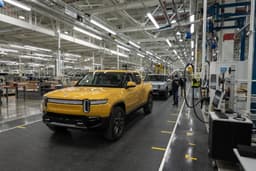
- Rivian's Market Opportunity: Rivian ranks sixth in the U.S. market, achieving an 8% revenue growth in 2025, and while still unprofitable, it is approaching profitability faster than Nio, suggesting a stronger competitive position.

Musk Responds to Schmidt's Power Warning

- Surging Power Demand: Schmidt warns that the U.S. needs an additional 92 gigawatts of power to sustain AI growth, while Musk shares a video highlighting that an average nuclear plant generates about 1.5 gigawatts, underscoring the urgency of power supply.
- Space Data Center Concept: Google's initiative aims to harness uninterrupted solar power in space to alleviate cooling constraints, with Pichai describing it as a 'moonshot' akin to Waymo's ambitions, indicating high aspirations for technological advancement.
- Reliance on Technological Breakthroughs: Pichai notes that the feasibility of this initiative hinges on significant breakthroughs in launch technology by Musk's SpaceX, showcasing the potential for developing space-based infrastructure.
- Divergent Market Reactions: While Alphabet Class A shares have surged 50.23% over the past six months, Amazon's stock has declined by 14.13%, reflecting differing market perceptions regarding the economic viability of space data centers.

Wall Street's Bull Market Continues for Third Year

- Strong Market Performance: By the end of last year, the S&P 500 had risen 16%, achieving three consecutive years of at least 16% growth, indicating a robust market recovery and rising investor confidence.
- Tariff Policy Impact: Trump's tariff policy led to a 10.5% drop in the S&P 500 within two days of its announcement, marking the fifth-largest two-day decline since 1950, reflecting the market's high sensitivity to policy uncertainty.
- Earnings Quality Concerns: Despite the market's historically high valuation, the second-highest P/E ratio (39-41) raises concerns about earnings quality, as many companies rely on non-sustainable income sources to maintain profits, potentially undermining long-term investor confidence.
- Challenges for Apple and Tesla: Apple masks its lack of real earnings growth through stock buybacks, while Tesla relies on automotive regulatory credits and interest income, which account for 63% of its pre-tax income, highlighting the earnings quality crisis facing market leaders.

Impact of Trump's Tariff Policy on the Market
- Increased Market Volatility: Despite a 16% rise in the S&P 500 in 2025, Trump's tariff policy triggered a 10.5% drop in just two days following its announcement on April 2, marking the fifth-largest decline since 1950, indicating the policy's detrimental impact on investor confidence.
- Earnings Quality Concerns: The tariffs imposed by Trump in 2018-2019 had a lasting negative effect on U.S. companies, with affected firms experiencing declines in labor productivity, employment, sales, and profits from 2019 to 2021, suggesting that current tariffs could replicate these adverse outcomes.
- Rising Inflation Pressure: Since the implementation of tariffs, the U.S. inflation rate has increased, with import duties raising production costs for certain businesses, leading to higher consumer prices and diminishing the likelihood of the Federal Reserve lowering interest rates, which could hinder economic growth.
- High Market Valuation: Entering 2026, the S&P 500's cyclically adjusted price-to-earnings (CAPE) ratio fluctuated between 39 and 41, significantly above the historical average of 17.34, highlighting the market's reliance on earnings quality; a decline in earnings quality could trigger a market correction.
Musk's Wealth Tied to Tesla and SpaceX Ownership
- Source of Wealth: Musk stated that his $849.3 billion fortune is overwhelmingly tied to his ownership stakes in Tesla and SpaceX, with less than 0.1% in cash, indicating that his wealth is primarily derived from equity rather than cash flow.
- Employee Incentives: He noted that employees at both Tesla and SpaceX receive stock and options, which not only enhances employee engagement but also boosts the overall value creation capacity of the companies.
- Market Predictions: Following the merger of SpaceX with Musk's AI firm xAI, the market has raised the odds of him reaching a $1 trillion net worth by 2027 to 78%, reflecting strong investor confidence in his future growth potential.
- Tesla Performance: Tesla's recent quarterly earnings of 50 cents per share exceeded analyst expectations of 45 cents, with quarterly revenue reaching $24.9 billion, showcasing the company's robust performance and ongoing growth potential in the electric vehicle market.
Tesla Actively Recruiting AI Chip Designers in South Korea
- Recruitment Initiative: Tesla is actively recruiting AI chip designers in South Korea, aiming to enhance its AI chip production capabilities for electric vehicles and other technologies, indicating a proactive approach to future market demands.
- Chip Architecture Development: The project aims to develop the world's highest-volume AI chip architecture, with Tesla seeking to secure a competitive edge in the rapidly evolving market by enhancing the technological superiority of its electric vehicles.
- Application Requirements: Applicants are required to mention three challenging technical problems they have solved in their application emails, which aims to identify highly skilled individuals to support Tesla's chip production expansion strategy.
- Investment Expansion: Tesla is also hiring silicon module process engineers in locations like Austin and Palo Alto, demonstrating a comprehensive expansion plan in chip manufacturing, alongside a commitment to invest approximately $2 billion into xAI to bolster its technological capabilities.
Analysis of Current Electric Vehicle Market Trends
- Sales Growth: Global EV sales surged 21% in 2025, with a notable 33% increase in Europe, indicating strong demand that could enhance market share for related companies.
- China's Market Dominance: EV sales in China grew by 19%, with Tesla holding a 4.4% market share, surpassing Nio, which highlights increasing competitive pressure on Nio in a rapidly consolidating market.
- Challenges for Nio: Nio reported a 15% year-over-year increase in vehicle sales in the latest quarter, yet its net losses reached $488.9 million, indicating a precarious position amid market consolidation and a lack of profitability.
- Rivian's Market Opportunity: Rivian ranks sixth in the U.S. market, achieving an 8% revenue growth in 2025, and while still unprofitable, it is approaching profitability faster than Nio, suggesting a stronger competitive position.
Musk Responds to Schmidt's Power Warning
- Surging Power Demand: Schmidt warns that the U.S. needs an additional 92 gigawatts of power to sustain AI growth, while Musk shares a video highlighting that an average nuclear plant generates about 1.5 gigawatts, underscoring the urgency of power supply.
- Space Data Center Concept: Google's initiative aims to harness uninterrupted solar power in space to alleviate cooling constraints, with Pichai describing it as a 'moonshot' akin to Waymo's ambitions, indicating high aspirations for technological advancement.
- Reliance on Technological Breakthroughs: Pichai notes that the feasibility of this initiative hinges on significant breakthroughs in launch technology by Musk's SpaceX, showcasing the potential for developing space-based infrastructure.
- Divergent Market Reactions: While Alphabet Class A shares have surged 50.23% over the past six months, Amazon's stock has declined by 14.13%, reflecting differing market perceptions regarding the economic viability of space data centers.
Wall Street's Bull Market Continues for Third Year
- Strong Market Performance: By the end of last year, the S&P 500 had risen 16%, achieving three consecutive years of at least 16% growth, indicating a robust market recovery and rising investor confidence.
- Tariff Policy Impact: Trump's tariff policy led to a 10.5% drop in the S&P 500 within two days of its announcement, marking the fifth-largest two-day decline since 1950, reflecting the market's high sensitivity to policy uncertainty.
- Earnings Quality Concerns: Despite the market's historically high valuation, the second-highest P/E ratio (39-41) raises concerns about earnings quality, as many companies rely on non-sustainable income sources to maintain profits, potentially undermining long-term investor confidence.
- Challenges for Apple and Tesla: Apple masks its lack of real earnings growth through stock buybacks, while Tesla relies on automotive regulatory credits and interest income, which account for 63% of its pre-tax income, highlighting the earnings quality crisis facing market leaders.
Impact of Trump's Tariff Policy on the Market
- Increased Market Volatility: Despite a 16% rise in the S&P 500 in 2025, Trump's tariff policy triggered a 10.5% drop in just two days following its announcement on April 2, marking the fifth-largest decline since 1950, indicating the policy's detrimental impact on investor confidence.
- Earnings Quality Concerns: The tariffs imposed by Trump in 2018-2019 had a lasting negative effect on U.S. companies, with affected firms experiencing declines in labor productivity, employment, sales, and profits from 2019 to 2021, suggesting that current tariffs could replicate these adverse outcomes.
- Rising Inflation Pressure: Since the implementation of tariffs, the U.S. inflation rate has increased, with import duties raising production costs for certain businesses, leading to higher consumer prices and diminishing the likelihood of the Federal Reserve lowering interest rates, which could hinder economic growth.
- High Market Valuation: Entering 2026, the S&P 500's cyclically adjusted price-to-earnings (CAPE) ratio fluctuated between 39 and 41, significantly above the historical average of 17.34, highlighting the market's reliance on earnings quality; a decline in earnings quality could trigger a market correction.