Hidden Gems: 18 Asian Stocks Providing Significant Value in U.S. Markets

Investment Opportunities in Asian Markets: Asian markets, particularly South Korea, Taiwan, India, and Southeast Asia, are undervalued compared to the S&P 500, with the MSCI Asia ex-China index trading at a significant discount while many companies show faster earnings growth and better returns on equity.
Demographic and Infrastructure Advantages: Countries like India and Vietnam have favorable demographics with younger populations entering their peak earning years, and substantial infrastructure investments are being made, positioning these markets for sustained economic growth.
Technological Adoption and Supply Chain Shifts: Many Asian countries are leading in technology adoption, such as mobile payments and e-commerce, and the ongoing geopolitical tensions are prompting companies to diversify supply chains away from China, creating new investment opportunities.
Contrarian Investment Strategy: The article advocates for a contrarian approach to investing in Asian markets, emphasizing the importance of recognizing value in overlooked stocks with strong fundamentals, particularly those trading at low EV/EBIT multiples and offering dividends.
Trade with 70% Backtested Accuracy
Analyst Views on TSM

About TSM
About the author

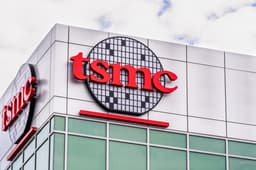
TSMC Controls 99% of AI Processor Foundry Market

- Market Dominance: TSMC controls 99% of the foundry market for AI server compute and custom AI processors, positioning itself as a critical technology enabler for emerging AI giants like Anthropic, thereby solidifying its leadership in the semiconductor industry.
- Revenue Growth Momentum: In 2025, TSMC achieved a 36% revenue increase to $122.4 billion, with January 2026 revenue growing nearly 37% year-over-year, indicating potential to exceed its 30% growth target and boosting investor confidence.
- AI Chip Market Outlook: RBC Capital Markets projects AI chip sales to rise from $220 billion last year to over $550 billion by 2028, placing TSMC in a prime position to capitalize on this lucrative market as the preferred foundry for AI chip designs.
- Investment Appeal: TSMC's forward earnings multiple of 26 aligns closely with the Nasdaq-100 index, and its earnings are expected to grow faster than the broader market, suggesting that investors are unlikely to go wrong with this semiconductor giant.

Three Tech Giants Set to Benefit from AI Surge


- Nvidia's Market Leadership: As a leading designer of AI processors, Nvidia is poised to benefit from the increasing spending on AI data center infrastructure, particularly as Alphabet and Meta ramp up capital expenditures to $185 billion and $135 billion respectively, driving demand for Nvidia's processors.
- Alphabet's Gemini Success: Alphabet's Gemini chatbot now boasts 750 million monthly active users, a 67% increase from nine months ago, and has secured a partnership with Apple to make Gemini the underlying AI model for an upcoming version of Siri, which is expected to generate billions in revenue for Alphabet.
- Taiwan Semiconductor's Market Share: Taiwan Semiconductor holds a 70% share of the global semiconductor manufacturing market, with revenue projected to increase by 30% to $122.4 billion by 2025, and diluted earnings expected to rise by 47% to $10.65 per ADR, showcasing its strong performance amid surging AI processor demand.
- Long-Term Competitive Advantage: Research from Morningstar indicates that TSMC's organic growth driven by major tech trends could last for decades, with management confidently forecasting a 30% increase in sales this year, further solidifying its market position.

Three Tech Stocks Worth Holding Long-Term
- Nvidia's Market Position: As the leading designer of AI processors, Nvidia's stock remains attractive despite bubble concerns, with a current P/E ratio of 47, slightly above the tech sector average of 43, indicating strong demand amid increasing AI infrastructure spending.
- Alphabet's AI Success: Alphabet's Gemini chatbot has reached 750 million monthly active users, a 67% increase in nine months, and its collaboration with Apple to integrate Gemini into Siri is expected to generate billions in revenue, further boosting its cloud computing growth.
- Taiwan Semiconductor's Competitive Edge: Holding a 70% market share in the global semiconductor market, TSMC's advanced chip manufacturing and high yield rates position it well, with projected revenue growth of 30% to $122.4 billion by 2025, reflecting strong performance amid surging AI processor demand.
- Optimistic Industry Outlook: All three companies excel in the AI sector, with reasonable P/E ratios of 47, 30, and 34 for Nvidia, Alphabet, and TSMC respectively, suggesting that investors can expect substantial returns over the coming years.

TSMC Leads Growth in AI Chip Market
- Market Share Advantage: TSMC holds a 99% share in AI server compute and custom AI processor manufacturing, making it a crucial enabler for emerging AI giants like Anthropic, thereby solidifying its leadership in the semiconductor industry.
- Significant Revenue Growth: In 2025, TSMC's revenue surged by 36% to $122.4 billion, with January 2026 revenue growing nearly 37% year-over-year, indicating potential to exceed its 30% growth target and boosting investor confidence.
- AI Chip Market Outlook: RBC Capital Markets projects AI chip sales to rise from $220 billion last year to over $550 billion by 2028, positioning TSMC as the foundry of choice for AI chip designs, ready to capitalize on this lucrative market opportunity.
- Enhanced Investment Value: TSMC's forward earnings multiple of 26 aligns with the Nasdaq-100 index, and its earnings growth is expected to outpace the broader market, suggesting that investors will not be disappointed with this semiconductor giant.

Cryptocurrency Market Slump and Tech Stock Opportunities

- Cryptocurrency Market Decline: The overall cryptocurrency market has fallen over 45% since reaching a high of $4.28 trillion on October 6, 2025, primarily driven by Bitcoin's price drop and institutional ETF withdrawals, highlighting the market's heavy reliance on sentiment and liquidity.
- Alphabet's Strong Earnings: Alphabet reported $113.8 billion in revenue for Q4, an 18% year-over-year increase, with net income of $34.45 billion, up nearly 30%, although the market reacted cautiously to its $185 billion AI infrastructure spending, the rapid growth of its cloud computing division indicates strong business potential.
- TSMC's Market Share Growth: Taiwan Semiconductor Manufacturing increased its market share from 66% to 72% in Q3, with Q4 revenue reaching $33.73 billion, a 25.5% year-over-year increase, and guidance for even better revenue in Q1, showcasing its leadership and robust growth prospects in the semiconductor industry.
- Oracle's Cloud Computing Growth: Oracle generated $7.97 billion in revenue in Q2 of fiscal 2026, a 34% increase year-over-year, with cloud computing becoming its largest revenue driver; despite over $100 billion in debt, its growth potential remains significant compared to the risks associated with cryptocurrencies.

Sandisk and TSMC: Bright Prospects Amid Market Recovery

- Attractive Valuation for Sandisk: Despite Sandisk's (SNDK) stock price doubling this year, its forward P/E ratio remains at 15 times, indicating strong attractiveness for fiscal 2026, with expectations of robust revenue growth driven by the recovery in the flash memory market over the coming years.
- Surging NAND Prices: The surge in demand for high-performance solid-state drives in AI data centers has led to a significant increase in NAND prices, boosting Sandisk's sales and gross margins, which is expected to enhance its competitive position and solidify its market share.
- TSMC's Market Dominance: Taiwan Semiconductor Manufacturing (TSM), as the world's largest foundry, has a forward P/E of about 26 times, and despite trading near all-time highs, its central role in AI infrastructure makes it a valuable investment, with AI chip revenue projected to grow at over 50% annually through 2029.
- Strong Pricing Power: TSMC's near-monopoly in advanced chip manufacturing, characterized by high pricing power and low defect rates, positions it as a crucial partner for chip designers, ensuring continued benefits from the surging demand for AI chips in the future.
TSMC Controls 99% of AI Processor Foundry Market
- Market Dominance: TSMC controls 99% of the foundry market for AI server compute and custom AI processors, positioning itself as a critical technology enabler for emerging AI giants like Anthropic, thereby solidifying its leadership in the semiconductor industry.
- Revenue Growth Momentum: In 2025, TSMC achieved a 36% revenue increase to $122.4 billion, with January 2026 revenue growing nearly 37% year-over-year, indicating potential to exceed its 30% growth target and boosting investor confidence.
- AI Chip Market Outlook: RBC Capital Markets projects AI chip sales to rise from $220 billion last year to over $550 billion by 2028, placing TSMC in a prime position to capitalize on this lucrative market as the preferred foundry for AI chip designs.
- Investment Appeal: TSMC's forward earnings multiple of 26 aligns closely with the Nasdaq-100 index, and its earnings are expected to grow faster than the broader market, suggesting that investors are unlikely to go wrong with this semiconductor giant.
Three Tech Giants Set to Benefit from AI Surge
- Nvidia's Market Leadership: As a leading designer of AI processors, Nvidia is poised to benefit from the increasing spending on AI data center infrastructure, particularly as Alphabet and Meta ramp up capital expenditures to $185 billion and $135 billion respectively, driving demand for Nvidia's processors.
- Alphabet's Gemini Success: Alphabet's Gemini chatbot now boasts 750 million monthly active users, a 67% increase from nine months ago, and has secured a partnership with Apple to make Gemini the underlying AI model for an upcoming version of Siri, which is expected to generate billions in revenue for Alphabet.
- Taiwan Semiconductor's Market Share: Taiwan Semiconductor holds a 70% share of the global semiconductor manufacturing market, with revenue projected to increase by 30% to $122.4 billion by 2025, and diluted earnings expected to rise by 47% to $10.65 per ADR, showcasing its strong performance amid surging AI processor demand.
- Long-Term Competitive Advantage: Research from Morningstar indicates that TSMC's organic growth driven by major tech trends could last for decades, with management confidently forecasting a 30% increase in sales this year, further solidifying its market position.
Three Tech Stocks Worth Holding Long-Term
- Nvidia's Market Position: As the leading designer of AI processors, Nvidia's stock remains attractive despite bubble concerns, with a current P/E ratio of 47, slightly above the tech sector average of 43, indicating strong demand amid increasing AI infrastructure spending.
- Alphabet's AI Success: Alphabet's Gemini chatbot has reached 750 million monthly active users, a 67% increase in nine months, and its collaboration with Apple to integrate Gemini into Siri is expected to generate billions in revenue, further boosting its cloud computing growth.
- Taiwan Semiconductor's Competitive Edge: Holding a 70% market share in the global semiconductor market, TSMC's advanced chip manufacturing and high yield rates position it well, with projected revenue growth of 30% to $122.4 billion by 2025, reflecting strong performance amid surging AI processor demand.
- Optimistic Industry Outlook: All three companies excel in the AI sector, with reasonable P/E ratios of 47, 30, and 34 for Nvidia, Alphabet, and TSMC respectively, suggesting that investors can expect substantial returns over the coming years.
TSMC Leads Growth in AI Chip Market
- Market Share Advantage: TSMC holds a 99% share in AI server compute and custom AI processor manufacturing, making it a crucial enabler for emerging AI giants like Anthropic, thereby solidifying its leadership in the semiconductor industry.
- Significant Revenue Growth: In 2025, TSMC's revenue surged by 36% to $122.4 billion, with January 2026 revenue growing nearly 37% year-over-year, indicating potential to exceed its 30% growth target and boosting investor confidence.
- AI Chip Market Outlook: RBC Capital Markets projects AI chip sales to rise from $220 billion last year to over $550 billion by 2028, positioning TSMC as the foundry of choice for AI chip designs, ready to capitalize on this lucrative market opportunity.
- Enhanced Investment Value: TSMC's forward earnings multiple of 26 aligns with the Nasdaq-100 index, and its earnings growth is expected to outpace the broader market, suggesting that investors will not be disappointed with this semiconductor giant.
Cryptocurrency Market Slump and Tech Stock Opportunities
- Cryptocurrency Market Decline: The overall cryptocurrency market has fallen over 45% since reaching a high of $4.28 trillion on October 6, 2025, primarily driven by Bitcoin's price drop and institutional ETF withdrawals, highlighting the market's heavy reliance on sentiment and liquidity.
- Alphabet's Strong Earnings: Alphabet reported $113.8 billion in revenue for Q4, an 18% year-over-year increase, with net income of $34.45 billion, up nearly 30%, although the market reacted cautiously to its $185 billion AI infrastructure spending, the rapid growth of its cloud computing division indicates strong business potential.
- TSMC's Market Share Growth: Taiwan Semiconductor Manufacturing increased its market share from 66% to 72% in Q3, with Q4 revenue reaching $33.73 billion, a 25.5% year-over-year increase, and guidance for even better revenue in Q1, showcasing its leadership and robust growth prospects in the semiconductor industry.
- Oracle's Cloud Computing Growth: Oracle generated $7.97 billion in revenue in Q2 of fiscal 2026, a 34% increase year-over-year, with cloud computing becoming its largest revenue driver; despite over $100 billion in debt, its growth potential remains significant compared to the risks associated with cryptocurrencies.
Sandisk and TSMC: Bright Prospects Amid Market Recovery
- Attractive Valuation for Sandisk: Despite Sandisk's (SNDK) stock price doubling this year, its forward P/E ratio remains at 15 times, indicating strong attractiveness for fiscal 2026, with expectations of robust revenue growth driven by the recovery in the flash memory market over the coming years.
- Surging NAND Prices: The surge in demand for high-performance solid-state drives in AI data centers has led to a significant increase in NAND prices, boosting Sandisk's sales and gross margins, which is expected to enhance its competitive position and solidify its market share.
- TSMC's Market Dominance: Taiwan Semiconductor Manufacturing (TSM), as the world's largest foundry, has a forward P/E of about 26 times, and despite trading near all-time highs, its central role in AI infrastructure makes it a valuable investment, with AI chip revenue projected to grow at over 50% annually through 2029.
- Strong Pricing Power: TSMC's near-monopoly in advanced chip manufacturing, characterized by high pricing power and low defect rates, positions it as a crucial partner for chip designers, ensuring continued benefits from the surging demand for AI chips in the future.