

ConocoPhillips Focuses on Debt Recovery Over Drilling in Venezuela
Written by Emily J. Thompson, Senior Investment Analyst
Updated: 6 days ago
0mins
Should l Buy COP?
Source: Yahoo Finance
- Debt Recovery Priority: CEO Ryan Lance emphasized during the Q4 earnings call that ConocoPhillips' current focus is on recovering owed funds from two judgments rather than increasing production, reflecting the company's cautious approach in a politically unstable market.
- Citgo's Potential Value: Lance indicated that Washington aims to keep the Citgo refinery in U.S. hands, suggesting that Conoco could recover part of its judgment through this process, highlighting a strategic shift towards asset monetization.
- Challenges of Returning to Venezuela: Even if sanctions ease, Lance stressed that a return would require stable policies and good local relations, which are currently absent, showcasing the company's high vigilance towards risks.
- Strategic Significance for Investors: ConocoPhillips is not relying on Venezuelan oil production to boost earnings but is betting on legal recovery to strengthen its balance sheet, a strategy that could provide cash returns independent of crude price fluctuations.
Trade with 70% Backtested Accuracy
Stop guessing "Should I Buy COP?" and start using high-conviction signals backed by rigorous historical data.
Sign up today to access powerful investing tools and make smarter, data-driven decisions.
Analyst Views on COP
Wall Street analysts forecast COP stock price to rise
18 Analyst Rating
15 Buy
3 Hold
0 Sell
Strong Buy
Current: 110.830

Low
98.00
Averages
113.39
High
132.00
Current: 110.830
Low
98.00
Averages
113.39
High
132.00
About COP
ConocoPhillips is an exploration and production company. Its Alaska segment primarily explores for, produces, transports and markets crude oil, natural gas and NGLs. The Lower 48 segment consists of operations located in the 48 contiguous states in the United States and the Gulf of Mexico. Canadian operations consist of the Surmont oil sands development in Alberta, the liquids-rich Montney unconventional play in British Columbia and commercial operations. The Europe, Middle East and North Africa segment consists of operations principally located in the Norwegian sector of the North Sea, the Norwegian Sea, Qatar, Libya, Equatorial Guinea and commercial and terminalling operations in the United Kingdom. Asia Pacific segment has exploration and production operations in China, Malaysia, Australia and commercial operations in China, Singapore and Japan. Other International segment includes interests in Colombia as well as contingencies associated with prior operations in other countries.
About the author

Emily J. Thompson
Emily J. Thompson, a Chartered Financial Analyst (CFA) with 12 years in investment research, graduated with honors from the Wharton School. Specializing in industrial and technology stocks, she provides in-depth analysis for Intellectia’s earnings and market brief reports.

ConocoPhillips Approves Investment for PPF Project in North Sea

- Investment Decision: ConocoPhillips' subsidiary, ConocoPhillips Skandinavia AS, along with its partners, has approved the final investment decision for the PPF Project in the Greater Ekofisk Area, with a total capital investment of approximately NOK 14 billion ($1.3 billion), which will significantly enhance the company's gas supply capabilities in Europe.
- Development Plan Submission: The development and operation plans for PL018B/F and PL044/D are expected to be submitted to the Norwegian Ministry of Energy in Q1 2026, indicating the company's strong commitment to advancing its near-field resource strategy.
- Production Outlook: ConocoPhillips anticipates total production to be between 2.33 and 2.36 million barrels of oil equivalent per day, with first-quarter production expected at 2.30–2.34 MMBOED, demonstrating the company's resilience amid market fluctuations.
- Earnings Performance Review: The company recently reported fourth-quarter FY25 earnings of $1.17 per share, a 39% year-over-year decline due to lower prices, despite quarterly revenue of $14.185 billion, slightly missing the expected $14.194 billion, reflecting revenue pressures.
See More

Energy Stocks Unexpectedly Surge, Market Outlook Optimistic


- Oil Price Recovery: As of February 2026, West Texas Intermediate (WTI) prices have rebounded to $57 per barrel, down $15 from early 2025, indicating renewed investor interest in energy stocks amidst a backdrop of previously declining oil prices.
- Energy Sector Leadership: The State Street Energy Select Sector SPDR ETF has surged 23% year-to-date, significantly outperforming the S&P 500's 2% increase, reflecting a resurgence of investor confidence in the energy sector and suggesting potential future investment opportunities.
- Impact of U.S. Foreign Policy: U.S. military actions in Venezuela have sparked optimistic expectations for major oil companies like Chevron and ExxonMobil, which may gain access to the world's largest oil reserves, further driving their stock prices higher.
- Shift in Investor Sentiment: As interest in AI-related stocks wanes, investors are turning to energy stocks as a reliable long-term investment choice, although the market must remain cautious of potential geopolitical risks.
See More

Energy Stocks Surge Driven by U.S. Policy and AI Fatigue
- Energy Stock Surge: As of February 11, 2026, the State Street Energy Select Sector SPDR ETF has risen 23% year-to-date, significantly outperforming the S&P 500's less than 2% increase, indicating strong investor confidence in the energy sector.
- Impact of U.S. Policy: Following the U.S. military's detention of Venezuelan President Maduro on January 3, investors believe that major oil companies like Chevron and ExxonMobil may gain special access to Venezuela's 19.4 billion barrels of oil reserves, potentially driving oil prices higher and enhancing their market positions.
- Escalating Geopolitical Risks: With rising tensions between the U.S. and Iran, particularly the deployment of a carrier group in the region, the market anticipates that any conflict could lead to a temporary spike in global oil prices, further stimulating energy stock performance.
- Shift to Energy Investments: Amidst fatigue in AI-related stocks, some investors are reallocating funds to energy stocks, viewing them as a more reliable long-term investment, although experts caution that restoring Venezuela's oil sector will require years and substantial capital.
See More

Universities Experience Financial Pressure Despite Strong Results


- Financial Strain on Universities: Universities are facing increased financial pressure due to rising costs.
- Impact of Federal Funding Cuts: President Donald Trump's initiatives to reduce federal funding are affecting many educational institutions.
See More
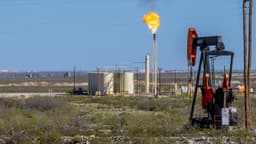
ConocoPhillips Plans to Restart Three Norwegian Oil Fields
- Investment Scale: ConocoPhillips and its partners submitted plans to the Norwegian government to invest NOK 20 billion (approximately $2.1 billion) to restart production at three oil fields in the Greater Ekofisk area by the end of 2028, reflecting the company's confidence in the future oil and gas market.
- Development Details: The development will comprise 11 wells and four subsea templates tied back to the Ekofisk complex via a shared multiphase pipeline, with Albuskjell featuring two subsea templates and six wells, while Vest Ekofisk and Tommeliten Gamma will each have one subsea template with three and two associated wells, respectively, aimed at enhancing overall capacity.
- Resource Potential: ConocoPhillips estimates that the Albuskjell, Vest Ekofisk, and Tommeliten Gamma fields still hold 90 million to 120 million barrels of oil equivalent in natural gas and condensate, indicating significant development potential that is expected to generate substantial revenue for the company.
- Production Expectations: First gas is anticipated in Q4 2028, with peak production estimated at 36,000 gross barrels of oil equivalent per day, which, if regulatory approval is obtained, will further strengthen the company's competitive position in the Norwegian market.
See More

U.S. Energy Secretary Visits Venezuela Amid Oil Revenue Changes
- Revenue Account Change: U.S. Energy Secretary Chris Wright announced that Venezuelan oil revenues will no longer be deposited in a Qatar account but will instead go to the U.S. Treasury, aiming to enhance fund transparency and reduce creditor claim risks.
- Surge in Oil Sales Revenue: Wright revealed that Venezuelan oil sales revenue has now topped $1 billion, with an expected additional $5 billion in crude sales through short-term agreements in the coming months, indicating strong U.S. interest and intent to rebuild Venezuela's oil market.
- Political Recognition Complexity: Although the U.S. does not officially recognize the government led by Delcy Rodríguez, Wright indicated that elections and a transition of power may occur during Trump's term, which will influence the U.S.'s ultimate recognition of the Venezuelan government.
- Debt Risk Management: Wright noted that the initial $500 million from oil sales was deposited in Qatar to prevent creditors from freezing the funds, reflecting the immense pressure Venezuela faces in repaying tens of billions in sovereign debt and nationalizing assets.
See More
ConocoPhillips Approves Investment for PPF Project in North Sea
- Investment Decision: ConocoPhillips' subsidiary, ConocoPhillips Skandinavia AS, along with its partners, has approved the final investment decision for the PPF Project in the Greater Ekofisk Area, with a total capital investment of approximately NOK 14 billion ($1.3 billion), which will significantly enhance the company's gas supply capabilities in Europe.
- Development Plan Submission: The development and operation plans for PL018B/F and PL044/D are expected to be submitted to the Norwegian Ministry of Energy in Q1 2026, indicating the company's strong commitment to advancing its near-field resource strategy.
- Production Outlook: ConocoPhillips anticipates total production to be between 2.33 and 2.36 million barrels of oil equivalent per day, with first-quarter production expected at 2.30–2.34 MMBOED, demonstrating the company's resilience amid market fluctuations.
- Earnings Performance Review: The company recently reported fourth-quarter FY25 earnings of $1.17 per share, a 39% year-over-year decline due to lower prices, despite quarterly revenue of $14.185 billion, slightly missing the expected $14.194 billion, reflecting revenue pressures.
See More
Energy Stocks Unexpectedly Surge, Market Outlook Optimistic
- Oil Price Recovery: As of February 2026, West Texas Intermediate (WTI) prices have rebounded to $57 per barrel, down $15 from early 2025, indicating renewed investor interest in energy stocks amidst a backdrop of previously declining oil prices.
- Energy Sector Leadership: The State Street Energy Select Sector SPDR ETF has surged 23% year-to-date, significantly outperforming the S&P 500's 2% increase, reflecting a resurgence of investor confidence in the energy sector and suggesting potential future investment opportunities.
- Impact of U.S. Foreign Policy: U.S. military actions in Venezuela have sparked optimistic expectations for major oil companies like Chevron and ExxonMobil, which may gain access to the world's largest oil reserves, further driving their stock prices higher.
- Shift in Investor Sentiment: As interest in AI-related stocks wanes, investors are turning to energy stocks as a reliable long-term investment choice, although the market must remain cautious of potential geopolitical risks.
See More
Energy Stocks Surge Driven by U.S. Policy and AI Fatigue
- Energy Stock Surge: As of February 11, 2026, the State Street Energy Select Sector SPDR ETF has risen 23% year-to-date, significantly outperforming the S&P 500's less than 2% increase, indicating strong investor confidence in the energy sector.
- Impact of U.S. Policy: Following the U.S. military's detention of Venezuelan President Maduro on January 3, investors believe that major oil companies like Chevron and ExxonMobil may gain special access to Venezuela's 19.4 billion barrels of oil reserves, potentially driving oil prices higher and enhancing their market positions.
- Escalating Geopolitical Risks: With rising tensions between the U.S. and Iran, particularly the deployment of a carrier group in the region, the market anticipates that any conflict could lead to a temporary spike in global oil prices, further stimulating energy stock performance.
- Shift to Energy Investments: Amidst fatigue in AI-related stocks, some investors are reallocating funds to energy stocks, viewing them as a more reliable long-term investment, although experts caution that restoring Venezuela's oil sector will require years and substantial capital.
See More
Universities Experience Financial Pressure Despite Strong Results
- Financial Strain on Universities: Universities are facing increased financial pressure due to rising costs.
- Impact of Federal Funding Cuts: President Donald Trump's initiatives to reduce federal funding are affecting many educational institutions.
See More
ConocoPhillips Plans to Restart Three Norwegian Oil Fields
- Investment Scale: ConocoPhillips and its partners submitted plans to the Norwegian government to invest NOK 20 billion (approximately $2.1 billion) to restart production at three oil fields in the Greater Ekofisk area by the end of 2028, reflecting the company's confidence in the future oil and gas market.
- Development Details: The development will comprise 11 wells and four subsea templates tied back to the Ekofisk complex via a shared multiphase pipeline, with Albuskjell featuring two subsea templates and six wells, while Vest Ekofisk and Tommeliten Gamma will each have one subsea template with three and two associated wells, respectively, aimed at enhancing overall capacity.
- Resource Potential: ConocoPhillips estimates that the Albuskjell, Vest Ekofisk, and Tommeliten Gamma fields still hold 90 million to 120 million barrels of oil equivalent in natural gas and condensate, indicating significant development potential that is expected to generate substantial revenue for the company.
- Production Expectations: First gas is anticipated in Q4 2028, with peak production estimated at 36,000 gross barrels of oil equivalent per day, which, if regulatory approval is obtained, will further strengthen the company's competitive position in the Norwegian market.
See More
U.S. Energy Secretary Visits Venezuela Amid Oil Revenue Changes
- Revenue Account Change: U.S. Energy Secretary Chris Wright announced that Venezuelan oil revenues will no longer be deposited in a Qatar account but will instead go to the U.S. Treasury, aiming to enhance fund transparency and reduce creditor claim risks.
- Surge in Oil Sales Revenue: Wright revealed that Venezuelan oil sales revenue has now topped $1 billion, with an expected additional $5 billion in crude sales through short-term agreements in the coming months, indicating strong U.S. interest and intent to rebuild Venezuela's oil market.
- Political Recognition Complexity: Although the U.S. does not officially recognize the government led by Delcy Rodríguez, Wright indicated that elections and a transition of power may occur during Trump's term, which will influence the U.S.'s ultimate recognition of the Venezuelan government.
- Debt Risk Management: Wright noted that the initial $500 million from oil sales was deposited in Qatar to prevent creditors from freezing the funds, reflecting the immense pressure Venezuela faces in repaying tens of billions in sovereign debt and nationalizing assets.
See More



