Why Levi Strauss Shares Are Trading Lower By Over 10%; Here Are 20 Stocks Moving Premarket


Levi Strauss & Co. Earnings Report: Levi Strauss shares fell 10.6% in pre-market trading despite posting better-than-expected earnings for the third quarter, as sales missed estimates and the company projected adjusted earnings for fiscal year 2024 slightly below expectations.
Pre-Market Stock Movements: Several stocks experienced significant movements in pre-market trading, with Conduit Pharmaceuticals rising 47.3% and EON Resources declining 17.7%, reflecting a mix of gains and losses among various companies following recent performance fluctuations.
Trade with 70% Backtested Accuracy
Analyst Views on SNGX

About SNGX
About the author

Soligenix Publishes Positive Phase 2a Results for SGX945 in Behçet's Disease Treatment

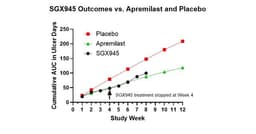
- Clinical Trial Results: Soligenix's SGX945 demonstrated significant improvement in 7 out of 8 patients in a Phase 2a trial for Behçet's Disease, indicating potential enduring effects after 4 weeks of treatment, which could enhance patient quality of life.
- Efficacy Comparison: After 4 weeks, the SGX945 group showed a 40% improvement relative to placebo, comparable to the 37% improvement seen with the approved drug apremilast, suggesting SGX945's competitive edge in the market.
- Patient Feedback: Patients reported reduced duration and number of oral ulcers during treatment, with SGX945 showing no treatment-related adverse events, indicating strong tolerability and potential for broader patient adoption.
- Future Development Plans: Soligenix intends to reformulate SGX945 for home-based treatment via subcutaneous injection, aiming to expand its application in innate immune-related inflammatory conditions, thereby enhancing its market competitiveness.

Soligenix Expands Psoriasis Trial, Revealing Improved Results with New Gel
Trial Results: Soligenix, Inc. announced extended results from its Phase 2a trial of SGX302 (synthetic hypericin) for mild-to-moderate psoriasis, showing improvements in various clinical measures with a new gel formulation that enhances application ease.
Patient Tolerance: The SGX302 gel therapy was well tolerated by all patients, with no drug-related adverse events reported, and one patient achieved a significant improvement in their psoriasis status.
Comparative Outcomes: The results from the gel formulation were comparable to or improved upon those from the previous ointment formulation, indicating effective treatment potential for psoriasis lesions.
Stock Performance: Following the announcement, Soligenix's stock experienced a decline of 21.05%, trading at $1.21.

Soligenix Reports Clinical Success of Optimized SGX302 Gel for Psoriasis Treatment
- Trial Expansion: Soligenix has enrolled four additional patients in its Phase 2a trial of SGX302 (synthetic hypericin) for mild-to-moderate psoriasis, utilizing an optimized gel formulation over an 18-week treatment period, with all patients well tolerated and no drug-related adverse events reported.
- Efficacy Assessment: Among the three evaluable patients, the average PASI score improved by over 50%, with one patient achieving an “Almost Clear” disease status, indicating that the new formulation shows comparable or improved efficacy relative to the previous ointment formulation.
- Market Potential: With an estimated 60-125 million psoriasis patients globally and a treatment market valued at approximately $15 billion in 2020, projected to reach $40 billion by 2027, the success of SGX302 could present significant market opportunities for the company.
- Future Directions: Soligenix plans to continue advancing SGX302 for psoriasis while preparing for the confirmatory Phase 3 trial of HyBryte™ in early-stage cutaneous T-cell lymphoma, with topline results expected in the second half of 2026.

Soligenix Reaches Enrollment Target for Interim Analysis in Phase 3 Clinical Trial of HyBryte™ for Cutaneous T-Cell Lymphoma Treatment
Study Enrollment and Interim Analysis: Soligenix, Inc. has completed the enrollment of 50 patients in its Phase 3 FLASH 2 study evaluating HyBryte™ for cutaneous T-cell lymphoma (CTCL), with an interim analysis expected in Q2 2026. The study aims to confirm the efficacy of HyBryte™, building on previous successful trials.
Response Rates and Safety Profile: The overall blinded study response rate to date is 48%, significantly exceeding the anticipated 25%. The safety profile of HyBryte™ remains benign, consistent with earlier studies, and is expected to demonstrate efficacy over an extended treatment period.
Mechanism of Action and Treatment Approach: HyBryte™ utilizes synthetic hypericin activated by visible light, offering a safer alternative to traditional therapies that carry risks of DNA damage and secondary malignancies. This treatment approach targets malignant T-cells while minimizing systemic absorption.
Regulatory Path and Future Prospects: Following the first Phase 3 study, regulatory bodies require a second successful trial for marketing approval. Soligenix is in discussions with the FDA regarding study design modifications, while also pursuing additional studies to support HyBryte™'s efficacy and safety in treating CTCL.
Soligenix Announces Recent Accomplishments and Third Quarter 2025 Financial Results
Company Overview: Soligenix, Inc. is a late-stage biopharmaceutical company focused on developing treatments for rare diseases, with key products including HyBryte™ for cutaneous T-cell lymphoma and SGX302 for psoriasis.
Recent Accomplishments: The company reported no safety concerns from the first Data Monitoring Committee meeting for HyBryte™ and announced updates to its Medical Advisory Boards in the U.S. and Europe to guide clinical development.
Financial Results: For the quarter ending September 30, 2025, Soligenix reported a net loss of $2.5 million, with approximately $10.5 million in cash, indicating a sufficient operating runway through 2026.
Future Outlook: The company is focused on upcoming milestones, including top-line results from clinical trials and exploring strategic options for funding and partnerships to advance its late-stage pipeline.
Soligenix Reaches Key Safety Milestone in Phase 3 Clinical Trial of HyBryte™ for Treating Cutaneous T-Cell Lymphoma
Study Progress: Soligenix, Inc. announced that the Data Monitoring Committee for its Phase 3 study of HyBryte™ in treating cutaneous T-cell lymphoma (CTCL) found no safety concerns, with an interim efficacy analysis planned for 1H2026 and an enrollment update expected in 4Q2025.
Treatment Efficacy: HyBryte™ has shown promising efficacy and safety in previous studies, with a significant treatment response observed in patients with early-stage CTCL, offering a potential new option for patients with limited treatment alternatives.
Soligenix Publishes Positive Phase 2a Results for SGX945 in Behçet's Disease Treatment
- Clinical Trial Results: Soligenix's SGX945 demonstrated significant improvement in 7 out of 8 patients in a Phase 2a trial for Behçet's Disease, indicating potential enduring effects after 4 weeks of treatment, which could enhance patient quality of life.
- Efficacy Comparison: After 4 weeks, the SGX945 group showed a 40% improvement relative to placebo, comparable to the 37% improvement seen with the approved drug apremilast, suggesting SGX945's competitive edge in the market.
- Patient Feedback: Patients reported reduced duration and number of oral ulcers during treatment, with SGX945 showing no treatment-related adverse events, indicating strong tolerability and potential for broader patient adoption.
- Future Development Plans: Soligenix intends to reformulate SGX945 for home-based treatment via subcutaneous injection, aiming to expand its application in innate immune-related inflammatory conditions, thereby enhancing its market competitiveness.
Soligenix Expands Psoriasis Trial, Revealing Improved Results with New Gel
Trial Results: Soligenix, Inc. announced extended results from its Phase 2a trial of SGX302 (synthetic hypericin) for mild-to-moderate psoriasis, showing improvements in various clinical measures with a new gel formulation that enhances application ease.
Patient Tolerance: The SGX302 gel therapy was well tolerated by all patients, with no drug-related adverse events reported, and one patient achieved a significant improvement in their psoriasis status.
Comparative Outcomes: The results from the gel formulation were comparable to or improved upon those from the previous ointment formulation, indicating effective treatment potential for psoriasis lesions.
Stock Performance: Following the announcement, Soligenix's stock experienced a decline of 21.05%, trading at $1.21.
Soligenix Reports Clinical Success of Optimized SGX302 Gel for Psoriasis Treatment
- Trial Expansion: Soligenix has enrolled four additional patients in its Phase 2a trial of SGX302 (synthetic hypericin) for mild-to-moderate psoriasis, utilizing an optimized gel formulation over an 18-week treatment period, with all patients well tolerated and no drug-related adverse events reported.
- Efficacy Assessment: Among the three evaluable patients, the average PASI score improved by over 50%, with one patient achieving an “Almost Clear” disease status, indicating that the new formulation shows comparable or improved efficacy relative to the previous ointment formulation.
- Market Potential: With an estimated 60-125 million psoriasis patients globally and a treatment market valued at approximately $15 billion in 2020, projected to reach $40 billion by 2027, the success of SGX302 could present significant market opportunities for the company.
- Future Directions: Soligenix plans to continue advancing SGX302 for psoriasis while preparing for the confirmatory Phase 3 trial of HyBryte™ in early-stage cutaneous T-cell lymphoma, with topline results expected in the second half of 2026.
Soligenix Reaches Enrollment Target for Interim Analysis in Phase 3 Clinical Trial of HyBryte™ for Cutaneous T-Cell Lymphoma Treatment
Study Enrollment and Interim Analysis: Soligenix, Inc. has completed the enrollment of 50 patients in its Phase 3 FLASH 2 study evaluating HyBryte™ for cutaneous T-cell lymphoma (CTCL), with an interim analysis expected in Q2 2026. The study aims to confirm the efficacy of HyBryte™, building on previous successful trials.
Response Rates and Safety Profile: The overall blinded study response rate to date is 48%, significantly exceeding the anticipated 25%. The safety profile of HyBryte™ remains benign, consistent with earlier studies, and is expected to demonstrate efficacy over an extended treatment period.
Mechanism of Action and Treatment Approach: HyBryte™ utilizes synthetic hypericin activated by visible light, offering a safer alternative to traditional therapies that carry risks of DNA damage and secondary malignancies. This treatment approach targets malignant T-cells while minimizing systemic absorption.
Regulatory Path and Future Prospects: Following the first Phase 3 study, regulatory bodies require a second successful trial for marketing approval. Soligenix is in discussions with the FDA regarding study design modifications, while also pursuing additional studies to support HyBryte™'s efficacy and safety in treating CTCL.
Soligenix Announces Recent Accomplishments and Third Quarter 2025 Financial Results
Company Overview: Soligenix, Inc. is a late-stage biopharmaceutical company focused on developing treatments for rare diseases, with key products including HyBryte™ for cutaneous T-cell lymphoma and SGX302 for psoriasis.
Recent Accomplishments: The company reported no safety concerns from the first Data Monitoring Committee meeting for HyBryte™ and announced updates to its Medical Advisory Boards in the U.S. and Europe to guide clinical development.
Financial Results: For the quarter ending September 30, 2025, Soligenix reported a net loss of $2.5 million, with approximately $10.5 million in cash, indicating a sufficient operating runway through 2026.
Future Outlook: The company is focused on upcoming milestones, including top-line results from clinical trials and exploring strategic options for funding and partnerships to advance its late-stage pipeline.
Soligenix Reaches Key Safety Milestone in Phase 3 Clinical Trial of HyBryte™ for Treating Cutaneous T-Cell Lymphoma
Study Progress: Soligenix, Inc. announced that the Data Monitoring Committee for its Phase 3 study of HyBryte™ in treating cutaneous T-cell lymphoma (CTCL) found no safety concerns, with an interim efficacy analysis planned for 1H2026 and an enrollment update expected in 4Q2025.
Treatment Efficacy: HyBryte™ has shown promising efficacy and safety in previous studies, with a significant treatment response observed in patients with early-stage CTCL, offering a potential new option for patients with limited treatment alternatives.