

U.S. Stock Futures Modestly Lower Amid Geopolitical Uncertainty


Stock futures are modestly lower reflecting a cautious response to renewed geopolitical and macroeconomic uncertainty after the volatility of the past week and before a key Federal Reserve meeting later this week. Markets look set to open mixed to slightly softer as traders navigate a heavy news and event calendar. Investors are bracing for a busy slate of major tech earnings from companies such as Microsoft, Meta, Apple and Tesla, prompting selective positioning ahead of potentially market-moving reports.One of the biggest themes shaping markets is the surge in precious metals as safe-haven demand has risen, with gold topping $5,000 an ounce for the first time and silver hitting new records as traders hedge against uncertainty. The dollar has weakened against major currencies, including the Japanese yen, amid speculation of currency intervention and broader risk rebalancing, which further supports commodities and metals.In pre-market trading, S&P 500 fell 0.08%, Nasdaq futures fell 0.28% and Dow futures fell 0.02%.Check out this morning's top movers from around Wall Street, compiled by The Fly.HIGHER -USA Rare Earthup 21% after announcing its entry into a non-binding $1.6B letter of intent with the U.S. Department of Commerce and a collaboration with the U.S. Department of EnergySareptaup 2% after reporting topline three-year results from Part 1-treated patients in EMBARK, the placebo-controlled Phase 3 study evaluating Elevidys in ambulatory individuals with Duchenne muscular dystrophy who were aged four to seven at time of treatmentAllied Gold Corporationup 3% after announcing that it has entered into a definitive agreement, pursuant to which Zijin Gold International has agreed to acquire all of the issued and outstanding shares of Allied Gold at a price of C$44 per share in cashMannKindup 3% after reporting that the FDA has approved an update to the prescribing information for Afrezza inhalation powder, revising recommendations for the starting mealtime dosage when patients switch from subcutaneous mealtime insulin regimensSkyWater Technologyand IonQup 8% and 2%, respectively, after the companies announced they have entered into a definitive agreement pursuant to which IonQ will acquire SkyWater for $35.00 per share in a cash-and-stock transactionCoreWeaveup 8% after Nvidiainvested $2B in CoreWeave Class A common stock at a purchase price of $87.20 per shareLOWER -Revolution Medicinesdown 20% after The Wall Street JournalMerckis no longer in discussions to acquire the companyBlackRock TCP Capitaldown 16% after reporting preliminary Q4 resultsEnphase Energydown 3% after notifying employees the company will be reducing headcount and moving certain functions to cost-efficient regions, affecting less than 6% of its workforce
Trade with 70% Backtested Accuracy
Analyst Views on USAR

About USAR
About the author


USA Rare Earth Stock Experiences Wild Post-Debut Fluctuations

- Post-Debut Volatility: Since its March 2025 SPAC merger, USA Rare Earth has seen significant stock price fluctuations, currently up approximately 141% from its debut but down about 33% from last October's peak, indicating market uncertainty.
- Market Capitalization: As of now, USA Rare Earth boasts a market cap of around $3.5 billion, yet the company has yet to record any revenue, highlighting the speculative nature of its business model and the balance of potential growth against inherent risks.
- New Refining Contracts: At the beginning of 2026, the company announced contracts to launch new mineral refining operations in France, with a new plant expected to produce 3,750 metric tons of refined material annually, supported by the French government covering up to 45% of equipment costs and reimbursing €130 million in real estate expenses, significantly mitigating initial investment risks.
- Government Support and Investment Outlook: USA Rare Earth recently received a non-binding letter of intent from the U.S. Commerce Department, suggesting potential funding of $1.6 billion, alongside a stake from the U.S. government, reflecting the administration's commitment to enhancing rare-earth mineral sourcing and the company's promising future prospects.

Mining Stocks: Risks and Opportunities for Investors


- TMC Overview: TMC The Metals Company focuses on collecting polymetallic nodules from the Pacific Ocean, currently valued at $2.7 billion with a 13.45% stock increase to $6.41; despite being pre-revenue, its eco-friendly mining approach may attract long-term investors.
- Importance of MP Materials: MP Materials operates the only large-scale rare-earth mine in the U.S., valued at $11 billion with an 8.49% stock increase to $61.35; it secured a $400 million investment from the Department of Defense and a $500 million partnership with Apple, ensuring stability in the U.S. rare-earth supply chain.
- USA Rare Earth Development: USA Rare Earth controls the Round Top deposit in Texas, valued at $3.2 billion with a 6.02% stock increase to $21.84; although still in the construction phase, it has raised $3.1 billion to support the establishment of a domestic rare-earth supply chain.
- Investment Outlook: While TMC, MP, and USA Rare Earth are all pre-revenue and face market volatility risks, their potential in the rare-earth and battery metal sectors makes them attractive for long-term investors.

Trump Administration Invests in Critical Minerals Sector

- Scale of Government Investment: The Trump administration's equity stakes in at least 10 companies, including USA Rare Earth and MP Materials, represent an unprecedented scale aimed at reducing reliance on Chinese rare earths, potentially altering market competition dynamics.
- Legal Risk Concerns: The lack of a clear legal basis for these investments exposes the Trump administration to lawsuits from competitors and political scrutiny during potential regime changes, increasing operational uncertainties for the involved companies.
- Capital Allocation Risks: Government equity stakes raise concerns about capital misallocation, as funds may flow to less competitive companies, which could adversely affect the overall health of the market and investor confidence.
- Corporate Silence: Despite some executives expressing distaste for government intervention, most corporate leaders remain silent, fearing that public opposition could strain relations with the administration and negatively impact shareholder interests.
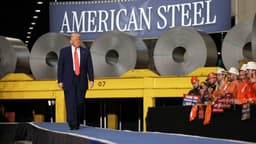
Trump Administration Increases Investments in Critical Minerals


- Surge in Investments: The Trump administration has made unprecedented equity investments in at least 10 companies over the past year, including critical minerals and chipmakers, aiming to build a domestic supply chain and reduce reliance on China, indicating a proactive government role in economic strategy.
- U.S. Steel Golden Share: The administration secured a golden share in U.S. Steel as a condition for approving Nippon Steel's acquisition, granting the president veto power over key business decisions, which ensures stability and growth in the U.S. steel industry, reflecting direct government intervention in vital sectors.
- Strategic Deal with MP Materials: The Defense Department struck a landmark deal with MP Materials, investing $400 million in preferred stock with rights to purchase additional shares, positioning the Pentagon as the largest single shareholder and further solidifying U.S. dominance in the rare earth mining sector.
- L3Harris and Defense Partnership: L3Harris announced a proposed partnership with the U.S. government, where the Pentagon will invest $1 billion in its rocket motor business, with plans for an IPO in the second half of 2026, allowing the Pentagon's investment to convert into common equity, enhancing the capital base of the defense industry.

USA Rare Earth Seizes Strategic Opportunity Amid Supply Chain Urgency
- Market Dependency Issue: According to the International Energy Agency, China accounted for 59% of global rare earth mining, 91% of refining, and 94% of permanent magnet production in 2024, highlighting the U.S.'s uncomfortable reliance on China for rare earth metals, where a policy shift could severely impact the American economy.
- Control of Key Resources: USA Rare Earth’s Round Top Deposit is one of the largest polymetallic bodies in the U.S., containing at least 15 rare earth elements and lithium, with heavy rare earth elements critical for permanent magnet production, positioning the company for significant market potential.
- Production Capacity Development: The company is constructing a magnet factory in Oklahoma and investing in its R&D lab in Colorado to identify the most cost-effective extraction and production techniques, laying the groundwork for future large-scale production.
- Funding and Market Outlook: By 2026, USA Rare Earth has raised approximately $3.1 billion for the development of the Round Top mine and the magnet factory, including $1.6 billion in loans and federal grants, and if large-scale production is achieved, it could attract major clients like Ford, GM, and the Department of Defense, significantly boosting revenue.

Nvidia's $2 Billion Investment in CoreWeave Highlights AI Infrastructure Needs


- Significant Investment: Nvidia's announcement of a $2 billion investment in CoreWeave, purchasing shares at approximately $87 each, represents a 6.5% discount from last Friday's closing price, resulting in a more than 10% surge in CoreWeave's stock, indicating strong market demand for AI infrastructure.
- Deepening Strategic Partnership: The collaboration between Nvidia and CoreWeave aims to meet the extraordinary demand for Nvidia's AI factories, with plans to build 5 gigawatts of AI factories by 2030, and this investment will accelerate that process, further solidifying Nvidia's leadership in the AI sector.
- Liquidity Crisis Concerns: While Nvidia's investment is seen as support for CoreWeave, critics note that CoreWeave may be facing cash flow shortages and debt burdens, suggesting that Nvidia's investment could be a move to mitigate the risk of its partner's potential bankruptcy.
- Market Outlook Analysis: As AI technology rapidly evolves, Nvidia's investment is not only a lifeline for CoreWeave but also a strategic positioning within the entire AI ecosystem, reflecting the company's forward-thinking approach in future market competition.
USA Rare Earth Stock Experiences Wild Post-Debut Fluctuations
- Post-Debut Volatility: Since its March 2025 SPAC merger, USA Rare Earth has seen significant stock price fluctuations, currently up approximately 141% from its debut but down about 33% from last October's peak, indicating market uncertainty.
- Market Capitalization: As of now, USA Rare Earth boasts a market cap of around $3.5 billion, yet the company has yet to record any revenue, highlighting the speculative nature of its business model and the balance of potential growth against inherent risks.
- New Refining Contracts: At the beginning of 2026, the company announced contracts to launch new mineral refining operations in France, with a new plant expected to produce 3,750 metric tons of refined material annually, supported by the French government covering up to 45% of equipment costs and reimbursing €130 million in real estate expenses, significantly mitigating initial investment risks.
- Government Support and Investment Outlook: USA Rare Earth recently received a non-binding letter of intent from the U.S. Commerce Department, suggesting potential funding of $1.6 billion, alongside a stake from the U.S. government, reflecting the administration's commitment to enhancing rare-earth mineral sourcing and the company's promising future prospects.
Mining Stocks: Risks and Opportunities for Investors
- TMC Overview: TMC The Metals Company focuses on collecting polymetallic nodules from the Pacific Ocean, currently valued at $2.7 billion with a 13.45% stock increase to $6.41; despite being pre-revenue, its eco-friendly mining approach may attract long-term investors.
- Importance of MP Materials: MP Materials operates the only large-scale rare-earth mine in the U.S., valued at $11 billion with an 8.49% stock increase to $61.35; it secured a $400 million investment from the Department of Defense and a $500 million partnership with Apple, ensuring stability in the U.S. rare-earth supply chain.
- USA Rare Earth Development: USA Rare Earth controls the Round Top deposit in Texas, valued at $3.2 billion with a 6.02% stock increase to $21.84; although still in the construction phase, it has raised $3.1 billion to support the establishment of a domestic rare-earth supply chain.
- Investment Outlook: While TMC, MP, and USA Rare Earth are all pre-revenue and face market volatility risks, their potential in the rare-earth and battery metal sectors makes them attractive for long-term investors.
Trump Administration Invests in Critical Minerals Sector
- Scale of Government Investment: The Trump administration's equity stakes in at least 10 companies, including USA Rare Earth and MP Materials, represent an unprecedented scale aimed at reducing reliance on Chinese rare earths, potentially altering market competition dynamics.
- Legal Risk Concerns: The lack of a clear legal basis for these investments exposes the Trump administration to lawsuits from competitors and political scrutiny during potential regime changes, increasing operational uncertainties for the involved companies.
- Capital Allocation Risks: Government equity stakes raise concerns about capital misallocation, as funds may flow to less competitive companies, which could adversely affect the overall health of the market and investor confidence.
- Corporate Silence: Despite some executives expressing distaste for government intervention, most corporate leaders remain silent, fearing that public opposition could strain relations with the administration and negatively impact shareholder interests.
Trump Administration Increases Investments in Critical Minerals
- Surge in Investments: The Trump administration has made unprecedented equity investments in at least 10 companies over the past year, including critical minerals and chipmakers, aiming to build a domestic supply chain and reduce reliance on China, indicating a proactive government role in economic strategy.
- U.S. Steel Golden Share: The administration secured a golden share in U.S. Steel as a condition for approving Nippon Steel's acquisition, granting the president veto power over key business decisions, which ensures stability and growth in the U.S. steel industry, reflecting direct government intervention in vital sectors.
- Strategic Deal with MP Materials: The Defense Department struck a landmark deal with MP Materials, investing $400 million in preferred stock with rights to purchase additional shares, positioning the Pentagon as the largest single shareholder and further solidifying U.S. dominance in the rare earth mining sector.
- L3Harris and Defense Partnership: L3Harris announced a proposed partnership with the U.S. government, where the Pentagon will invest $1 billion in its rocket motor business, with plans for an IPO in the second half of 2026, allowing the Pentagon's investment to convert into common equity, enhancing the capital base of the defense industry.
USA Rare Earth Seizes Strategic Opportunity Amid Supply Chain Urgency
- Market Dependency Issue: According to the International Energy Agency, China accounted for 59% of global rare earth mining, 91% of refining, and 94% of permanent magnet production in 2024, highlighting the U.S.'s uncomfortable reliance on China for rare earth metals, where a policy shift could severely impact the American economy.
- Control of Key Resources: USA Rare Earth’s Round Top Deposit is one of the largest polymetallic bodies in the U.S., containing at least 15 rare earth elements and lithium, with heavy rare earth elements critical for permanent magnet production, positioning the company for significant market potential.
- Production Capacity Development: The company is constructing a magnet factory in Oklahoma and investing in its R&D lab in Colorado to identify the most cost-effective extraction and production techniques, laying the groundwork for future large-scale production.
- Funding and Market Outlook: By 2026, USA Rare Earth has raised approximately $3.1 billion for the development of the Round Top mine and the magnet factory, including $1.6 billion in loans and federal grants, and if large-scale production is achieved, it could attract major clients like Ford, GM, and the Department of Defense, significantly boosting revenue.
Nvidia's $2 Billion Investment in CoreWeave Highlights AI Infrastructure Needs
- Significant Investment: Nvidia's announcement of a $2 billion investment in CoreWeave, purchasing shares at approximately $87 each, represents a 6.5% discount from last Friday's closing price, resulting in a more than 10% surge in CoreWeave's stock, indicating strong market demand for AI infrastructure.
- Deepening Strategic Partnership: The collaboration between Nvidia and CoreWeave aims to meet the extraordinary demand for Nvidia's AI factories, with plans to build 5 gigawatts of AI factories by 2030, and this investment will accelerate that process, further solidifying Nvidia's leadership in the AI sector.
- Liquidity Crisis Concerns: While Nvidia's investment is seen as support for CoreWeave, critics note that CoreWeave may be facing cash flow shortages and debt burdens, suggesting that Nvidia's investment could be a move to mitigate the risk of its partner's potential bankruptcy.
- Market Outlook Analysis: As AI technology rapidly evolves, Nvidia's investment is not only a lifeline for CoreWeave but also a strategic positioning within the entire AI ecosystem, reflecting the company's forward-thinking approach in future market competition.


