Tuesday Sector Highlights: Non-Precious Metals & Non-Metallic Mining, Gas Utility Leaders
Written by Emily J. Thompson, Senior Investment Analyst
Updated: Oct 07 2025
0mins



Source: NASDAQ.COM
Gas Utilities Performance: Gas utilities shares increased by approximately 0.9% on Tuesday, with Spire leading the gains at 2.8% and Chesapeake Utilities following at 2.1%.
Sector Leaders Video: A video highlights the top-performing sectors on Tuesday, focusing on non-precious metals, non-metallic mining, and gas utilities.
Trade with 70% Backtested Accuracy
Stop guessing "Should I Buy TMQ?" and start using high-conviction signals backed by rigorous historical data.
Sign up today to access powerful investing tools and make smarter, data-driven decisions.
Analyst Views on TMQ
Wall Street analysts forecast TMQ stock price to rise over the next 12 months. According to Wall Street analysts, the average 1-year price target for TMQ is 5.22 USD with a low forecast of 4.68 USD and a high forecast of 5.76 USD. However, analyst price targets are subjective and often lag stock prices, so investors should focus on the objective reasons behind analyst rating changes, which better reflect the company's fundamentals.
2 Analyst Rating
1 Buy
1 Hold
0 Sell
Moderate Buy
Current: 4.670

Low
4.68
Averages
5.22
High
5.76
Current: 4.670
Low
4.68
Averages
5.22
High
5.76

No data
About TMQ
Trilogy Metals Inc. is a metal exploration and development company. The Company holds a 50 % interest in Ambler Metals LLC, which has a 100 % interest in the Upper Kobuk Mineral Projects (UKMP) in northwestern Alaska. The UKMP is located within the Ambler Mining District, which is a prospective known copper-dominant district in the world. It hosts polymetallic volcanogenic massive sulfide (VMS) deposits that contain copper, zinc, lead, gold and silver, and carbonate replacement deposits. Its exploration is focused on two deposits in the Ambler Mining District: the Arctic VMS deposit and the Bornite carbonate replacement deposit. Both deposits are located within a land package that spans approximately 190,929 hectares. The Arctic deposit is a polymetallic VMS deposit located over 470 km northwest of the City of Fairbanks, Alaska. The Bornite deposit is a carbonate-hosted copper-cobalt deposit located near Kobuk, Alaska, and is approximately 25 km southwest of its Arctic Project.
About the author

Emily J. Thompson
Emily J. Thompson, a Chartered Financial Analyst (CFA) with 12 years in investment research, graduated with honors from the Wharton School. Specializing in industrial and technology stocks, she provides in-depth analysis for Intellectia’s earnings and market brief reports.
Trump Administration Increases Investments in Critical Minerals


- Surge in Investments: The Trump administration has made unprecedented equity investments in at least 10 companies over the past year, including critical minerals and chipmakers, aiming to build a domestic supply chain and reduce reliance on China, indicating a proactive government role in economic strategy.
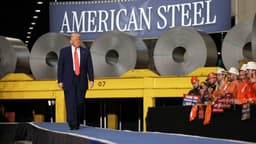
- U.S. Steel Golden Share: The administration secured a golden share in U.S. Steel as a condition for approving Nippon Steel's acquisition, granting the president veto power over key business decisions, which ensures stability and growth in the U.S. steel industry, reflecting direct government intervention in vital sectors.
- Strategic Deal with MP Materials: The Defense Department struck a landmark deal with MP Materials, investing $400 million in preferred stock with rights to purchase additional shares, positioning the Pentagon as the largest single shareholder and further solidifying U.S. dominance in the rare earth mining sector.
- L3Harris and Defense Partnership: L3Harris announced a proposed partnership with the U.S. government, where the Pentagon will invest $1 billion in its rocket motor business, with plans for an IPO in the second half of 2026, allowing the Pentagon's investment to convert into common equity, enhancing the capital base of the defense industry.
See More

US Collaborates with Mexico and Others on Critical Mineral Price Floors


- Critical Minerals Collaboration: The U.S. is partnering with Mexico, the EU, and Japan to implement minimum pricing for critical minerals within the next 60 days, addressing global market distortions and enhancing North American supply chain resilience.
- Action Plan Details: The U.S. Trade Representative indicated that the collaboration with Mexico will focus on establishing price floors for critical mineral imports and exploring how to implement these minimum prices in agreements with other nations.
- Strategic Partnerships: The cooperation with the EU and Japan will include a strategic partnership on critical minerals, with a memorandum of understanding on supply chain security expected within 30 days, demonstrating commitment from major market-oriented economies to a new trade paradigm.
- Policy Center Shift: The Trump administration has prioritized critical minerals in its trade and industrial policies to reduce dependence on China, enhancing domestic supply chain security through a national critical mineral stockpile and equity investments in related companies.
See More

U.S. Rare Earth Miners' Shares Rise on New Reserve Plan


- Share Price Surge: Shares of U.S. rare earth miners rose in pre-market trading following President Trump's announcement of a $12 billion critical mineral reserve, indicating a positive market response to the initiative.
- Project Context: Known as Project Vault, this critical mineral reserve aims to counter China's dominance in rare earth minerals, protecting U.S. tech firms and automakers from supply shocks while reducing reliance on Chinese resources.
- Funding Structure: The plan combines $2 billion in private funding with a $10 billion loan from the U.S. Export-Import Bank, with Trump stating that American taxpayers are expected to profit from the interest on the loan, highlighting the project's potential economic benefits.
- National Security Strategy: The new reserve is modeled after existing strategic petroleum and critical stockpiles, intended to support U.S. industry and prevent future supply disruptions, thereby enhancing national security and economic resilience.
See More

Trump to Unveil Critical Minerals Stockpile Initiative

- Project Funding: Trump is set to unveil a critical minerals stockpile initiative named Project Vault, which is expected to secure $12 billion in seed funding, including $1.67 billion from private capital and a $10 billion loan from the U.S. Export-Import Bank, highlighting the government's commitment to mineral supply chains.
- Reducing China Dependence: The initiative aims to protect U.S. tech firms, automakers, and other manufacturers from supply shocks while decreasing reliance on Chinese rare earths and minerals, which holds significant national security and economic strategic implications.
- Loan Authorization Process: The Ex-Im Bank is likely to vote on Monday to authorize the 15-year loan, which will provide essential funding support for the project's implementation and further promote the development of a domestic rare earth supply chain.
- Industry Collaboration: Trump is set to meet with General Motors CEO Mary Barra and billionaire mining financier Robert Friedland, indicating a collaborative intent between the government and industry leaders to foster the construction and growth of the rare earth supply chain.
See More

USA Rare Earth Stock Plummets After Subsidy Cancellation
- Stock Volatility: USA Rare Earth shares surged nearly 8% on Monday but plummeted 13% by Thursday morning, indicating investor anxiety and uncertainty about the company's future prospects.
- Government Loan Support: The U.S. Department of Commerce announced an extension of a $1.3 billion CHIPS Act loan and a $277 million equity stake acquisition in the rare earth miner, yet this support failed to stabilize the stock price, raising market concerns.
- Price Guarantee Cancellation: The Trump administration's decision to withdraw minimum price guarantees for U.S. critical mineral projects acknowledges congressional funding shortfalls and market pricing complexities, leading to diminished investor confidence in the rare earth sector.
- Deteriorating Profit Forecast: Analysts project that USA Rare Earth will incur a loss of $252 million this year, highlighting the financial pressures and market challenges the company faces without government backing.
See More

Trump Administration's Policy Shift on Rare Earths Shakes Market
- Policy Shift Impact: The Trump administration informed industry leaders that future rare earth projects must demonstrate “financial independence” without federal price supports, marking a significant reversal from last year's aggressive rhetoric, which could undermine the competitiveness of the U.S. rare earth supply chain.
- Market Reaction: The news triggered a steep sell-off in rare earth and critical minerals stocks, with companies like MP Materials and U.S. Antimony experiencing significant declines, reflecting strong market concerns over policy uncertainty that may affect investor confidence.
- Industry Pushback: MP Materials labeled the report as “fake news” on social media, emphasizing that its existing government contract, which includes a price floor of $110/kg, remains intact, demonstrating the company's determination to counter misleading narratives and protect its interests.
- Clarification Controversy: Following the report's publication, Reuters edited the content, initially implying that existing agreements were being rescinded, later clarifying that the pivot applies only to future projects, raising questions among industry observers about the media's influence on market sentiment.
See More
Trump Administration Increases Investments in Critical Minerals
- Surge in Investments: The Trump administration has made unprecedented equity investments in at least 10 companies over the past year, including critical minerals and chipmakers, aiming to build a domestic supply chain and reduce reliance on China, indicating a proactive government role in economic strategy.
- U.S. Steel Golden Share: The administration secured a golden share in U.S. Steel as a condition for approving Nippon Steel's acquisition, granting the president veto power over key business decisions, which ensures stability and growth in the U.S. steel industry, reflecting direct government intervention in vital sectors.
- Strategic Deal with MP Materials: The Defense Department struck a landmark deal with MP Materials, investing $400 million in preferred stock with rights to purchase additional shares, positioning the Pentagon as the largest single shareholder and further solidifying U.S. dominance in the rare earth mining sector.
- L3Harris and Defense Partnership: L3Harris announced a proposed partnership with the U.S. government, where the Pentagon will invest $1 billion in its rocket motor business, with plans for an IPO in the second half of 2026, allowing the Pentagon's investment to convert into common equity, enhancing the capital base of the defense industry.
See More
US Collaborates with Mexico and Others on Critical Mineral Price Floors
- Critical Minerals Collaboration: The U.S. is partnering with Mexico, the EU, and Japan to implement minimum pricing for critical minerals within the next 60 days, addressing global market distortions and enhancing North American supply chain resilience.
- Action Plan Details: The U.S. Trade Representative indicated that the collaboration with Mexico will focus on establishing price floors for critical mineral imports and exploring how to implement these minimum prices in agreements with other nations.
- Strategic Partnerships: The cooperation with the EU and Japan will include a strategic partnership on critical minerals, with a memorandum of understanding on supply chain security expected within 30 days, demonstrating commitment from major market-oriented economies to a new trade paradigm.
- Policy Center Shift: The Trump administration has prioritized critical minerals in its trade and industrial policies to reduce dependence on China, enhancing domestic supply chain security through a national critical mineral stockpile and equity investments in related companies.
See More
U.S. Rare Earth Miners' Shares Rise on New Reserve Plan
- Share Price Surge: Shares of U.S. rare earth miners rose in pre-market trading following President Trump's announcement of a $12 billion critical mineral reserve, indicating a positive market response to the initiative.
- Project Context: Known as Project Vault, this critical mineral reserve aims to counter China's dominance in rare earth minerals, protecting U.S. tech firms and automakers from supply shocks while reducing reliance on Chinese resources.
- Funding Structure: The plan combines $2 billion in private funding with a $10 billion loan from the U.S. Export-Import Bank, with Trump stating that American taxpayers are expected to profit from the interest on the loan, highlighting the project's potential economic benefits.
- National Security Strategy: The new reserve is modeled after existing strategic petroleum and critical stockpiles, intended to support U.S. industry and prevent future supply disruptions, thereby enhancing national security and economic resilience.
See More
Trump to Unveil Critical Minerals Stockpile Initiative
- Project Funding: Trump is set to unveil a critical minerals stockpile initiative named Project Vault, which is expected to secure $12 billion in seed funding, including $1.67 billion from private capital and a $10 billion loan from the U.S. Export-Import Bank, highlighting the government's commitment to mineral supply chains.
- Reducing China Dependence: The initiative aims to protect U.S. tech firms, automakers, and other manufacturers from supply shocks while decreasing reliance on Chinese rare earths and minerals, which holds significant national security and economic strategic implications.
- Loan Authorization Process: The Ex-Im Bank is likely to vote on Monday to authorize the 15-year loan, which will provide essential funding support for the project's implementation and further promote the development of a domestic rare earth supply chain.
- Industry Collaboration: Trump is set to meet with General Motors CEO Mary Barra and billionaire mining financier Robert Friedland, indicating a collaborative intent between the government and industry leaders to foster the construction and growth of the rare earth supply chain.
See More
USA Rare Earth Stock Plummets After Subsidy Cancellation
- Stock Volatility: USA Rare Earth shares surged nearly 8% on Monday but plummeted 13% by Thursday morning, indicating investor anxiety and uncertainty about the company's future prospects.
- Government Loan Support: The U.S. Department of Commerce announced an extension of a $1.3 billion CHIPS Act loan and a $277 million equity stake acquisition in the rare earth miner, yet this support failed to stabilize the stock price, raising market concerns.
- Price Guarantee Cancellation: The Trump administration's decision to withdraw minimum price guarantees for U.S. critical mineral projects acknowledges congressional funding shortfalls and market pricing complexities, leading to diminished investor confidence in the rare earth sector.
- Deteriorating Profit Forecast: Analysts project that USA Rare Earth will incur a loss of $252 million this year, highlighting the financial pressures and market challenges the company faces without government backing.
See More
Trump Administration's Policy Shift on Rare Earths Shakes Market
- Policy Shift Impact: The Trump administration informed industry leaders that future rare earth projects must demonstrate “financial independence” without federal price supports, marking a significant reversal from last year's aggressive rhetoric, which could undermine the competitiveness of the U.S. rare earth supply chain.
- Market Reaction: The news triggered a steep sell-off in rare earth and critical minerals stocks, with companies like MP Materials and U.S. Antimony experiencing significant declines, reflecting strong market concerns over policy uncertainty that may affect investor confidence.
- Industry Pushback: MP Materials labeled the report as “fake news” on social media, emphasizing that its existing government contract, which includes a price floor of $110/kg, remains intact, demonstrating the company's determination to counter misleading narratives and protect its interests.
- Clarification Controversy: Following the report's publication, Reuters edited the content, initially implying that existing agreements were being rescinded, later clarifying that the pivot applies only to future projects, raising questions among industry observers about the media's influence on market sentiment.
See More