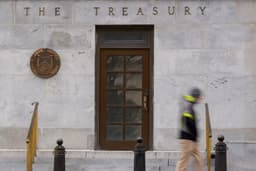
Trump's tariffs were expected to boost the dollar, but recession fears are dragging it down
Impact of Trump's Tariff Plans on the Dollar: Contrary to expectations that President-elect Trump's tariffs would strengthen the U.S. dollar, concerns about a recession have led to a decline in the dollar's value, with the ICE U.S. Dollar Index dropping significantly since the tariffs were announced.
Market Reactions and Currency Trends: While safe-haven currencies like the yen and franc gained against the dollar, more commodity-linked currencies fell. Despite market volatility, experts believe the currency fluctuations do not pose an immediate threat to the economy, as companies are likely to hedge their currency risks conservatively.
Trade with 70% Backtested Accuracy
Analyst Views on UDN


No data
About the author


Trump Eyes Early Replacement for Powell? ETF Strategies to Play


Trump's Frustration with Powell: President Trump is frustrated with Federal Reserve Chair Jerome Powell's cautious approach to interest rates and is considering announcing a successor earlier than expected, despite Powell's term lasting until May 2026.
Market Reactions and Economic Implications: The probability of a rate cut at the Fed's July meeting has increased, which could boost market optimism and favor growth stocks, while the U.S. dollar has weakened due to concerns over Trump's tariffs and skepticism about the Fed's independence.

Gold Surpasses Euro To Become Second-Largest Reserve Asset, Still Far Behind Dollar, ECB Says


Gold Surpasses Euro as Reserve Asset: The euro has lost its status as the second-largest reserve asset globally, with gold now holding that position, driven by increased central bank purchases and record prices amid geopolitical tensions.
Surge in Central Bank Gold Purchases: Central banks have significantly increased their gold holdings, adding over 1,000 tons annually for the past three years, with countries like Türkiye, India, China, and Poland leading the demand to hedge against de-dollarization and economic instability.
Greenback On The Brink: The Dollar ETFs Everyone's Watching
Investor Interest in Dollar ETFs: ETFs tracking the U.S. dollar, such as UUP, UDN, and USDU, are gaining traction as investors respond to a weakening dollar amid global trade tensions and signs of a slowing U.S. economy.
Market Reactions and Sentiment Shift: The dollar has seen its largest decline in over two years, prompting a significant shift in investor sentiment, with options traders going short on the dollar for the first time in five years, indicating a growing bearish outlook.

Trump's tariffs were expected to boost the dollar, but recession fears are dragging it down


Impact of Trump's Tariff Plans on the Dollar: Contrary to expectations that President-elect Trump's tariffs would strengthen the U.S. dollar, concerns about a recession have led to a decline in the dollar's value, with the ICE U.S. Dollar Index dropping significantly since the tariffs were announced.
Market Reactions and Currency Trends: While safe-haven currencies like the yen and franc gained against the dollar, more commodity-linked currencies fell. Despite market volatility, experts believe the currency fluctuations do not pose an immediate threat to the economy, as companies are likely to hedge their currency risks conservatively.

Time to sell the U.S. dollar? Morgan Stanley thinks so

Morgan Stanley's Recommendation: Analysts at Morgan Stanley suggest selling the U.S. dollar as bullish sentiment is already priced in, driven by expectations of stronger economic data and new tariffs from President-elect Trump.
Investment Strategy: The analysts warn that investors may be overestimating the impact of trade policy changes and recommend betting against the dollar by investing in the British pound and Australian dollar, which are less affected by trade tensions.
Citi forecasts upside for the dollar in 2025 and stated $115 for the DXY is a possibility
Citi Research Forecast: Citi Research predicts that the U.S. dollar (DXY) may continue to rally into 2025, potentially reaching $115, although this is considered an extreme scenario and likely short-lived due to trade tensions.
Current DXY Status: The DXY currently trades at $105.77, reflecting a 4.3% increase in 2024, with investors advised to monitor dollar-based ETFs and currency pairs for potential opportunities.
Trump Eyes Early Replacement for Powell? ETF Strategies to Play
Trump's Frustration with Powell: President Trump is frustrated with Federal Reserve Chair Jerome Powell's cautious approach to interest rates and is considering announcing a successor earlier than expected, despite Powell's term lasting until May 2026.
Market Reactions and Economic Implications: The probability of a rate cut at the Fed's July meeting has increased, which could boost market optimism and favor growth stocks, while the U.S. dollar has weakened due to concerns over Trump's tariffs and skepticism about the Fed's independence.
Gold Surpasses Euro To Become Second-Largest Reserve Asset, Still Far Behind Dollar, ECB Says
Gold Surpasses Euro as Reserve Asset: The euro has lost its status as the second-largest reserve asset globally, with gold now holding that position, driven by increased central bank purchases and record prices amid geopolitical tensions.
Surge in Central Bank Gold Purchases: Central banks have significantly increased their gold holdings, adding over 1,000 tons annually for the past three years, with countries like Türkiye, India, China, and Poland leading the demand to hedge against de-dollarization and economic instability.
Greenback On The Brink: The Dollar ETFs Everyone's Watching
Investor Interest in Dollar ETFs: ETFs tracking the U.S. dollar, such as UUP, UDN, and USDU, are gaining traction as investors respond to a weakening dollar amid global trade tensions and signs of a slowing U.S. economy.
Market Reactions and Sentiment Shift: The dollar has seen its largest decline in over two years, prompting a significant shift in investor sentiment, with options traders going short on the dollar for the first time in five years, indicating a growing bearish outlook.
Trump's tariffs were expected to boost the dollar, but recession fears are dragging it down
Impact of Trump's Tariff Plans on the Dollar: Contrary to expectations that President-elect Trump's tariffs would strengthen the U.S. dollar, concerns about a recession have led to a decline in the dollar's value, with the ICE U.S. Dollar Index dropping significantly since the tariffs were announced.
Market Reactions and Currency Trends: While safe-haven currencies like the yen and franc gained against the dollar, more commodity-linked currencies fell. Despite market volatility, experts believe the currency fluctuations do not pose an immediate threat to the economy, as companies are likely to hedge their currency risks conservatively.
Time to sell the U.S. dollar? Morgan Stanley thinks so
Morgan Stanley's Recommendation: Analysts at Morgan Stanley suggest selling the U.S. dollar as bullish sentiment is already priced in, driven by expectations of stronger economic data and new tariffs from President-elect Trump.
Investment Strategy: The analysts warn that investors may be overestimating the impact of trade policy changes and recommend betting against the dollar by investing in the British pound and Australian dollar, which are less affected by trade tensions.
Citi forecasts upside for the dollar in 2025 and stated $115 for the DXY is a possibility
Citi Research Forecast: Citi Research predicts that the U.S. dollar (DXY) may continue to rally into 2025, potentially reaching $115, although this is considered an extreme scenario and likely short-lived due to trade tensions.
Current DXY Status: The DXY currently trades at $105.77, reflecting a 4.3% increase in 2024, with investors advised to monitor dollar-based ETFs and currency pairs for potential opportunities.