Trump Administration Invests in Critical Minerals Sector
Written by Emily J. Thompson, Senior Investment Analyst
Updated: 23h ago
0mins

Should l Buy GM?
Source: CNBC
- Scale of Government Investment: The Trump administration's equity stakes in at least 10 companies, including USA Rare Earth and MP Materials, represent an unprecedented scale aimed at reducing reliance on Chinese rare earths, potentially altering market competition dynamics.
- Legal Risk Concerns: The lack of a clear legal basis for these investments exposes the Trump administration to lawsuits from competitors and political scrutiny during potential regime changes, increasing operational uncertainties for the involved companies.
- Capital Allocation Risks: Government equity stakes raise concerns about capital misallocation, as funds may flow to less competitive companies, which could adversely affect the overall health of the market and investor confidence.
- Corporate Silence: Despite some executives expressing distaste for government intervention, most corporate leaders remain silent, fearing that public opposition could strain relations with the administration and negatively impact shareholder interests.
Trade with 70% Backtested Accuracy
Stop guessing "Should I Buy GM?" and start using high-conviction signals backed by rigorous historical data.
Sign up today to access powerful investing tools and make smarter, data-driven decisions.
Analyst Views on GM
Wall Street analysts forecast GM stock price to fall over the next 12 months. According to Wall Street analysts, the average 1-year price target for GM is 82.06 USD with a low forecast of 48.00 USD and a high forecast of 100.00 USD. However, analyst price targets are subjective and often lag stock prices, so investors should focus on the objective reasons behind analyst rating changes, which better reflect the company's fundamentals.
18 Analyst Rating
16 Buy
1 Hold
1 Sell
Strong Buy
Current: 83.300

Low
48.00
Averages
82.06
High
100.00
Current: 83.300
Low
48.00
Averages
82.06
High
100.00
About GM
General Motors Company designs, builds and sells trucks, crossovers, cars and automobile parts and provides software-enabled services and subscriptions worldwide. The Company's segments include GMNA, GMI, Cruise and GM Financial. Its GM North America (GMNA) and GM International (GMI) develop, manufacture and/or markets vehicles under the Buick, Cadillac, Chevrolet and GMC brands. The Company provides automotive financing services through its General Motors Financial Company, Inc. (GM Financial) segment. Its Cruise segment is engaged in the development and commercialization of autonomous vehicle technology. Its software-enabled services and subscriptions, including OnStar, its advanced driver-assistance systems (ADAS), including Super Cruise driver assistance technology, and its end-to-end software platform. The Company is also focused on investing in electric vehicles (EVs) and AVs, software-enabled services and subscriptions and new business opportunities.
About the author

Emily J. Thompson
Emily J. Thompson, a Chartered Financial Analyst (CFA) with 12 years in investment research, graduated with honors from the Wharton School. Specializing in industrial and technology stocks, she provides in-depth analysis for Intellectia’s earnings and market brief reports.

General Motors Reports Strong Q4 Earnings, Increases Dividend and Buyback

- Strong Performance: Despite challenges such as vehicle affordability and increased competition, General Motors reported fourth-quarter earnings for 2025 that exceeded Wall Street expectations, showcasing its strong brand and technology-driven services.
- Increased Shareholder Returns: GM raised its quarterly dividend to $0.18 per share, yielding approximately 0.8%, and announced a new $6 billion share repurchase authorization, demonstrating the company's firm commitment to returning value to shareholders.
- Massive Buyback Program: Since 2023, GM has announced an impressive $22 billion in share buybacks, significantly reducing the number of outstanding shares and enhancing the earnings power of remaining shares, thereby boosting investor confidence.
- Net Income Loss: Despite a strong fourth quarter, GM faced $7.2 billion in special charges due to realigning EV production capacity, resulting in a net income loss of $3.3 billion; however, management remains optimistic about the sustainability of future performance.
See More

General Motors Increases Dividend and Announces Share Buyback Program
- Dividend Increase: General Motors raised its quarterly dividend by $0.03 to $0.18 per share, resulting in a yield of approximately 0.8%, aimed at boosting investor confidence and rewarding shareholders.
- Share Buyback Program: The company announced a new $6 billion share repurchase program, bringing its total buybacks to $22 billion since 2023, significantly reducing outstanding shares and enhancing the earnings power of remaining shares.
- Earnings Report Highlights: Despite facing $7.2 billion in special charges, GM's adjusted earnings exceeded Wall Street estimates in the fourth quarter, showcasing its strong cash generation capabilities and ongoing market competitiveness.
- Market Reaction: GM's stock surged nearly 9% following the earnings report, reflecting investor confidence in the company's future performance, with management believing that such strong results are sustainable, further driving the dividend and buyback initiatives.
See More

Trump Administration Invests in Critical Minerals Sector

- Scale of Government Investment: The Trump administration's equity stakes in at least 10 companies, including USA Rare Earth and MP Materials, represent an unprecedented scale aimed at reducing reliance on Chinese rare earths, potentially altering market competition dynamics.
- Legal Risk Concerns: The lack of a clear legal basis for these investments exposes the Trump administration to lawsuits from competitors and political scrutiny during potential regime changes, increasing operational uncertainties for the involved companies.
- Capital Allocation Risks: Government equity stakes raise concerns about capital misallocation, as funds may flow to less competitive companies, which could adversely affect the overall health of the market and investor confidence.
- Corporate Silence: Despite some executives expressing distaste for government intervention, most corporate leaders remain silent, fearing that public opposition could strain relations with the administration and negatively impact shareholder interests.
See More
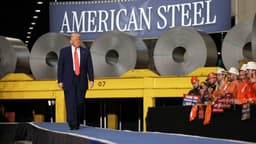
Trump Administration Increases Investments in Critical Minerals


- Surge in Investments: The Trump administration has made unprecedented equity investments in at least 10 companies over the past year, including critical minerals and chipmakers, aiming to build a domestic supply chain and reduce reliance on China, indicating a proactive government role in economic strategy.
- U.S. Steel Golden Share: The administration secured a golden share in U.S. Steel as a condition for approving Nippon Steel's acquisition, granting the president veto power over key business decisions, which ensures stability and growth in the U.S. steel industry, reflecting direct government intervention in vital sectors.
- Strategic Deal with MP Materials: The Defense Department struck a landmark deal with MP Materials, investing $400 million in preferred stock with rights to purchase additional shares, positioning the Pentagon as the largest single shareholder and further solidifying U.S. dominance in the rare earth mining sector.
- L3Harris and Defense Partnership: L3Harris announced a proposed partnership with the U.S. government, where the Pentagon will invest $1 billion in its rocket motor business, with plans for an IPO in the second half of 2026, allowing the Pentagon's investment to convert into common equity, enhancing the capital base of the defense industry.
See More

Shifts in Automotive Advertising During Super Bowl


- Declining Ad Spend: According to iSpot, automakers' share of Super Bowl ad minutes has plummeted from 40% in 2012 to just 7% by 2025, reflecting tightening budgets and uncertainty in the automotive sector, which diminishes brand visibility and competitive edge.
- Super Bowl Advertising Strategy: With only General Motors, Toyota, and Volkswagen expected to air ads totaling around two minutes, this indicates that the automotive industry is still seeking effective advertising strategies amidst high costs and market volatility to ensure a return on investment.
- Cost Pressure on Ads: The average cost for a 30-second Super Bowl ad is $8 million, leading many automakers to opt out of participation, reallocating their advertising budgets to other channels, which impacts their overall market promotion strategies.
- Future Advertising Directions: Automakers are shifting towards more sports and streaming advertisements; despite the reduction in Super Bowl ads, they still account for 60% of spending on live sports, demonstrating adaptability and innovation in their advertising approaches.
See More

Volkswagen Adjusts Electric Vehicle Strategy Amid Market Challenges

- EV Plans Scaling Back: Volkswagen has reinvested $64 billion into developing new gas-powered vehicles in 2024 and postponed its next-generation EV architecture to the late 2020s, indicating a cautious approach to the EV market while still exploring its future.
- Consumer Confidence Decline: According to AAA, the percentage of consumers likely to buy a fully electric vehicle has dropped from 25% in 2022 to 16% in 2025, while those unlikely to purchase has risen from 51% to 63%, reflecting growing concerns about EVs, particularly regarding range anxiety and high repair costs.
- Extended-Range EV Exploration: Volkswagen is developing extended-range EVs similar to plug-in hybrids, which utilize a small gas engine as a generator to alleviate range anxiety and reduce battery costs, potentially attracting more prospective buyers.
- Strong Financial Performance: Despite challenges, Volkswagen has achieved a 4.25% compound annual growth rate in revenue over the past decade, and its current P/E ratio of 7.6 is more attractive compared to competitors like BMW and Toyota, indicating long-term investment value in the EV market.
See More
General Motors Reports Strong Q4 Earnings, Increases Dividend and Buyback
- Strong Performance: Despite challenges such as vehicle affordability and increased competition, General Motors reported fourth-quarter earnings for 2025 that exceeded Wall Street expectations, showcasing its strong brand and technology-driven services.
- Increased Shareholder Returns: GM raised its quarterly dividend to $0.18 per share, yielding approximately 0.8%, and announced a new $6 billion share repurchase authorization, demonstrating the company's firm commitment to returning value to shareholders.
- Massive Buyback Program: Since 2023, GM has announced an impressive $22 billion in share buybacks, significantly reducing the number of outstanding shares and enhancing the earnings power of remaining shares, thereby boosting investor confidence.
- Net Income Loss: Despite a strong fourth quarter, GM faced $7.2 billion in special charges due to realigning EV production capacity, resulting in a net income loss of $3.3 billion; however, management remains optimistic about the sustainability of future performance.
See More
General Motors Increases Dividend and Announces Share Buyback Program
- Dividend Increase: General Motors raised its quarterly dividend by $0.03 to $0.18 per share, resulting in a yield of approximately 0.8%, aimed at boosting investor confidence and rewarding shareholders.
- Share Buyback Program: The company announced a new $6 billion share repurchase program, bringing its total buybacks to $22 billion since 2023, significantly reducing outstanding shares and enhancing the earnings power of remaining shares.
- Earnings Report Highlights: Despite facing $7.2 billion in special charges, GM's adjusted earnings exceeded Wall Street estimates in the fourth quarter, showcasing its strong cash generation capabilities and ongoing market competitiveness.
- Market Reaction: GM's stock surged nearly 9% following the earnings report, reflecting investor confidence in the company's future performance, with management believing that such strong results are sustainable, further driving the dividend and buyback initiatives.
See More
Trump Administration Invests in Critical Minerals Sector
- Scale of Government Investment: The Trump administration's equity stakes in at least 10 companies, including USA Rare Earth and MP Materials, represent an unprecedented scale aimed at reducing reliance on Chinese rare earths, potentially altering market competition dynamics.
- Legal Risk Concerns: The lack of a clear legal basis for these investments exposes the Trump administration to lawsuits from competitors and political scrutiny during potential regime changes, increasing operational uncertainties for the involved companies.
- Capital Allocation Risks: Government equity stakes raise concerns about capital misallocation, as funds may flow to less competitive companies, which could adversely affect the overall health of the market and investor confidence.
- Corporate Silence: Despite some executives expressing distaste for government intervention, most corporate leaders remain silent, fearing that public opposition could strain relations with the administration and negatively impact shareholder interests.
See More
Trump Administration Increases Investments in Critical Minerals
- Surge in Investments: The Trump administration has made unprecedented equity investments in at least 10 companies over the past year, including critical minerals and chipmakers, aiming to build a domestic supply chain and reduce reliance on China, indicating a proactive government role in economic strategy.
- U.S. Steel Golden Share: The administration secured a golden share in U.S. Steel as a condition for approving Nippon Steel's acquisition, granting the president veto power over key business decisions, which ensures stability and growth in the U.S. steel industry, reflecting direct government intervention in vital sectors.
- Strategic Deal with MP Materials: The Defense Department struck a landmark deal with MP Materials, investing $400 million in preferred stock with rights to purchase additional shares, positioning the Pentagon as the largest single shareholder and further solidifying U.S. dominance in the rare earth mining sector.
- L3Harris and Defense Partnership: L3Harris announced a proposed partnership with the U.S. government, where the Pentagon will invest $1 billion in its rocket motor business, with plans for an IPO in the second half of 2026, allowing the Pentagon's investment to convert into common equity, enhancing the capital base of the defense industry.
See More
Shifts in Automotive Advertising During Super Bowl
- Declining Ad Spend: According to iSpot, automakers' share of Super Bowl ad minutes has plummeted from 40% in 2012 to just 7% by 2025, reflecting tightening budgets and uncertainty in the automotive sector, which diminishes brand visibility and competitive edge.
- Super Bowl Advertising Strategy: With only General Motors, Toyota, and Volkswagen expected to air ads totaling around two minutes, this indicates that the automotive industry is still seeking effective advertising strategies amidst high costs and market volatility to ensure a return on investment.
- Cost Pressure on Ads: The average cost for a 30-second Super Bowl ad is $8 million, leading many automakers to opt out of participation, reallocating their advertising budgets to other channels, which impacts their overall market promotion strategies.
- Future Advertising Directions: Automakers are shifting towards more sports and streaming advertisements; despite the reduction in Super Bowl ads, they still account for 60% of spending on live sports, demonstrating adaptability and innovation in their advertising approaches.
See More
Volkswagen Adjusts Electric Vehicle Strategy Amid Market Challenges
- EV Plans Scaling Back: Volkswagen has reinvested $64 billion into developing new gas-powered vehicles in 2024 and postponed its next-generation EV architecture to the late 2020s, indicating a cautious approach to the EV market while still exploring its future.
- Consumer Confidence Decline: According to AAA, the percentage of consumers likely to buy a fully electric vehicle has dropped from 25% in 2022 to 16% in 2025, while those unlikely to purchase has risen from 51% to 63%, reflecting growing concerns about EVs, particularly regarding range anxiety and high repair costs.
- Extended-Range EV Exploration: Volkswagen is developing extended-range EVs similar to plug-in hybrids, which utilize a small gas engine as a generator to alleviate range anxiety and reduce battery costs, potentially attracting more prospective buyers.
- Strong Financial Performance: Despite challenges, Volkswagen has achieved a 4.25% compound annual growth rate in revenue over the past decade, and its current P/E ratio of 7.6 is more attractive compared to competitors like BMW and Toyota, indicating long-term investment value in the EV market.
See More