JSAIY vs. WMT: Which Stock is the Better Buy for Value Investors Right Now?
Written by Emily J. Thompson, Senior Investment Analyst
Updated: Sep 24 2025
0mins
Should l Buy WMT?
Source: NASDAQ.COM
Comparison of J. Sainsbury PLC and Walmart: J. Sainsbury PLC (JSAIY) has a stronger Zacks Rank (#1) compared to Walmart (WMT) (#3), indicating a better earnings outlook for JSAIY, making it a more attractive option for value investors.
Valuation Metrics: JSAIY shows favorable valuation metrics with a forward P/E ratio of 13.80 and a P/B ratio of 1.24, while WMT has a higher forward P/E of 39.39 and a P/B of 8.47, contributing to JSAIY's superior Value grade of A versus WMT's C.
Trade with 70% Backtested Accuracy
Stop guessing "Should I Buy WMT?" and start using high-conviction signals backed by rigorous historical data.
Sign up today to access powerful investing tools and make smarter, data-driven decisions.
Analyst Views on WMT
Wall Street analysts forecast WMT stock price to fall over the next 12 months. According to Wall Street analysts, the average 1-year price target for WMT is 125.75 USD with a low forecast of 119.00 USD and a high forecast of 136.00 USD. However, analyst price targets are subjective and often lag stock prices, so investors should focus on the objective reasons behind analyst rating changes, which better reflect the company's fundamentals.
26 Analyst Rating
25 Buy
1 Hold
0 Sell
Strong Buy
Current: 126.940

Low
119.00
Averages
125.75
High
136.00
Current: 126.940
Low
119.00
Averages
125.75
High
136.00
About WMT
Walmart Inc. is a technology-powered omnichannel retailer. The Company is engaged in the operation of retail and wholesale stores and clubs, as well as eCommerce Websites and mobile applications, located throughout the United States (U.S.), Africa, Canada, Central America, Chile, China, India and Mexico. It operates in three reportable segments: Walmart U.S., Walmart International and Sam's Club U.S. The Walmart U.S. segment includes the Company's mass merchandising concept in the U.S., as well as eCommerce, which includes omni-channel initiatives and certain other business offerings such as advertising services. The Walmart International segment consists of the Company's operations outside of the U.S. through its subsidiaries, as well as eCommerce and omni-channel initiatives. The Sam's Club U.S. segment includes the warehouse membership clubs in the U.S., as well as samsclub.com and omni-channel initiatives.
About the author

Emily J. Thompson
Emily J. Thompson, a Chartered Financial Analyst (CFA) with 12 years in investment research, graduated with honors from the Wharton School. Specializing in industrial and technology stocks, she provides in-depth analysis for Intellectia’s earnings and market brief reports.

Kroger Appoints Former Walmart Executive as CEO


- Executive Change: Kroger has appointed former Walmart executive Greg Foran as its new CEO, aiming to enhance corporate governance and operational efficiency, which is expected to bring new leadership and strategic direction to the company.
- Stock Reaction: Following this announcement, Kroger's shares rose approximately 6% in premarket trading, indicating market confidence and expectations for the new CEO, which could improve the company's performance in a highly competitive retail landscape.
- Background Analysis: Foran previously served as CEO of Walmart's U.S. operations, where he successfully drove operational transformations; analysts believe his experience will help Kroger tackle current challenges of weak consumer spending and increasing competition.
- Strategic Challenges: Under Foran's leadership, Kroger faces pressure from competitors like Walmart while needing to address the decline in consumer spending on essentials, which will test Foran's leadership capabilities and strategic execution.
See More

U.S. Stock Futures Decline Amid Cautious Market Sentiment


- Market Sentiment Dips: Following a strong rebound on Friday, U.S. stock futures declined on Monday, reflecting cautious market sentiment amid concerns over upcoming economic data, particularly regarding inflation and labor market changes.
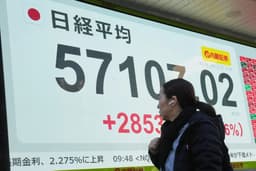
- Japanese Market Surge: The Nikkei 225 index broke the 57,000-point barrier for the first time, driven by Prime Minister Sanae Takaichi's landslide election victory and a high-profile endorsement from Trump, indicating a robust recovery in Japan that may attract more international investors.
- Stable Treasury Yields: The 10-year Treasury bond yield stood at 4.22%, while the two-year yield was at 3.50%, suggesting market expectations for the Federal Reserve's future interest rate policy are stabilizing, with an 84.2% likelihood of rates remaining unchanged in March.
- Stock Dynamics: FedEx shares rose 0.47% after announcing plans to acquire InPost for €7.8 billion, showcasing a proactive business expansion strategy, while ON Semiconductor fell 1.38% as analysts expect quarterly earnings to miss expectations.
See More

Movers: Hims & Hers, Novo Nordisk, Micron, Kroger, STMicroelectronics, Nvidia, and Others

- Stock Market Trends: Stock futures were declining on Monday as investors expressed concerns about the sustainability of a recent relief rally.
- Investor Sentiment: There is a prevailing uncertainty among investors regarding the market's ability to maintain upward momentum following last week's gains.
See More
Kroger's CEO Transition Sparks Stock Surge

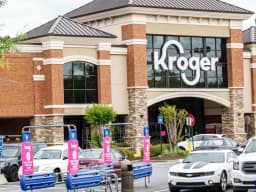
- Stock Surge: Kroger's shares jumped nearly 3% in pre-market trading on Monday following reports that former Walmart executive Greg Foran is being considered for the CEO position, indicating a positive market reaction to the leadership change.
- Historical Performance: The stock gained over 7% last week, marking its best weekly performance since June 2025, and is up about 8% year-to-date, on track for a ninth consecutive year of gains if this momentum continues.
- Management Transition: Kroger announced last year that CEO Rodney McMullen resigned due to personal conduct issues, leading the board to appoint Ronald Sargent as chairman and interim CEO, reflecting adjustments in the company's governance structure.
- Market Sentiment Shift: According to Stocktwits data, retail sentiment on Kroger has shifted from 'Neutral' a month ago to 'Bearish', indicating a decline in investor confidence regarding the company's future, despite a 3% increase in stock price over the past 12 months.
See More
Comparison of FSTA and RSPS Consumer Staples ETFs
- Cost Comparison: FSTA's expense ratio is just 0.08%, significantly lower than RSPS's 0.40%, meaning investors pay only $8 annually for every $10,000 invested in FSTA compared to $40 for RSPS, greatly reducing investment costs.
- Performance Metrics: As of February 3, 2026, FSTA boasts a 1-year return of 8.34%, surpassing RSPS's 7.01%, indicating that FSTA has provided higher returns over the past year, potentially attracting yield-seeking investors.
- Risk Assessment: Over the past five years, FSTA's maximum drawdown stands at 16.57%, lower than RSPS's 18.61%, showcasing FSTA's relative stability during market fluctuations, which may appeal to risk-averse investors.
- Holding Structure: FSTA holds 96 stocks primarily focused on consumer defensive names, while RSPS equally weights 36 stocks, leading to a strategy where FSTA may achieve higher returns when top companies perform well but also faces greater volatility risk.
See More

Comparison Analysis of FSTA and RSPS ETFs
- Expense Ratio Advantage: FSTA boasts a significantly lower expense ratio of 0.08% compared to RSPS's 0.40%, meaning investors pay only $8 annually for every $10,000 invested in FSTA versus $40 for RSPS, enhancing FSTA's cost-effectiveness for long-term investors.
- Return Performance Discrepancy: While RSPS offers a slightly higher dividend yield, FSTA has outperformed in one-year and five-year total returns, indicating that FSTA may provide better capital appreciation opportunities amid market fluctuations.
- Holdings Structure Comparison: FSTA holds 96 stocks, primarily concentrated in large consumer brands like Costco, Walmart, and Procter & Gamble, which account for nearly 37% of its assets, whereas RSPS evenly distributes its 36 holdings, ensuring a balanced risk and return profile.
- Investment Strategy Choice: FSTA's concentrated holdings strategy may yield excess returns when large brands perform well, but it also poses greater risks during market downturns, while RSPS's equal-weight strategy helps mitigate single-stock volatility, making it suitable for risk-averse investors.
See More
Kroger Appoints Former Walmart Executive as CEO
- Executive Change: Kroger has appointed former Walmart executive Greg Foran as its new CEO, aiming to enhance corporate governance and operational efficiency, which is expected to bring new leadership and strategic direction to the company.
- Stock Reaction: Following this announcement, Kroger's shares rose approximately 6% in premarket trading, indicating market confidence and expectations for the new CEO, which could improve the company's performance in a highly competitive retail landscape.
- Background Analysis: Foran previously served as CEO of Walmart's U.S. operations, where he successfully drove operational transformations; analysts believe his experience will help Kroger tackle current challenges of weak consumer spending and increasing competition.
- Strategic Challenges: Under Foran's leadership, Kroger faces pressure from competitors like Walmart while needing to address the decline in consumer spending on essentials, which will test Foran's leadership capabilities and strategic execution.
See More
U.S. Stock Futures Decline Amid Cautious Market Sentiment
- Market Sentiment Dips: Following a strong rebound on Friday, U.S. stock futures declined on Monday, reflecting cautious market sentiment amid concerns over upcoming economic data, particularly regarding inflation and labor market changes.
- Japanese Market Surge: The Nikkei 225 index broke the 57,000-point barrier for the first time, driven by Prime Minister Sanae Takaichi's landslide election victory and a high-profile endorsement from Trump, indicating a robust recovery in Japan that may attract more international investors.
- Stable Treasury Yields: The 10-year Treasury bond yield stood at 4.22%, while the two-year yield was at 3.50%, suggesting market expectations for the Federal Reserve's future interest rate policy are stabilizing, with an 84.2% likelihood of rates remaining unchanged in March.
- Stock Dynamics: FedEx shares rose 0.47% after announcing plans to acquire InPost for €7.8 billion, showcasing a proactive business expansion strategy, while ON Semiconductor fell 1.38% as analysts expect quarterly earnings to miss expectations.
See More
Movers: Hims & Hers, Novo Nordisk, Micron, Kroger, STMicroelectronics, Nvidia, and Others
- Stock Market Trends: Stock futures were declining on Monday as investors expressed concerns about the sustainability of a recent relief rally.
- Investor Sentiment: There is a prevailing uncertainty among investors regarding the market's ability to maintain upward momentum following last week's gains.
See More
Kroger's CEO Transition Sparks Stock Surge
- Stock Surge: Kroger's shares jumped nearly 3% in pre-market trading on Monday following reports that former Walmart executive Greg Foran is being considered for the CEO position, indicating a positive market reaction to the leadership change.
- Historical Performance: The stock gained over 7% last week, marking its best weekly performance since June 2025, and is up about 8% year-to-date, on track for a ninth consecutive year of gains if this momentum continues.
- Management Transition: Kroger announced last year that CEO Rodney McMullen resigned due to personal conduct issues, leading the board to appoint Ronald Sargent as chairman and interim CEO, reflecting adjustments in the company's governance structure.
- Market Sentiment Shift: According to Stocktwits data, retail sentiment on Kroger has shifted from 'Neutral' a month ago to 'Bearish', indicating a decline in investor confidence regarding the company's future, despite a 3% increase in stock price over the past 12 months.
See More
Comparison of FSTA and RSPS Consumer Staples ETFs
- Cost Comparison: FSTA's expense ratio is just 0.08%, significantly lower than RSPS's 0.40%, meaning investors pay only $8 annually for every $10,000 invested in FSTA compared to $40 for RSPS, greatly reducing investment costs.
- Performance Metrics: As of February 3, 2026, FSTA boasts a 1-year return of 8.34%, surpassing RSPS's 7.01%, indicating that FSTA has provided higher returns over the past year, potentially attracting yield-seeking investors.
- Risk Assessment: Over the past five years, FSTA's maximum drawdown stands at 16.57%, lower than RSPS's 18.61%, showcasing FSTA's relative stability during market fluctuations, which may appeal to risk-averse investors.
- Holding Structure: FSTA holds 96 stocks primarily focused on consumer defensive names, while RSPS equally weights 36 stocks, leading to a strategy where FSTA may achieve higher returns when top companies perform well but also faces greater volatility risk.
See More
Comparison Analysis of FSTA and RSPS ETFs
- Expense Ratio Advantage: FSTA boasts a significantly lower expense ratio of 0.08% compared to RSPS's 0.40%, meaning investors pay only $8 annually for every $10,000 invested in FSTA versus $40 for RSPS, enhancing FSTA's cost-effectiveness for long-term investors.
- Return Performance Discrepancy: While RSPS offers a slightly higher dividend yield, FSTA has outperformed in one-year and five-year total returns, indicating that FSTA may provide better capital appreciation opportunities amid market fluctuations.
- Holdings Structure Comparison: FSTA holds 96 stocks, primarily concentrated in large consumer brands like Costco, Walmart, and Procter & Gamble, which account for nearly 37% of its assets, whereas RSPS evenly distributes its 36 holdings, ensuring a balanced risk and return profile.
- Investment Strategy Choice: FSTA's concentrated holdings strategy may yield excess returns when large brands perform well, but it also poses greater risks during market downturns, while RSPS's equal-weight strategy helps mitigate single-stock volatility, making it suitable for risk-averse investors.
See More