Soligenix Announces Formation of European Medical Advisory Board for Cutaneous T-Cell Lymphoma
Phase 3 Clinical Study Announcement: Soligenix, Inc. is set to initiate a confirmatory Phase 3 clinical study of HyBryte™ (synthetic hypericin) for treating early-stage cutaneous T-cell lymphoma (CTCL) in late 2024, following positive feedback from the European Medicines Agency on its study design.
Medical Advisory Board Formation: The company has established a European Medical Advisory Board comprising leading CTCL experts to provide strategic guidance for the upcoming study, which aims to enroll approximately 80 patients across the U.S. and Europe, with results expected by mid-2026.
Trade with 70% Backtested Accuracy
Analyst Views on SNGX

About SNGX
About the author

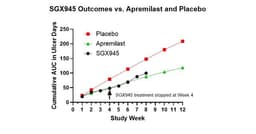
Soligenix Publishes Positive Phase 2a Results for SGX945 in Behçet's Disease Treatment

- Clinical Trial Results: Soligenix's SGX945 demonstrated significant improvement in 7 out of 8 patients in a Phase 2a trial for Behçet's Disease, indicating potential enduring effects after 4 weeks of treatment, which could enhance patient quality of life.
- Efficacy Comparison: After 4 weeks, the SGX945 group showed a 40% improvement relative to placebo, comparable to the 37% improvement seen with the approved drug apremilast, suggesting SGX945's competitive edge in the market.
- Patient Feedback: Patients reported reduced duration and number of oral ulcers during treatment, with SGX945 showing no treatment-related adverse events, indicating strong tolerability and potential for broader patient adoption.
- Future Development Plans: Soligenix intends to reformulate SGX945 for home-based treatment via subcutaneous injection, aiming to expand its application in innate immune-related inflammatory conditions, thereby enhancing its market competitiveness.

Soligenix Expands Psoriasis Trial, Revealing Improved Results with New Gel
Trial Results: Soligenix, Inc. announced extended results from its Phase 2a trial of SGX302 (synthetic hypericin) for mild-to-moderate psoriasis, showing improvements in various clinical measures with a new gel formulation that enhances application ease.
Patient Tolerance: The SGX302 gel therapy was well tolerated by all patients, with no drug-related adverse events reported, and one patient achieved a significant improvement in their psoriasis status.
Comparative Outcomes: The results from the gel formulation were comparable to or improved upon those from the previous ointment formulation, indicating effective treatment potential for psoriasis lesions.
Stock Performance: Following the announcement, Soligenix's stock experienced a decline of 21.05%, trading at $1.21.

Soligenix Reports Clinical Success of Optimized SGX302 Gel for Psoriasis Treatment
- Trial Expansion: Soligenix has enrolled four additional patients in its Phase 2a trial of SGX302 (synthetic hypericin) for mild-to-moderate psoriasis, utilizing an optimized gel formulation over an 18-week treatment period, with all patients well tolerated and no drug-related adverse events reported.
- Efficacy Assessment: Among the three evaluable patients, the average PASI score improved by over 50%, with one patient achieving an “Almost Clear” disease status, indicating that the new formulation shows comparable or improved efficacy relative to the previous ointment formulation.
- Market Potential: With an estimated 60-125 million psoriasis patients globally and a treatment market valued at approximately $15 billion in 2020, projected to reach $40 billion by 2027, the success of SGX302 could present significant market opportunities for the company.
- Future Directions: Soligenix plans to continue advancing SGX302 for psoriasis while preparing for the confirmatory Phase 3 trial of HyBryte™ in early-stage cutaneous T-cell lymphoma, with topline results expected in the second half of 2026.

Soligenix Reaches Enrollment Target for Interim Analysis in Phase 3 Clinical Trial of HyBryte™ for Cutaneous T-Cell Lymphoma Treatment
Study Enrollment and Interim Analysis: Soligenix, Inc. has completed the enrollment of 50 patients in its Phase 3 FLASH 2 study evaluating HyBryte™ for cutaneous T-cell lymphoma (CTCL), with an interim analysis expected in Q2 2026. The study aims to confirm the efficacy of HyBryte™, building on previous successful trials.
Response Rates and Safety Profile: The overall blinded study response rate to date is 48%, significantly exceeding the anticipated 25%. The safety profile of HyBryte™ remains benign, consistent with earlier studies, and is expected to demonstrate efficacy over an extended treatment period.
Mechanism of Action and Treatment Approach: HyBryte™ utilizes synthetic hypericin activated by visible light, offering a safer alternative to traditional therapies that carry risks of DNA damage and secondary malignancies. This treatment approach targets malignant T-cells while minimizing systemic absorption.
Regulatory Path and Future Prospects: Following the first Phase 3 study, regulatory bodies require a second successful trial for marketing approval. Soligenix is in discussions with the FDA regarding study design modifications, while also pursuing additional studies to support HyBryte™'s efficacy and safety in treating CTCL.

Soligenix Announces Recent Accomplishments and Third Quarter 2025 Financial Results
Company Overview: Soligenix, Inc. is a late-stage biopharmaceutical company focused on developing treatments for rare diseases, with key products including HyBryte™ for cutaneous T-cell lymphoma and SGX302 for psoriasis.
Recent Accomplishments: The company reported no safety concerns from the first Data Monitoring Committee meeting for HyBryte™ and announced updates to its Medical Advisory Boards in the U.S. and Europe to guide clinical development.
Financial Results: For the quarter ending September 30, 2025, Soligenix reported a net loss of $2.5 million, with approximately $10.5 million in cash, indicating a sufficient operating runway through 2026.
Future Outlook: The company is focused on upcoming milestones, including top-line results from clinical trials and exploring strategic options for funding and partnerships to advance its late-stage pipeline.
Soligenix Reaches Key Safety Milestone in Phase 3 Clinical Trial of HyBryte™ for Treating Cutaneous T-Cell Lymphoma
Study Progress: Soligenix, Inc. announced that the Data Monitoring Committee for its Phase 3 study of HyBryte™ in treating cutaneous T-cell lymphoma (CTCL) found no safety concerns, with an interim efficacy analysis planned for 1H2026 and an enrollment update expected in 4Q2025.
Treatment Efficacy: HyBryte™ has shown promising efficacy and safety in previous studies, with a significant treatment response observed in patients with early-stage CTCL, offering a potential new option for patients with limited treatment alternatives.
Soligenix Publishes Positive Phase 2a Results for SGX945 in Behçet's Disease Treatment
- Clinical Trial Results: Soligenix's SGX945 demonstrated significant improvement in 7 out of 8 patients in a Phase 2a trial for Behçet's Disease, indicating potential enduring effects after 4 weeks of treatment, which could enhance patient quality of life.
- Efficacy Comparison: After 4 weeks, the SGX945 group showed a 40% improvement relative to placebo, comparable to the 37% improvement seen with the approved drug apremilast, suggesting SGX945's competitive edge in the market.
- Patient Feedback: Patients reported reduced duration and number of oral ulcers during treatment, with SGX945 showing no treatment-related adverse events, indicating strong tolerability and potential for broader patient adoption.
- Future Development Plans: Soligenix intends to reformulate SGX945 for home-based treatment via subcutaneous injection, aiming to expand its application in innate immune-related inflammatory conditions, thereby enhancing its market competitiveness.
Soligenix Expands Psoriasis Trial, Revealing Improved Results with New Gel
Trial Results: Soligenix, Inc. announced extended results from its Phase 2a trial of SGX302 (synthetic hypericin) for mild-to-moderate psoriasis, showing improvements in various clinical measures with a new gel formulation that enhances application ease.
Patient Tolerance: The SGX302 gel therapy was well tolerated by all patients, with no drug-related adverse events reported, and one patient achieved a significant improvement in their psoriasis status.
Comparative Outcomes: The results from the gel formulation were comparable to or improved upon those from the previous ointment formulation, indicating effective treatment potential for psoriasis lesions.
Stock Performance: Following the announcement, Soligenix's stock experienced a decline of 21.05%, trading at $1.21.
Soligenix Reports Clinical Success of Optimized SGX302 Gel for Psoriasis Treatment
- Trial Expansion: Soligenix has enrolled four additional patients in its Phase 2a trial of SGX302 (synthetic hypericin) for mild-to-moderate psoriasis, utilizing an optimized gel formulation over an 18-week treatment period, with all patients well tolerated and no drug-related adverse events reported.
- Efficacy Assessment: Among the three evaluable patients, the average PASI score improved by over 50%, with one patient achieving an “Almost Clear” disease status, indicating that the new formulation shows comparable or improved efficacy relative to the previous ointment formulation.
- Market Potential: With an estimated 60-125 million psoriasis patients globally and a treatment market valued at approximately $15 billion in 2020, projected to reach $40 billion by 2027, the success of SGX302 could present significant market opportunities for the company.
- Future Directions: Soligenix plans to continue advancing SGX302 for psoriasis while preparing for the confirmatory Phase 3 trial of HyBryte™ in early-stage cutaneous T-cell lymphoma, with topline results expected in the second half of 2026.
Soligenix Reaches Enrollment Target for Interim Analysis in Phase 3 Clinical Trial of HyBryte™ for Cutaneous T-Cell Lymphoma Treatment
Study Enrollment and Interim Analysis: Soligenix, Inc. has completed the enrollment of 50 patients in its Phase 3 FLASH 2 study evaluating HyBryte™ for cutaneous T-cell lymphoma (CTCL), with an interim analysis expected in Q2 2026. The study aims to confirm the efficacy of HyBryte™, building on previous successful trials.
Response Rates and Safety Profile: The overall blinded study response rate to date is 48%, significantly exceeding the anticipated 25%. The safety profile of HyBryte™ remains benign, consistent with earlier studies, and is expected to demonstrate efficacy over an extended treatment period.
Mechanism of Action and Treatment Approach: HyBryte™ utilizes synthetic hypericin activated by visible light, offering a safer alternative to traditional therapies that carry risks of DNA damage and secondary malignancies. This treatment approach targets malignant T-cells while minimizing systemic absorption.
Regulatory Path and Future Prospects: Following the first Phase 3 study, regulatory bodies require a second successful trial for marketing approval. Soligenix is in discussions with the FDA regarding study design modifications, while also pursuing additional studies to support HyBryte™'s efficacy and safety in treating CTCL.
Soligenix Announces Recent Accomplishments and Third Quarter 2025 Financial Results
Company Overview: Soligenix, Inc. is a late-stage biopharmaceutical company focused on developing treatments for rare diseases, with key products including HyBryte™ for cutaneous T-cell lymphoma and SGX302 for psoriasis.
Recent Accomplishments: The company reported no safety concerns from the first Data Monitoring Committee meeting for HyBryte™ and announced updates to its Medical Advisory Boards in the U.S. and Europe to guide clinical development.
Financial Results: For the quarter ending September 30, 2025, Soligenix reported a net loss of $2.5 million, with approximately $10.5 million in cash, indicating a sufficient operating runway through 2026.
Future Outlook: The company is focused on upcoming milestones, including top-line results from clinical trials and exploring strategic options for funding and partnerships to advance its late-stage pipeline.
Soligenix Reaches Key Safety Milestone in Phase 3 Clinical Trial of HyBryte™ for Treating Cutaneous T-Cell Lymphoma
Study Progress: Soligenix, Inc. announced that the Data Monitoring Committee for its Phase 3 study of HyBryte™ in treating cutaneous T-cell lymphoma (CTCL) found no safety concerns, with an interim efficacy analysis planned for 1H2026 and an enrollment update expected in 4Q2025.
Treatment Efficacy: HyBryte™ has shown promising efficacy and safety in previous studies, with a significant treatment response observed in patients with early-stage CTCL, offering a potential new option for patients with limited treatment alternatives.