Significant Inflows Observed in ETF for CGDV, SBUX, CARR, HAL
Written by Emily J. Thompson, Senior Investment Analyst
Updated: Dec 15 2025
0mins


Should l Buy SBUX?
Source: NASDAQ.COM
CGDV Share Price Analysis: CGDV's share price is currently at $43.42, with a 52-week low of $30.94 and a high of $43.93, indicating a relatively stable position within its trading range.
Understanding ETFs: Exchange-traded funds (ETFs) function similarly to stocks, where investors buy and sell "units" that can be created or destroyed based on demand, impacting the underlying assets.
Monitoring ETF Flows: Weekly monitoring of shares outstanding helps identify ETFs with significant inflows (new units created) or outflows (units destroyed), which can affect the individual components held within those ETFs.
Disclaimer on Views: The opinions expressed in the article are those of the author and do not necessarily represent the views of Nasdaq, Inc.
Trade with 70% Backtested Accuracy
Stop guessing "Should I Buy SBUX?" and start using high-conviction signals backed by rigorous historical data.
Sign up today to access powerful investing tools and make smarter, data-driven decisions.
Analyst Views on SBUX
Wall Street analysts forecast SBUX stock price to rise over the next 12 months. According to Wall Street analysts, the average 1-year price target for SBUX is 96.12 USD with a low forecast of 59.00 USD and a high forecast of 115.00 USD. However, analyst price targets are subjective and often lag stock prices, so investors should focus on the objective reasons behind analyst rating changes, which better reflect the company's fundamentals.
21 Analyst Rating
12 Buy
7 Hold
2 Sell
Moderate Buy
Current: 96.070

Low
59.00
Averages
96.12
High
115.00
Current: 96.070
Low
59.00
Averages
96.12
High
115.00
About SBUX
Starbucks Corporations is a roaster, marketer, and retailer of specialty coffee globally. Its North America segment includes the United States and Canada. Its International segment includes China, Japan, Asia Pacific, Europe, Middle East and Africa, Latin America, and the Caribbean. Its North America and International segments include both Company-operated and licensed stores. The Channel Development segment includes roasted whole bean and ground coffees, Starbucks-branded single-serve products, a variety of ready-to-drink beverages, such as Frappuccino and Starbucks Doubleshot, foodservice products, and other branded products sold outside the Company-operated and licensed stores. A large portion of its Channel Development business operates under a licensed model of the Global Coffee Alliance with Nestle, while its global ready-to-drink businesses operate under collaborative relationships with PepsiCo, Inc., Tingyi-Ashi Beverages Holding Co., Ltd., Arla Foods amba, Nestle, and others.
About the author

Emily J. Thompson
Emily J. Thompson, a Chartered Financial Analyst (CFA) with 12 years in investment research, graduated with honors from the Wharton School. Specializing in industrial and technology stocks, she provides in-depth analysis for Intellectia’s earnings and market brief reports.
Luckin Coffee's Global Expansion and Market Performance

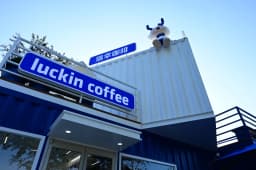
- Market Share Growth: Luckin Coffee has reached 30,000 stores in China, becoming the largest coffee chain and surpassing Starbucks, reflecting its strong performance in the rapidly growing coffee market.
- Profitability Improvement: Luckin has been profitable for the last six quarters, with expected net profit growth of at least 20% annually, while Starbucks has seen a slowdown in profit growth, showcasing Luckin's competitive edge.
- Retail Sentiment Shift: According to Stocktwits data, retail sentiment on Luckin surged from 'bullish' to 'extremely bullish', while Starbucks is in 'bearish' territory, indicating a significant increase in investor confidence in Luckin.
- Overseas Market Expansion: Luckin is rapidly expanding into overseas markets such as Singapore, Malaysia, and the United States to capitalize on the growing demand for its coffee offerings, further solidifying its market position.
See More

Japan's LDP Secures Overwhelming Election Victory


- Election Impact: Japan's Prime Minister Sanae Takaichi and her ruling LDP secured a supermajority in the election, controlling over two-thirds of the Lower House, which allows her to freely pursue an agenda of increased spending and suspension of certain food taxes, likely stimulating economic growth further.
- Market Surge: Following the election results, Japanese stocks reached a record high, with the yen strengthening to 156.88 per dollar, reflecting renewed investor confidence and indicating positive market expectations regarding Takaichi's policies.
- U.S. Market Rebound: Major U.S. indexes rebounded post-election, with the S&P 500 rising 1.97% and the Nasdaq Composite climbing 2.18%, driven by strong performances from tech stocks like Nvidia and Oracle, which bolstered global investor confidence.
- Private Credit Concerns: The private credit market faces renewed uncertainty as AI pressures software companies, raising investor concerns about borrower business models and potentially increasing default risks, which could impact overall financial stability.
See More

Japan's LDP Wins Election, Prime Minister Returns
- Election Outcome: Japan's ruling Liberal Democratic Party (LDP) secured a supermajority in the recent elections, allowing Prime Minister Sanae Takaichi to return to power, which indicates strong voter support for her administration.
- Economic Policy Initiatives: Takaichi's agenda includes increasing defense spending and suspending certain food-related taxes, which is expected to stimulate economic growth and enhance consumer confidence, positively impacting Japan's economy.
- Market Reaction: Following the election results, Japanese stocks reached a record high, with the yen strengthening to 156.88 per dollar, reflecting renewed investor confidence in the government's future policies and economic direction.
- International Market Trends: U.S. markets also showed strong performance post-election, with major index futures rising, indicating global investor interest in tech stocks, particularly in the AI sector, further contributing to the overall market recovery.
See More

Big Tech Loses Over $1 Trillion in Valuation
- Big Tech Valuation Loss: According to FactSet data, Big Tech has collectively lost over $1 trillion in valuation over the past week, with Amazon alone shedding more than $300 billion, indicating a significant decline in market confidence that may lead investors to reassess the future growth potential of the tech sector.
- US-India Trade Deal Framework: The U.S. and India released a framework for a trade deal, although India showed resistance to U.S. demands for opening its agricultural market to imports, while Trump removed a 25% tariff on India for purchasing Russian oil, which could impact trade relations and future economic cooperation between the two nations.
- Luckin Coffee's High-End Store Launch: China's Luckin Coffee opened its first high-end store in Shenzhen, marking a shift from its original budget coffee kiosk strategy to directly compete with Starbucks, a strategic move that could attract a more affluent consumer base and enhance brand image and market share.
- Dow Jones Surpasses 50,000: The Dow Jones Industrial Average closed above 50,000 for the first time on Friday, driven by a rebound in tech stocks, a milestone that not only reflects a strong market recovery but may also attract more investors to focus on the long-term growth potential of the U.S. stock market.
See More

Super Bowl Day After Holiday Gains Attention

- Viewership Expectations: Over 100 million people are expected to tune into Super Bowl LX, starting at 6:30 p.m. ET, with post-game coverage lasting until 10:30 p.m. ET; if the game becomes one-sided, Comcast could face viewer drop-off, impacting advertising revenue.
- Holiday Support: A Benzinga poll revealed that 69.4% of users favor making the Monday after the Super Bowl a holiday, while a separate survey showed 42% support for it as a federal holiday, indicating a divide in public opinion on this proposal.
- Productivity Impact: A 2023 survey indicated that 18.1 million employees are expected to miss work the day after the Super Bowl, with productivity dropping by over $5 billion during the Super Bowl week, highlighting the potential economic implications of establishing this holiday.
- Future Outlook: The Super Bowl in 2027 will coincide with Presidents' Day, which may prompt the NFL to consider making the Monday after the Super Bowl a holiday; NFL Commissioner Goodell noted that the decision not to do so in the past was to maintain audience ratings, suggesting future changes could alter this stance.
See More

Dutch Bros Outpaces Starbucks with Consistent Growth

- Consistent Sales Growth: Dutch Bros has achieved 12 consecutive quarters of same-store sales growth, indicating strong operational health, while Starbucks faced six quarters of declines during the same period, highlighting increasing market competition.
- Expansion Potential: With only 1,081 locations currently in the U.S., Dutch Bros' CEO projects the potential to expand to 7,000 stores, suggesting significant future revenue and earnings growth, particularly in the eastern and northern markets.
- Revenue Structure Advantage: Dutch Bros generates nearly 75% of its revenue after 10 a.m., compared to 50% for other chains, allowing for more efficient store management and better handling of customer traffic.
- Strategic Food Initiative: Dutch Bros plans to expand its food program throughout 2026, aiming to become a one-stop shop during the morning daypart, which will attract a broader customer base and further drive sales growth.
See More
Luckin Coffee's Global Expansion and Market Performance
- Market Share Growth: Luckin Coffee has reached 30,000 stores in China, becoming the largest coffee chain and surpassing Starbucks, reflecting its strong performance in the rapidly growing coffee market.
- Profitability Improvement: Luckin has been profitable for the last six quarters, with expected net profit growth of at least 20% annually, while Starbucks has seen a slowdown in profit growth, showcasing Luckin's competitive edge.
- Retail Sentiment Shift: According to Stocktwits data, retail sentiment on Luckin surged from 'bullish' to 'extremely bullish', while Starbucks is in 'bearish' territory, indicating a significant increase in investor confidence in Luckin.
- Overseas Market Expansion: Luckin is rapidly expanding into overseas markets such as Singapore, Malaysia, and the United States to capitalize on the growing demand for its coffee offerings, further solidifying its market position.
See More
Japan's LDP Secures Overwhelming Election Victory
- Election Impact: Japan's Prime Minister Sanae Takaichi and her ruling LDP secured a supermajority in the election, controlling over two-thirds of the Lower House, which allows her to freely pursue an agenda of increased spending and suspension of certain food taxes, likely stimulating economic growth further.
- Market Surge: Following the election results, Japanese stocks reached a record high, with the yen strengthening to 156.88 per dollar, reflecting renewed investor confidence and indicating positive market expectations regarding Takaichi's policies.
- U.S. Market Rebound: Major U.S. indexes rebounded post-election, with the S&P 500 rising 1.97% and the Nasdaq Composite climbing 2.18%, driven by strong performances from tech stocks like Nvidia and Oracle, which bolstered global investor confidence.
- Private Credit Concerns: The private credit market faces renewed uncertainty as AI pressures software companies, raising investor concerns about borrower business models and potentially increasing default risks, which could impact overall financial stability.
See More
Japan's LDP Wins Election, Prime Minister Returns
- Election Outcome: Japan's ruling Liberal Democratic Party (LDP) secured a supermajority in the recent elections, allowing Prime Minister Sanae Takaichi to return to power, which indicates strong voter support for her administration.
- Economic Policy Initiatives: Takaichi's agenda includes increasing defense spending and suspending certain food-related taxes, which is expected to stimulate economic growth and enhance consumer confidence, positively impacting Japan's economy.
- Market Reaction: Following the election results, Japanese stocks reached a record high, with the yen strengthening to 156.88 per dollar, reflecting renewed investor confidence in the government's future policies and economic direction.
- International Market Trends: U.S. markets also showed strong performance post-election, with major index futures rising, indicating global investor interest in tech stocks, particularly in the AI sector, further contributing to the overall market recovery.
See More
Big Tech Loses Over $1 Trillion in Valuation
- Big Tech Valuation Loss: According to FactSet data, Big Tech has collectively lost over $1 trillion in valuation over the past week, with Amazon alone shedding more than $300 billion, indicating a significant decline in market confidence that may lead investors to reassess the future growth potential of the tech sector.
- US-India Trade Deal Framework: The U.S. and India released a framework for a trade deal, although India showed resistance to U.S. demands for opening its agricultural market to imports, while Trump removed a 25% tariff on India for purchasing Russian oil, which could impact trade relations and future economic cooperation between the two nations.
- Luckin Coffee's High-End Store Launch: China's Luckin Coffee opened its first high-end store in Shenzhen, marking a shift from its original budget coffee kiosk strategy to directly compete with Starbucks, a strategic move that could attract a more affluent consumer base and enhance brand image and market share.
- Dow Jones Surpasses 50,000: The Dow Jones Industrial Average closed above 50,000 for the first time on Friday, driven by a rebound in tech stocks, a milestone that not only reflects a strong market recovery but may also attract more investors to focus on the long-term growth potential of the U.S. stock market.
See More
Super Bowl Day After Holiday Gains Attention
- Viewership Expectations: Over 100 million people are expected to tune into Super Bowl LX, starting at 6:30 p.m. ET, with post-game coverage lasting until 10:30 p.m. ET; if the game becomes one-sided, Comcast could face viewer drop-off, impacting advertising revenue.
- Holiday Support: A Benzinga poll revealed that 69.4% of users favor making the Monday after the Super Bowl a holiday, while a separate survey showed 42% support for it as a federal holiday, indicating a divide in public opinion on this proposal.
- Productivity Impact: A 2023 survey indicated that 18.1 million employees are expected to miss work the day after the Super Bowl, with productivity dropping by over $5 billion during the Super Bowl week, highlighting the potential economic implications of establishing this holiday.
- Future Outlook: The Super Bowl in 2027 will coincide with Presidents' Day, which may prompt the NFL to consider making the Monday after the Super Bowl a holiday; NFL Commissioner Goodell noted that the decision not to do so in the past was to maintain audience ratings, suggesting future changes could alter this stance.
See More
Dutch Bros Outpaces Starbucks with Consistent Growth
- Consistent Sales Growth: Dutch Bros has achieved 12 consecutive quarters of same-store sales growth, indicating strong operational health, while Starbucks faced six quarters of declines during the same period, highlighting increasing market competition.
- Expansion Potential: With only 1,081 locations currently in the U.S., Dutch Bros' CEO projects the potential to expand to 7,000 stores, suggesting significant future revenue and earnings growth, particularly in the eastern and northern markets.
- Revenue Structure Advantage: Dutch Bros generates nearly 75% of its revenue after 10 a.m., compared to 50% for other chains, allowing for more efficient store management and better handling of customer traffic.
- Strategic Food Initiative: Dutch Bros plans to expand its food program throughout 2026, aiming to become a one-stop shop during the morning daypart, which will attract a broader customer base and further drive sales growth.
See More