Nvidia plummets 13% to lead global tech sell-off as China's DeepSeek raises questions about AI chip spending
Written by Emily J. Thompson, Senior Investment Analyst
Updated: Jan 27 2025
0mins


Should l Buy AMZN?
Source: CNBC
Market Reaction to DeepSeek's AI Model: Nvidia and other U.S. tech stocks experienced significant declines following the launch of DeepSeek's competitive AI model, raising concerns about America's leadership in the AI sector and the financial viability of major tech investments.
Analysts' Perspectives on Competition: While some analysts express skepticism about the cost-effectiveness of DeepSeek's model, they acknowledge its impressive performance, suggesting that it may intensify competition among U.S. tech giants reliant on advanced GPUs for AI development.
Trade with 70% Backtested Accuracy
Stop guessing "Should I Buy AMZN?" and start using high-conviction signals backed by rigorous historical data.
Sign up today to access powerful investing tools and make smarter, data-driven decisions.
Analyst Views on AMZN
Wall Street analysts forecast AMZN stock price to rise over the next 12 months. According to Wall Street analysts, the average 1-year price target for AMZN is 294.69 USD with a low forecast of 250.00 USD and a high forecast of 340.00 USD. However, analyst price targets are subjective and often lag stock prices, so investors should focus on the objective reasons behind analyst rating changes, which better reflect the company's fundamentals.
47 Analyst Rating
46 Buy
1 Hold
0 Sell
Strong Buy
Current: 210.320

Low
250.00
Averages
294.69
High
340.00
Current: 210.320
Low
250.00
Averages
294.69
High
340.00
About AMZN
Amazon.com, Inc. provides a range of products and services to customers. The products offered through its stores include merchandise and content it has purchased for resale and products offered by third-party sellers. The Company’s segments include North America, International and Amazon Web Services (AWS). It serves consumers through its online and physical stores and focuses on selection, price, and convenience. Customers access its offerings through its websites, mobile apps, Alexa, devices, streaming, and physically visiting its stores. It also manufactures and sells electronic devices, including Kindle, Fire tablet, Fire TV, Echo, Ring, Blink, and eero, and develops and produces media content. It serves developers and enterprises of all sizes, including start-ups, government agencies, and academic institutions, through AWS, which offers a set of on-demand technology services, including compute, storage, database, analytics, and machine learning, and other services.
About the author

Emily J. Thompson
Emily J. Thompson, a Chartered Financial Analyst (CFA) with 12 years in investment research, graduated with honors from the Wharton School. Specializing in industrial and technology stocks, she provides in-depth analysis for Intellectia’s earnings and market brief reports.

Amazon's Strong Q4 Earnings Offset by Aggressive Investment Plans

- Earnings Growth: Amazon's Q4 revenue surged 14% to $213 billion, with operating income rising 18% to $25 billion, showcasing broad growth across retail, advertising, and cloud sectors, yet this strong performance failed to reassure investors.
- Capital Expenditure Forecast: CEO Andy Jassy announced a staggering $200 billion in expected capital expenditures for 2026, significantly exceeding Wall Street's forecast of $150 billion, which raised investor concerns and triggered a sell-off.
- Market Reaction: The stock price of Amazon plummeted 12% over the past week due to worries about future spending, reflecting a cautious investor sentiment despite robust demand in AI and cloud computing sectors.
- Investor Confidence Shaken: Although Amazon enjoys strong demand across various sectors, the aggressive expansion plans have unsettled investors, leading to a decline in market confidence that could impact short-term stock performance.
See More

AI Giants Ramp Up Capital Expenditure Plans for 2026


- Surge in Capital Expenditure: The four major tech giants are projected to collectively invest $625 billion in new data centers and AI infrastructure by 2026, although the uncertain returns may negatively impact shareholder profits.
- Individual Company Struggles: Microsoft's quarterly results revealed slowing revenue growth from its Azure cloud computing unit, leading to an 11% drop in its stock price in a single day, marking the largest decline since March 2020, reflecting market concerns over its spending plans.
- Data Center Market Outlook: According to Grand View Research, the data center construction market is expected to grow from $241 billion in 2024 to $456 billion by 2030, with a compound annual growth rate of 11.8%, indicating strong demand for infrastructure investment.
- Investment Opportunity Analysis: Despite fierce competition among the four giants for AI customers, investing in the Global X Data Center and Digital Infrastructure ETF (DTCR) may be an effective way to capitalize on this rapidly growing trend, as the ETF currently manages $1.1 billion in assets and has delivered a 41.3% return over the past 52 weeks.
See More

Amazon Stock Declines 11.1% Year-to-Date

- Amazon's Poor Performance: Currently, Amazon's stock is down 2.4%, with a year-to-date decline of 11.1%, indicating market concerns about its future growth prospects, which may affect investor confidence and lead to capital outflows.
- IBM Stock Fluctuation: International Business Machines (IBM) shares are down 1.9%, highlighting challenges in the current market environment that could impact its future investment appeal and market share.
- Microsoft's Resilience: In contrast to Amazon, Microsoft shares are up 1.9%, indicating relative strength in the market, which may attract more investor interest in its growth potential.
- Dow Component Dynamics: The stock movements of Amazon, IBM, and Microsoft reflect varying performances among Dow components, prompting investors to monitor how these changes affect overall market sentiment.
See More

Broadcom Stock Rises on Surge in AI Investments

- Surge in Big Tech Spending: Google's capital expenditure forecast has been raised to $175-$185 billion, while Amazon's spending reaches $200 billion, providing significant market support for AI hardware suppliers like Broadcom, with expectations that Big Tech's capital spending will hit $550-$600 billion in 2026, up from $380 billion in 2025.
- Semiconductor Industry Growth Outlook: The semiconductor industry is projected to reach $1 trillion in annual revenue, with global sales at $791.7 billion in 2025 and expected to grow by 26% in 2026, primarily driven by strong demand for AI chips, where Broadcom is particularly prominent.
- Broadcom's Key Role in AI Economy: Broadcom's AI chip revenue surged to $6.5 billion this quarter, with projections of $8.2 billion next quarter, reflecting a 100% year-on-year growth, and the company's backlog across XPUs, switches, optics, and racks exceeds $73 billion, highlighting its critical position in AI infrastructure.
- Broadcom's Market Positioning: Broadcom is not only a supplier of AI hardware but is also referred to as the
See More

AI Infrastructure ETFs Gain Investor Attention Amidst Software Sell-off

- Early AI Investment Cycle: Wedbush analyst Dan Ives highlights that the artificial intelligence investment cycle is still in its early stages, currently around year three of a projected ten-year cycle, with significant capital spending from Big Tech and governments expected to reshape technology leadership and drive growth in related ETFs.
- Software Stock Sell-off Overstated: Ives has re-added Salesforce and ServiceNow to his list of top 30 AI-focused stocks, asserting that concerns about permanent damage to traditional software business models are exaggerated, as enterprises are unlikely to quickly abandon existing software ecosystems, which could support inflows into enterprise software-heavy ETFs.
- Multiplier Effect of AI Chip Investment: Ives notes that for every dollar spent on Nvidia GPU chips, there is an estimated $8 to $10 increase in broader technology ecosystem investment, indicating a favorable dynamic for diversified technology ETFs that capture multiple aspects of the AI value chain amid the ongoing AI revolution.
- Diversified ETF Opportunities: The report emphasizes investment areas in AI development such as data infrastructure, cybersecurity, and autonomous vehicles, suggesting that ETF investors should focus on these sector opportunities to achieve diversification and manage stock-specific volatility as AI continues to gain momentum.
See More
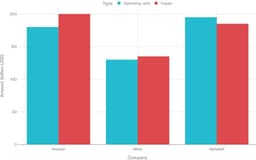
Big Tech Faces Funding Crisis Amid AI Spending Surge
- Funding Shortages: Amazon expects to generate about $180 billion in operating cash this year against a capital spending plan of $200 billion, resulting in a $20 billion shortfall, marking the company's first entry into deficit territory which could impact future investment capabilities.
- Meta's Cash Flow Crisis: Meta anticipates operating cash flow of approximately $130 billion, while its capital spending guidance peaks at $135 billion, indicating significant financial pressure in building AI systems that may lead to depletion of cash reserves.
- Increased Debt Financing: Oracle raised $25 billion in bonds to support a $300 billion infrastructure deal with OpenAI, while Meta raised $30 billion last year, with tech companies expected to issue $337 billion in investment-grade bonds this year, reflecting the industry's urgent need for funding.
- Infrastructure Investment Risks: Big Tech firms are heavily investing in data centers and power facilities, yet the irreversibility of these infrastructures poses substantial financial risks, especially if AI demand does not grow as anticipated, potentially leading to massive depreciation and debt burdens.
See More
Amazon's Strong Q4 Earnings Offset by Aggressive Investment Plans
- Earnings Growth: Amazon's Q4 revenue surged 14% to $213 billion, with operating income rising 18% to $25 billion, showcasing broad growth across retail, advertising, and cloud sectors, yet this strong performance failed to reassure investors.
- Capital Expenditure Forecast: CEO Andy Jassy announced a staggering $200 billion in expected capital expenditures for 2026, significantly exceeding Wall Street's forecast of $150 billion, which raised investor concerns and triggered a sell-off.
- Market Reaction: The stock price of Amazon plummeted 12% over the past week due to worries about future spending, reflecting a cautious investor sentiment despite robust demand in AI and cloud computing sectors.
- Investor Confidence Shaken: Although Amazon enjoys strong demand across various sectors, the aggressive expansion plans have unsettled investors, leading to a decline in market confidence that could impact short-term stock performance.
See More
AI Giants Ramp Up Capital Expenditure Plans for 2026
- Surge in Capital Expenditure: The four major tech giants are projected to collectively invest $625 billion in new data centers and AI infrastructure by 2026, although the uncertain returns may negatively impact shareholder profits.
- Individual Company Struggles: Microsoft's quarterly results revealed slowing revenue growth from its Azure cloud computing unit, leading to an 11% drop in its stock price in a single day, marking the largest decline since March 2020, reflecting market concerns over its spending plans.
- Data Center Market Outlook: According to Grand View Research, the data center construction market is expected to grow from $241 billion in 2024 to $456 billion by 2030, with a compound annual growth rate of 11.8%, indicating strong demand for infrastructure investment.
- Investment Opportunity Analysis: Despite fierce competition among the four giants for AI customers, investing in the Global X Data Center and Digital Infrastructure ETF (DTCR) may be an effective way to capitalize on this rapidly growing trend, as the ETF currently manages $1.1 billion in assets and has delivered a 41.3% return over the past 52 weeks.
See More
Amazon Stock Declines 11.1% Year-to-Date
- Amazon's Poor Performance: Currently, Amazon's stock is down 2.4%, with a year-to-date decline of 11.1%, indicating market concerns about its future growth prospects, which may affect investor confidence and lead to capital outflows.
- IBM Stock Fluctuation: International Business Machines (IBM) shares are down 1.9%, highlighting challenges in the current market environment that could impact its future investment appeal and market share.
- Microsoft's Resilience: In contrast to Amazon, Microsoft shares are up 1.9%, indicating relative strength in the market, which may attract more investor interest in its growth potential.
- Dow Component Dynamics: The stock movements of Amazon, IBM, and Microsoft reflect varying performances among Dow components, prompting investors to monitor how these changes affect overall market sentiment.
See More
Broadcom Stock Rises on Surge in AI Investments
- Surge in Big Tech Spending: Google's capital expenditure forecast has been raised to $175-$185 billion, while Amazon's spending reaches $200 billion, providing significant market support for AI hardware suppliers like Broadcom, with expectations that Big Tech's capital spending will hit $550-$600 billion in 2026, up from $380 billion in 2025.
- Semiconductor Industry Growth Outlook: The semiconductor industry is projected to reach $1 trillion in annual revenue, with global sales at $791.7 billion in 2025 and expected to grow by 26% in 2026, primarily driven by strong demand for AI chips, where Broadcom is particularly prominent.
- Broadcom's Key Role in AI Economy: Broadcom's AI chip revenue surged to $6.5 billion this quarter, with projections of $8.2 billion next quarter, reflecting a 100% year-on-year growth, and the company's backlog across XPUs, switches, optics, and racks exceeds $73 billion, highlighting its critical position in AI infrastructure.
- Broadcom's Market Positioning: Broadcom is not only a supplier of AI hardware but is also referred to as the
See More
AI Infrastructure ETFs Gain Investor Attention Amidst Software Sell-off
- Early AI Investment Cycle: Wedbush analyst Dan Ives highlights that the artificial intelligence investment cycle is still in its early stages, currently around year three of a projected ten-year cycle, with significant capital spending from Big Tech and governments expected to reshape technology leadership and drive growth in related ETFs.
- Software Stock Sell-off Overstated: Ives has re-added Salesforce and ServiceNow to his list of top 30 AI-focused stocks, asserting that concerns about permanent damage to traditional software business models are exaggerated, as enterprises are unlikely to quickly abandon existing software ecosystems, which could support inflows into enterprise software-heavy ETFs.
- Multiplier Effect of AI Chip Investment: Ives notes that for every dollar spent on Nvidia GPU chips, there is an estimated $8 to $10 increase in broader technology ecosystem investment, indicating a favorable dynamic for diversified technology ETFs that capture multiple aspects of the AI value chain amid the ongoing AI revolution.
- Diversified ETF Opportunities: The report emphasizes investment areas in AI development such as data infrastructure, cybersecurity, and autonomous vehicles, suggesting that ETF investors should focus on these sector opportunities to achieve diversification and manage stock-specific volatility as AI continues to gain momentum.
See More
Big Tech Faces Funding Crisis Amid AI Spending Surge
- Funding Shortages: Amazon expects to generate about $180 billion in operating cash this year against a capital spending plan of $200 billion, resulting in a $20 billion shortfall, marking the company's first entry into deficit territory which could impact future investment capabilities.
- Meta's Cash Flow Crisis: Meta anticipates operating cash flow of approximately $130 billion, while its capital spending guidance peaks at $135 billion, indicating significant financial pressure in building AI systems that may lead to depletion of cash reserves.
- Increased Debt Financing: Oracle raised $25 billion in bonds to support a $300 billion infrastructure deal with OpenAI, while Meta raised $30 billion last year, with tech companies expected to issue $337 billion in investment-grade bonds this year, reflecting the industry's urgent need for funding.
- Infrastructure Investment Risks: Big Tech firms are heavily investing in data centers and power facilities, yet the irreversibility of these infrastructures poses substantial financial risks, especially if AI demand does not grow as anticipated, potentially leading to massive depreciation and debt burdens.
See More