Nvidia Nears $30 Billion Investment in OpenAI
Written by Emily J. Thompson, Senior Investment Analyst
Updated: 1 hour ago
0mins
Should l Buy NVDA?
Source: seekingalpha
- Investment Scale Adjustment: Nvidia is nearing the completion of a $30 billion investment in OpenAI, which will replace the previously agreed $100 billion long-term commitment, reflecting ongoing market confidence and demand for AI technology.
- Funding Round Impact: This funding round is expected to exceed $100 billion, valuing OpenAI at $730 billion excluding the new capital, which will further solidify its leadership position in the AI sector.
- Hardware Investment Focus: OpenAI plans to allocate much of the new capital towards Nvidia's hardware, which will not only enhance its technological infrastructure but also promote deeper collaboration and innovation between the two companies in the AI field.
- Transaction Timeline: The deal could be finalized as early as this weekend, and if successful, it will present significant market opportunities for Nvidia while also driving OpenAI's technological advancements and market expansion.
Trade with 70% Backtested Accuracy
Stop guessing "Should I Buy NVDA?" and start using high-conviction signals backed by rigorous historical data.
Sign up today to access powerful investing tools and make smarter, data-driven decisions.
Analyst Views on NVDA
Wall Street analysts forecast NVDA stock price to rise
41 Analyst Rating
39 Buy
1 Hold
1 Sell
Strong Buy
Current: 187.980

Low
200.00
Averages
264.97
High
352.00
Current: 187.980
Low
200.00
Averages
264.97
High
352.00
About NVDA
NVIDIA Corporation is a full-stack computing infrastructure company. The Company is engaged in accelerated computing to help solve the challenging computational problems. The Company’s segments include Compute & Networking and Graphics. The Compute & Networking segment includes its Data Center accelerated computing platforms and artificial intelligence (AI) solutions and software; networking; automotive platforms and autonomous and electric vehicle solutions; Jetson for robotics and other embedded platforms, and DGX Cloud computing services. The Graphics segment includes GeForce GPUs for gaming and PCs, the GeForce NOW game streaming service and related infrastructure, and solutions for gaming platforms; Quadro/NVIDIA RTX GPUs for enterprise workstation graphics; virtual GPU software for cloud-based visual and virtual computing; automotive platforms for infotainment systems, and Omniverse Enterprise software for building and operating industrial AI and digital twin applications.
About the author

Emily J. Thompson
Emily J. Thompson, a Chartered Financial Analyst (CFA) with 12 years in investment research, graduated with honors from the Wharton School. Specializing in industrial and technology stocks, she provides in-depth analysis for Intellectia’s earnings and market brief reports.

Nvidia's Q4 Earnings Outlook Shows Strong Potential

- Earnings Potential Analysis: Oppenheimer anticipates Nvidia's Q4 sales could see a typical upside of $2B to $3B, primarily driven by the GB300 Ultra, indicating strong performance in the AI sector.
- Growing Market Demand: Expected capital expenditures from cloud service providers are projected to reach $650B in 2026, up from over $400B in 2025, reflecting sustained demand for Nvidia's products.
- New Product Outlook: The average selling price for Vera Rubin is expected to be 40% to 50% higher than that of GB300, potentially adding around $8B in revenue for Nvidia, further solidifying its market leadership.
- Market Size Expansion: With China now included, Nvidia's total addressable market is estimated to be around $4T, showcasing its dominant position in the global AI platform and future growth potential.
See More

Nvidia's Stock Pullback Presents Investment Opportunities
- Weak Market Performance: Since August 2025, Nvidia's stock has only risen by 5%, significantly lagging behind the S&P 500's 10% gain, indicating market caution regarding its future growth despite optimistic prospects in the AI sector.
- Surge in Capital Expenditures: Amazon, Alphabet, and Meta expect to spend at least $500 billion in capital expenditures in 2026, positioning Nvidia as a primary beneficiary; if it maintains its market share, it could see substantial revenue growth, with global data center capital expenditures projected to reach $3 trillion to $4 trillion by 2030.
- China Market Resumption: Nvidia has regained the ability to export GPUs to China, re-entering the world's second-largest AI market; although the stock has not significantly reacted to this positive development, it provides new momentum for future growth.
- Attractive Valuation: With a forward P/E ratio of less than 24, Nvidia's stock appears cheap compared to the S&P 500's 21.9, suggesting that investors should consider buying during this pullback, especially with upcoming spending increases on the horizon.
See More
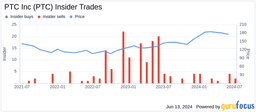
PTC Faces Challenges but AI Presents Opportunities

- Slowing ARR Growth: PTC forecasts adjusted organic ARR growth of 7.5% to 9.5% for fiscal 2026, significantly lower than the previously predicted mid-teens growth, reflecting market concerns about its growth prospects and contributing to a 10% decline in stock price over the past year.
- AI Embedding Strategy: CEO Neil Barua emphasizes that customers prefer AI embedded directly into trusted record systems rather than as standalone systems, which positions PTC to transform AI from a threat into an opportunity by enhancing value in future enterprise workflows.
- Future Cash Flow Expectations: Management anticipates reaching $1 billion in free cash flow by 2026, which, based on the current market cap of $18.7 billion, would result in a free cash flow multiple of 18.7, indicating a favorable valuation not seen in years.
- Large Deals Driving Growth: Management expects a significant increase in ARR starting in Q4 of fiscal 2026, primarily driven by large deals not yet reflected in ARR, with deferred ARR being about three times what it was entering the last fourth quarter, indicating strong future growth potential.
See More
PTC Faces AI Threat Amid Slowing Growth
- Slowing ARR Growth: PTC forecasts adjusted organic ARR growth of 7.5% to 9.5% for fiscal 2026, significantly lower than the previously predicted mid-teens growth, indicating weakness in key metrics that may affect investor confidence.
- AI Opportunities and Challenges: While the market fears AI could threaten PTC's business, CEO Neil Barua emphasizes that customers want AI embedded in existing systems, presenting PTC with an opportunity to integrate AI into its digital record systems, thereby enhancing product value.
- Future Cash Flow Expectations: Management expects to reach $1 billion in free cash flow by 2026, which, based on the current market cap of $18.7 billion, would result in a free cash flow multiple of 18.7, indicating an attractive valuation.
- Market Strategy Adjustment: PTC reorganized its go-to-market strategy in late 2024 to focus on large enterprise deals, with expectations of significant ARR growth in the fourth quarter of fiscal 2026, reflecting the company's potential in key industry verticals.
See More
PTC: AI as an Opportunity, Not a Threat
- Market Opportunity Analysis: Despite a slowdown in PTC's annual recurring revenue (ARR) growth, management anticipates a significant change in the fourth quarter of fiscal 2026, primarily driven by large deals not yet reflected in ARR, indicating market confidence in PTC's future.
- AI Embedding Strategy: CEO Neil Barua emphasized that customers want AI embedded directly into their trusted systems of record, a strategy that will help PTC maintain its competitive edge in product lifecycle management and computer-aided design.
- Financial Outlook: Management expects free cash flow to reach $1 billion by 2026, which, based on the current market cap of $18.7 billion, results in a valuation multiple of 18.7, reflecting PTC's attractiveness in a market not seen at such low valuations in a decade.
- Investor Focus: Although PTC was not included in The Motley Fool Stock Advisor's list of top investment picks, its potential in AI and digital transformation continues to attract investor interest, especially against the backdrop of overall pressure in the software industry.
See More
Nvidia Nears $30 Billion Investment in OpenAI
- Investment Scale Adjustment: Nvidia is nearing the completion of a $30 billion investment in OpenAI, which will replace the previously agreed $100 billion long-term commitment, reflecting ongoing market confidence and demand for AI technology.
- Funding Round Impact: This funding round is expected to exceed $100 billion, valuing OpenAI at $730 billion excluding the new capital, which will further solidify its leadership position in the AI sector.
- Hardware Investment Focus: OpenAI plans to allocate much of the new capital towards Nvidia's hardware, which will not only enhance its technological infrastructure but also promote deeper collaboration and innovation between the two companies in the AI field.
- Transaction Timeline: The deal could be finalized as early as this weekend, and if successful, it will present significant market opportunities for Nvidia while also driving OpenAI's technological advancements and market expansion.
See More
Nvidia's Q4 Earnings Outlook Shows Strong Potential
- Earnings Potential Analysis: Oppenheimer anticipates Nvidia's Q4 sales could see a typical upside of $2B to $3B, primarily driven by the GB300 Ultra, indicating strong performance in the AI sector.
- Growing Market Demand: Expected capital expenditures from cloud service providers are projected to reach $650B in 2026, up from over $400B in 2025, reflecting sustained demand for Nvidia's products.
- New Product Outlook: The average selling price for Vera Rubin is expected to be 40% to 50% higher than that of GB300, potentially adding around $8B in revenue for Nvidia, further solidifying its market leadership.
- Market Size Expansion: With China now included, Nvidia's total addressable market is estimated to be around $4T, showcasing its dominant position in the global AI platform and future growth potential.
See More
Nvidia's Stock Pullback Presents Investment Opportunities
- Weak Market Performance: Since August 2025, Nvidia's stock has only risen by 5%, significantly lagging behind the S&P 500's 10% gain, indicating market caution regarding its future growth despite optimistic prospects in the AI sector.
- Surge in Capital Expenditures: Amazon, Alphabet, and Meta expect to spend at least $500 billion in capital expenditures in 2026, positioning Nvidia as a primary beneficiary; if it maintains its market share, it could see substantial revenue growth, with global data center capital expenditures projected to reach $3 trillion to $4 trillion by 2030.
- China Market Resumption: Nvidia has regained the ability to export GPUs to China, re-entering the world's second-largest AI market; although the stock has not significantly reacted to this positive development, it provides new momentum for future growth.
- Attractive Valuation: With a forward P/E ratio of less than 24, Nvidia's stock appears cheap compared to the S&P 500's 21.9, suggesting that investors should consider buying during this pullback, especially with upcoming spending increases on the horizon.
See More
PTC Faces Challenges but AI Presents Opportunities
- Slowing ARR Growth: PTC forecasts adjusted organic ARR growth of 7.5% to 9.5% for fiscal 2026, significantly lower than the previously predicted mid-teens growth, reflecting market concerns about its growth prospects and contributing to a 10% decline in stock price over the past year.
- AI Embedding Strategy: CEO Neil Barua emphasizes that customers prefer AI embedded directly into trusted record systems rather than as standalone systems, which positions PTC to transform AI from a threat into an opportunity by enhancing value in future enterprise workflows.
- Future Cash Flow Expectations: Management anticipates reaching $1 billion in free cash flow by 2026, which, based on the current market cap of $18.7 billion, would result in a free cash flow multiple of 18.7, indicating a favorable valuation not seen in years.
- Large Deals Driving Growth: Management expects a significant increase in ARR starting in Q4 of fiscal 2026, primarily driven by large deals not yet reflected in ARR, with deferred ARR being about three times what it was entering the last fourth quarter, indicating strong future growth potential.
See More
PTC Faces AI Threat Amid Slowing Growth
- Slowing ARR Growth: PTC forecasts adjusted organic ARR growth of 7.5% to 9.5% for fiscal 2026, significantly lower than the previously predicted mid-teens growth, indicating weakness in key metrics that may affect investor confidence.
- AI Opportunities and Challenges: While the market fears AI could threaten PTC's business, CEO Neil Barua emphasizes that customers want AI embedded in existing systems, presenting PTC with an opportunity to integrate AI into its digital record systems, thereby enhancing product value.
- Future Cash Flow Expectations: Management expects to reach $1 billion in free cash flow by 2026, which, based on the current market cap of $18.7 billion, would result in a free cash flow multiple of 18.7, indicating an attractive valuation.
- Market Strategy Adjustment: PTC reorganized its go-to-market strategy in late 2024 to focus on large enterprise deals, with expectations of significant ARR growth in the fourth quarter of fiscal 2026, reflecting the company's potential in key industry verticals.
See More
PTC: AI as an Opportunity, Not a Threat
- Market Opportunity Analysis: Despite a slowdown in PTC's annual recurring revenue (ARR) growth, management anticipates a significant change in the fourth quarter of fiscal 2026, primarily driven by large deals not yet reflected in ARR, indicating market confidence in PTC's future.
- AI Embedding Strategy: CEO Neil Barua emphasized that customers want AI embedded directly into their trusted systems of record, a strategy that will help PTC maintain its competitive edge in product lifecycle management and computer-aided design.
- Financial Outlook: Management expects free cash flow to reach $1 billion by 2026, which, based on the current market cap of $18.7 billion, results in a valuation multiple of 18.7, reflecting PTC's attractiveness in a market not seen at such low valuations in a decade.
- Investor Focus: Although PTC was not included in The Motley Fool Stock Advisor's list of top investment picks, its potential in AI and digital transformation continues to attract investor interest, especially against the backdrop of overall pressure in the software industry.
See More
Nvidia Nears $30 Billion Investment in OpenAI
- Investment Scale Adjustment: Nvidia is nearing the completion of a $30 billion investment in OpenAI, which will replace the previously agreed $100 billion long-term commitment, reflecting ongoing market confidence and demand for AI technology.
- Funding Round Impact: This funding round is expected to exceed $100 billion, valuing OpenAI at $730 billion excluding the new capital, which will further solidify its leadership position in the AI sector.
- Hardware Investment Focus: OpenAI plans to allocate much of the new capital towards Nvidia's hardware, which will not only enhance its technological infrastructure but also promote deeper collaboration and innovation between the two companies in the AI field.
- Transaction Timeline: The deal could be finalized as early as this weekend, and if successful, it will present significant market opportunities for Nvidia while also driving OpenAI's technological advancements and market expansion.
See More