Nvidia Invests $2B in CoreWeave, Price Target Raised to $110


Catch up on the top artificial intelligence news and commentary by Wall Street analysts on publicly traded companies in the space with this daily recap compiled by The Fly.INVESTMENT:Nvidiaand CoreWeaveannounced an expansion of their relationship to enable CoreWeave to accelerate the buildout of more than five gigawatts of AI factories by 2030. In addition, Nvidia has invested $2B in CoreWeave Class A common stock at a purchase price of $87.20 per share. The companies intend to: build AI factories developed and operated by CoreWeave using Nvidia's computing platform technology to meet customer demand; accelerate CoreWeave's procurement of land, power and shell to build AI factories; test and validate CoreWeave's AI-native software and reference architecture, including SUNK and CoreWeave Mission Control; deploy multiple generations of Nvidia infrastructure across CoreWeave's platform through early adoption of Nvidia computing architectures, including the Rubin platform, Vera CPUs and Bluefield storage systems.COMPUTE DEMAND:DA Davidson upgraded CoreWeave to Buy from Neutral with a price target of $110, up from $68, after assuming coverage of the name. The firm cites strengthening compute demand for the upgrade. CoreWeave has "multiple de-risking pathways" in 2026 with favorable upside potential relative to the downside risk that is already priced into the shares, the analyst tells investors in a research note. DA believes CoreWeave shares are unlikely to sustainably move higher without a "de-risking event that would significantly reduce" its "perceived counterparty risk and capital-structure overhang." The probability of these events "increases materially" in 2026, contends the firm.PREMIUM PRICES:OpenAI is targeting about $60 per 1,000 views for ChatGPT ads, on par with live NFL broadcasts and above Meta's sub-$20 cost-per-thousand impressions, while offering little conversion data, The Information's Ann Gehan and Catherine Perloff.MAIA 200:Microsoft'sScott Guthrie, Executive Vice President, Cloud + AI, stated in a blog, "Today, we're proud to introduce Maia 200, a breakthrough inference accelerator engineered to dramatically improve the economics of AI token generation. Maia 200 is an AI inference powerhouse: an accelerator built on TSMC's 3nm process with native FP8/FP4 tensor cores, a redesigned memory system with 216GB HBM3e at 7 TB/s and 272MB of on-chip SRAM, plus data movement engines that keep massive models fed, fast and highly utilized. This makes Maia 200 the most performant, first-party silicon from any hyperscaler, with three times the FP4 performance of the third generation Amazon Trainium, and FP8 performance above Google's seventh generation TPU. Maia 200 is also the most efficient inference system Microsoft has ever deployed, with 30% better performance per dollar than the latest generation hardware in our fleet today. Maia 200 is part of our heterogenous AI infrastructure and will serve multiple models, including the latest GPT-5.2 models from OpenAI, bringing performance per dollar advantage to Microsoft Foundry and Microsoft 365 Copilot. The Microsoft Superintelligence team will use Maia 200 for synthetic data generation and reinforcement learning to improve next-generation in-house models... Maia 200 is deployed in our US Central datacenter region near Des Moines, Iowa, with the US West 3 datacenter region near Phoenix, Arizona, coming next and future regions to follow. Maia 200 integrates seamlessly with Azure, and we are previewing the Maia SDK with a complete set of tools to build and optimize models for Maia 200."AI USED IN TRIALS:AI has begun helping drug companies progress through trials and regulatory submissions, Maggie Fick and Michael Erman of Reuters. AI is assisting with finding participants and clinical trial sites as well as drafting documents for regulators. Many drugmakers, including Eli Lillyhave entered partnerships with Nvidia, hoping AI will also improve the success rate of new drugs. Other drug companies in the space also using AI include Novartis, GSK, Genmab, and Teva Pharmaceutical.
Trade with 70% Backtested Accuracy
Analyst Views on NVDA

About NVDA
About the author


Nvidia vs. Oracle: Compelling Investment Stories

- Nvidia's Market Performance: Nvidia's stock has surged over 700% in the past three years, pushing its market capitalization beyond $4 trillion, making it the largest company globally, which highlights its dominant position in high-performance AI applications and attracts significant investor interest.
- Oracle's Market Challenges: Oracle, with a market cap of $440 billion, has seen its stock drop over 52% since last September, primarily due to high spending on AI infrastructure and a debt exceeding $100 billion, raising concerns about its financial health among investors.
- Financial Performance Highlights: Oracle's recent Q2 FY2026 earnings report revealed a 14% year-over-year revenue increase to $16.05 billion, with net income soaring 95% to $6.13 billion, including a $2.7 billion pre-tax gain, showcasing its strong growth potential in the cloud computing sector.
- Future Growth Expectations: Despite facing debt pressures, Oracle's forward price-to-earnings ratio stands at just 19.8, indicating that its stock is at a two-year low, and analysts expect significant revenue growth in the future, potentially providing a good buying opportunity for investors.
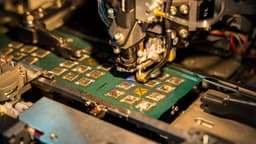
Montage Technology Shares Surge 60% on Hong Kong Debut, Raising $902 Million
- Strong Debut Performance: Montage Technology's shares surged approximately 60% on their Hong Kong debut, climbing from the offering price of HK$106.89 to HK$171, indicating robust market demand for its high-performance semiconductors and reinforcing its position in the cloud computing and AI sectors.
- Significant Fundraising: The IPO raised $902 million, reflecting strong investor interest in Chinese AI and semiconductor firms, particularly as the public tranche was oversubscribed by more than 700 times and the international offering was nearly 38 times covered.
- Intensifying Market Competition: Despite Montage's successful listing, competition is heating up, with Huawei and its chip unit HiSilicon holding a leading share of the domestic market, suggesting that the push for self-sufficiency will lead to fiercer rivalry within the industry.
- Evolving Policy Landscape: As the Chinese government intensifies efforts for self-sufficiency in advanced chips, the recent approval for Nvidia's H200 imports under specific conditions highlights the uncertainty in policy that could impact market dynamics.
Lumentum to Benefit as Nvidia Accelerates Optical Technology
- Rising Market Demand: GF Securities analyst Jeff Pu noted that Nvidia's launch of the Quantum-X optical switch at the 2025 GTC will drive demand for continuous-wave lasers from Lumentum, presenting significant market opportunities for the company.
- Product Release Timeline: Nvidia plans to gradually introduce its scale-out optical switches from 2025 to 2027, with a new generation featuring 115.2T expected in 2026, further propelling Lumentum's business growth.
- Long-Term Structural Opportunity: Lumentum highlighted in its recent earnings call that optical scale-up represents a long-term structural opportunity, expected to materialize by late 2027, indicating the company's confidence in future market prospects.
- Technological Transition Trend: As Nvidia considers introducing CPO/NPO technologies in the second half of 2027, Lumentum stands to benefit from the transition in optical interconnects, although the readiness for NPO versus CPO production remains uncertain.
Nvidia Shares Up 47% with Promising Growth Ahead

- Strong Market Demand: Nvidia's (NVDA) stock has surged 47% over the past year, driven by ongoing investments in chips and data centers, particularly as Google's parent company Alphabet announced a minimum of $175 billion in capital expenditures this year to support AI demand, indicating robust market interest in artificial intelligence.
- Diversified Market Opportunities: Nvidia is not solely reliant on selling powerful chips to AI hyperscalers; it is also partnering with Thermo Fisher Scientific to build an AI lab computing system powered by its DGX Spark supercomputer, targeting the life sciences industry, which spends approximately $300 billion annually on research and development, thereby expanding its market potential.
- Systems Solutions Provider: Nvidia distinguishes itself as a systems and solutions provider rather than just a chip supplier, which enhances its competitive edge against custom chip designers like Broadcom, making it an indispensable partner for enterprises seeking to solve complex problems and solidifying its market position.
- Attractive Investment Value: Nvidia's stock appears attractively valued, trading at 24 times this year's consensus earnings estimate, with Wall Street analysts projecting a 57% increase in earnings this year, suggesting that the recent dip could present an excellent buying opportunity before the stock rises to new highs later this year.

Society Pass Invests in Sapience AI and Expands NusaTrip Partnerships

- Sapience AI Investment: Society Pass announced an $8.8 million investment in Sapience AI at the end of January, leveraging Nvidia's Blackwell chips to develop smaller data centers, which is expected to drive growth in a faster and more cost-effective manner, enhancing its competitive edge in the Southeast Asian market.
- NusaTrip Partnership Expansion: NusaTrip has formed new partnerships with Indonesian OTA Bookcabin and Thai OTA Gother to integrate flight and hotel supplies, with expectations for future expansion of products and ancillary services, thereby increasing market share.
- Gorilla eSIM Reinvestment: After selling Gorilla in 2025, Society Pass reacquired an interest in the company through a $1.9 million investment, with management anticipating that the shift to a B2B model will lead to an IPO within the next year, potentially benefiting shareholders.
- Financing and Target Price Adjustment: Society Pass funded the above investments through a $3 million offering with no warrant coverage, which is expected to boost shareholder confidence, while Greenridge's target price adjustment reflects an optimistic outlook on future growth.

Nvidia Expands Competitive Lead in AI Market
- Surge in Capital Expenditure: Alphabet, Google's parent company, announced it will invest at least $175 billion in capital expenditures this year to support AI demand, indicating sustained enthusiasm for AI investments that further boosts Nvidia's market demand.
- Market Potential Expansion: Nvidia is not solely reliant on selling powerful chips to AI hyperscalers like Google; it is partnering with Thermo Fisher Scientific to build AI lab computing systems, which is expected to tap into the $300 billion market opportunity in the life sciences sector.
- Optimistic Earnings Outlook: Analysts project Nvidia's earnings to grow by 57% this year, with the stock currently trading at 24 times this year's consensus earnings estimate, making it an attractive investment option for investors looking for value.
- Strengthened Industry Position: Nvidia is not just a chip supplier but a systems and solutions provider, solidifying its indispensable role in the AI sector by solving complex problems, thereby differentiating itself from custom chip designers like Broadcom.
Nvidia vs. Oracle: Compelling Investment Stories
- Nvidia's Market Performance: Nvidia's stock has surged over 700% in the past three years, pushing its market capitalization beyond $4 trillion, making it the largest company globally, which highlights its dominant position in high-performance AI applications and attracts significant investor interest.
- Oracle's Market Challenges: Oracle, with a market cap of $440 billion, has seen its stock drop over 52% since last September, primarily due to high spending on AI infrastructure and a debt exceeding $100 billion, raising concerns about its financial health among investors.
- Financial Performance Highlights: Oracle's recent Q2 FY2026 earnings report revealed a 14% year-over-year revenue increase to $16.05 billion, with net income soaring 95% to $6.13 billion, including a $2.7 billion pre-tax gain, showcasing its strong growth potential in the cloud computing sector.
- Future Growth Expectations: Despite facing debt pressures, Oracle's forward price-to-earnings ratio stands at just 19.8, indicating that its stock is at a two-year low, and analysts expect significant revenue growth in the future, potentially providing a good buying opportunity for investors.
Montage Technology Shares Surge 60% on Hong Kong Debut, Raising $902 Million
- Strong Debut Performance: Montage Technology's shares surged approximately 60% on their Hong Kong debut, climbing from the offering price of HK$106.89 to HK$171, indicating robust market demand for its high-performance semiconductors and reinforcing its position in the cloud computing and AI sectors.
- Significant Fundraising: The IPO raised $902 million, reflecting strong investor interest in Chinese AI and semiconductor firms, particularly as the public tranche was oversubscribed by more than 700 times and the international offering was nearly 38 times covered.
- Intensifying Market Competition: Despite Montage's successful listing, competition is heating up, with Huawei and its chip unit HiSilicon holding a leading share of the domestic market, suggesting that the push for self-sufficiency will lead to fiercer rivalry within the industry.
- Evolving Policy Landscape: As the Chinese government intensifies efforts for self-sufficiency in advanced chips, the recent approval for Nvidia's H200 imports under specific conditions highlights the uncertainty in policy that could impact market dynamics.
Lumentum to Benefit as Nvidia Accelerates Optical Technology
- Rising Market Demand: GF Securities analyst Jeff Pu noted that Nvidia's launch of the Quantum-X optical switch at the 2025 GTC will drive demand for continuous-wave lasers from Lumentum, presenting significant market opportunities for the company.
- Product Release Timeline: Nvidia plans to gradually introduce its scale-out optical switches from 2025 to 2027, with a new generation featuring 115.2T expected in 2026, further propelling Lumentum's business growth.
- Long-Term Structural Opportunity: Lumentum highlighted in its recent earnings call that optical scale-up represents a long-term structural opportunity, expected to materialize by late 2027, indicating the company's confidence in future market prospects.
- Technological Transition Trend: As Nvidia considers introducing CPO/NPO technologies in the second half of 2027, Lumentum stands to benefit from the transition in optical interconnects, although the readiness for NPO versus CPO production remains uncertain.
Nvidia Shares Up 47% with Promising Growth Ahead
- Strong Market Demand: Nvidia's (NVDA) stock has surged 47% over the past year, driven by ongoing investments in chips and data centers, particularly as Google's parent company Alphabet announced a minimum of $175 billion in capital expenditures this year to support AI demand, indicating robust market interest in artificial intelligence.
- Diversified Market Opportunities: Nvidia is not solely reliant on selling powerful chips to AI hyperscalers; it is also partnering with Thermo Fisher Scientific to build an AI lab computing system powered by its DGX Spark supercomputer, targeting the life sciences industry, which spends approximately $300 billion annually on research and development, thereby expanding its market potential.
- Systems Solutions Provider: Nvidia distinguishes itself as a systems and solutions provider rather than just a chip supplier, which enhances its competitive edge against custom chip designers like Broadcom, making it an indispensable partner for enterprises seeking to solve complex problems and solidifying its market position.
- Attractive Investment Value: Nvidia's stock appears attractively valued, trading at 24 times this year's consensus earnings estimate, with Wall Street analysts projecting a 57% increase in earnings this year, suggesting that the recent dip could present an excellent buying opportunity before the stock rises to new highs later this year.
Society Pass Invests in Sapience AI and Expands NusaTrip Partnerships
- Sapience AI Investment: Society Pass announced an $8.8 million investment in Sapience AI at the end of January, leveraging Nvidia's Blackwell chips to develop smaller data centers, which is expected to drive growth in a faster and more cost-effective manner, enhancing its competitive edge in the Southeast Asian market.
- NusaTrip Partnership Expansion: NusaTrip has formed new partnerships with Indonesian OTA Bookcabin and Thai OTA Gother to integrate flight and hotel supplies, with expectations for future expansion of products and ancillary services, thereby increasing market share.
- Gorilla eSIM Reinvestment: After selling Gorilla in 2025, Society Pass reacquired an interest in the company through a $1.9 million investment, with management anticipating that the shift to a B2B model will lead to an IPO within the next year, potentially benefiting shareholders.
- Financing and Target Price Adjustment: Society Pass funded the above investments through a $3 million offering with no warrant coverage, which is expected to boost shareholder confidence, while Greenridge's target price adjustment reflects an optimistic outlook on future growth.
Nvidia Expands Competitive Lead in AI Market
- Surge in Capital Expenditure: Alphabet, Google's parent company, announced it will invest at least $175 billion in capital expenditures this year to support AI demand, indicating sustained enthusiasm for AI investments that further boosts Nvidia's market demand.
- Market Potential Expansion: Nvidia is not solely reliant on selling powerful chips to AI hyperscalers like Google; it is partnering with Thermo Fisher Scientific to build AI lab computing systems, which is expected to tap into the $300 billion market opportunity in the life sciences sector.
- Optimistic Earnings Outlook: Analysts project Nvidia's earnings to grow by 57% this year, with the stock currently trading at 24 times this year's consensus earnings estimate, making it an attractive investment option for investors looking for value.
- Strengthened Industry Position: Nvidia is not just a chip supplier but a systems and solutions provider, solidifying its indispensable role in the AI sector by solving complex problems, thereby differentiating itself from custom chip designers like Broadcom.