Modi's Momentum: Achieving Balance in India's Ideal Economic Conditions
Investment Landscape in 2026: Investors entering 2026 are navigating a complex landscape marked by political uncertainty and policy shifts, leading to significant volatility in U.S. equities. In contrast, India is emerging as a primary destination for capital seeking stability and economic growth.
India's Economic Metrics: India's economic environment is characterized by a projected GDP growth of approximately 6.7% and a low inflation rate of 1.33%, which is significantly below the Reserve Bank of India's target. This stability supports purchasing power and allows businesses to maintain healthy profit margins.
HDFC Bank's Growth and Market Position: HDFC Bank has successfully pivoted back to aggressive growth following its merger, reporting a 13% year-over-year increase in loan growth and an 11.5% rise in deposits. This positions the bank favorably in a low-rate environment, enhancing its lending capabilities.
Strategic Diversification Opportunities: The combination of the broad INDA ETF and HDFC Bank's revitalized growth presents a compelling opportunity for investors looking to diversify away from U.S. political risks, with India offering a stable growth narrative backed by strong economic fundamentals.
Trade with 70% Backtested Accuracy
Analyst Views on HDB
About HDB
About the author

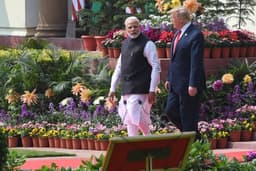
Major U.S.-India Trade Agreement Announced
- Tariff Reductions: Trump announced a U.S.-India trade agreement that eliminates trade barriers for India and reduces U.S. tariffs on Indian goods from 25% to 18%, significantly enhancing trade relations between the two nations.
- Oil Procurement Agreement: The deal ends the 25% punitive tariff imposed due to India's purchases of Russian oil, with Trump stating that India will cease buying Russian oil and increase imports from the U.S. and potentially Venezuela.
- India's Purchasing Commitment: Prime Minister Modi committed to purchasing over $500 billion worth of American products across energy, technology, agriculture, and coal sectors, indicating India's strong interest in U.S. markets and collaboration.
- Improvement in Trade Relations: This agreement is expected to alleviate trade tensions caused by U.S. tariffs of up to 50% on Indian goods, while India is also exploring a free trade deal with the EU to further diversify its international trade relationships.

Investigation into HDFC Bank's Deposit-Loan Growth Gap
- Deposit-Loan Growth Discrepancy: Following its merger with HDFC Limited, HDFC Bank has experienced significant loan growth, yet deposit growth has lagged, leading to a widening gap that impacts the bank's funding sources and profitability.
- Credit Expansion Context: While the bank reported healthy credit expansion leveraging its enhanced distribution network and customer base, the lagging deposit growth may force it to rely on higher-cost alternative funding sources, which could compress profit margins.
- Market Reaction: Following the release of the latest business update, HDFC Bank's shares fell over 5%, indicating market concern regarding liquidity metrics, especially as deposit growth failed to accelerate.
- Investor Focus: The surge in trading volumes as institutional investors adjusted their portfolios highlights the market's increasing focus on HDFC Bank's deposit mobilization challenges, which could have broader implications for the stability of the overall banking system.

Investigation into HDFC Bank's Deposit and Loan Growth Discrepancy
- Deposit-Loan Growth Gap: Following its merger with HDFC Limited, HDFC Bank has experienced significant loan growth, yet deposit growth has lagged, leading to an expanding gap that impacts the bank's funding sources and profitability.
- Credit Expansion Dynamics: While HDFC Bank has reported healthy credit expansion leveraging its enhanced distribution network and customer base post-merger, the lagging deposit growth may force the bank to rely on higher-cost alternative funding sources.
- Market Reaction: After the release of the latest business update, HDFC Bank's shares fell over 5%, underperforming both the Nifty 50 index and banking sector benchmarks, indicating increased market focus on liquidity metrics.
- Investor Attention: Trading volumes surged as institutional investors adjusted their portfolios, with large block deals recorded, reflecting growing concerns about the bank's deposit mobilization challenges.

Trinity Street Fully Exits Axalta Stake in $22.1 Million Transaction

- Full Exit: Trinity Street Asset Management LLP disclosed on January 22, 2026, that it liquidated its entire holding of 770,919 shares in Axalta Coating Systems, with an estimated transaction value of $22.06 million, indicating a lack of confidence in the company's growth prospects.
- Asset Allocation Shift: This transaction reduced Axalta's representation to 0% of Trinity's 13F AUM, while its top five holdings include Taiwan Semiconductor valued at $293.8 million, or 18.5% of AUM, reflecting a preference for companies with better growth potential.
- Poor Market Performance: As of January 21, 2026, Axalta's share price stood at $33.47, down 9.5% over the past year, significantly underperforming the S&P 500 by 23.2 percentage points, highlighting sluggish growth in the coatings sector.
- Investor Strategy: Trinity sold a small position representing about 1.5% of its assets in Q3, possibly for tax-loss harvesting or due to diminished confidence in Axalta's growth, while simultaneously increasing investments in other major holdings like Taiwan Semiconductor, indicating a shift towards companies with higher growth potential.

Dell, Heineken, and 28 Additional Selections for 2026 from the Barron’s Roundtable


Dramatic Start to 2026: The year has begun with significant tensions, likened to a transition from conflict to peace efforts.
Greenland's Political Situation: Greenland was on the verge of becoming the seventh state of New England, highlighting its unique geopolitical status.
HDFC Bank (HDB) Reports Q3 2025 Net Profit of ₹198.1 Billion, Up 12.2%
- Revenue Growth: HDFC Bank's consolidated net revenue for Q3 2025 reached ₹811.1 billion, indicating strong market demand and business expansion capabilities, further solidifying its leadership position in the Indian banking sector.
- Profit Performance: The consolidated profit after tax for the quarter was ₹198.1 billion, reflecting a 12.2% year-over-year increase, showcasing effective strategies in cost control and credit growth, which enhances investor confidence.
- Interest Income: As of December 31, 2025, the bank's net interest income grew by 6.4% to ₹326.2 billion, demonstrating its adaptability and profitability amid changing interest rate environments.
- Capital Adequacy Ratio: HDFC Bank's Capital Adequacy Ratio stood at 19.9% as per Basel III guidelines, significantly above the regulatory requirement of 11.9%, indicating a robust capital structure and effective risk management capabilities.
Major U.S.-India Trade Agreement Announced
- Tariff Reductions: Trump announced a U.S.-India trade agreement that eliminates trade barriers for India and reduces U.S. tariffs on Indian goods from 25% to 18%, significantly enhancing trade relations between the two nations.
- Oil Procurement Agreement: The deal ends the 25% punitive tariff imposed due to India's purchases of Russian oil, with Trump stating that India will cease buying Russian oil and increase imports from the U.S. and potentially Venezuela.
- India's Purchasing Commitment: Prime Minister Modi committed to purchasing over $500 billion worth of American products across energy, technology, agriculture, and coal sectors, indicating India's strong interest in U.S. markets and collaboration.
- Improvement in Trade Relations: This agreement is expected to alleviate trade tensions caused by U.S. tariffs of up to 50% on Indian goods, while India is also exploring a free trade deal with the EU to further diversify its international trade relationships.
Investigation into HDFC Bank's Deposit-Loan Growth Gap
- Deposit-Loan Growth Discrepancy: Following its merger with HDFC Limited, HDFC Bank has experienced significant loan growth, yet deposit growth has lagged, leading to a widening gap that impacts the bank's funding sources and profitability.
- Credit Expansion Context: While the bank reported healthy credit expansion leveraging its enhanced distribution network and customer base, the lagging deposit growth may force it to rely on higher-cost alternative funding sources, which could compress profit margins.
- Market Reaction: Following the release of the latest business update, HDFC Bank's shares fell over 5%, indicating market concern regarding liquidity metrics, especially as deposit growth failed to accelerate.
- Investor Focus: The surge in trading volumes as institutional investors adjusted their portfolios highlights the market's increasing focus on HDFC Bank's deposit mobilization challenges, which could have broader implications for the stability of the overall banking system.
Investigation into HDFC Bank's Deposit and Loan Growth Discrepancy
- Deposit-Loan Growth Gap: Following its merger with HDFC Limited, HDFC Bank has experienced significant loan growth, yet deposit growth has lagged, leading to an expanding gap that impacts the bank's funding sources and profitability.
- Credit Expansion Dynamics: While HDFC Bank has reported healthy credit expansion leveraging its enhanced distribution network and customer base post-merger, the lagging deposit growth may force the bank to rely on higher-cost alternative funding sources.
- Market Reaction: After the release of the latest business update, HDFC Bank's shares fell over 5%, underperforming both the Nifty 50 index and banking sector benchmarks, indicating increased market focus on liquidity metrics.
- Investor Attention: Trading volumes surged as institutional investors adjusted their portfolios, with large block deals recorded, reflecting growing concerns about the bank's deposit mobilization challenges.
Trinity Street Fully Exits Axalta Stake in $22.1 Million Transaction
- Full Exit: Trinity Street Asset Management LLP disclosed on January 22, 2026, that it liquidated its entire holding of 770,919 shares in Axalta Coating Systems, with an estimated transaction value of $22.06 million, indicating a lack of confidence in the company's growth prospects.
- Asset Allocation Shift: This transaction reduced Axalta's representation to 0% of Trinity's 13F AUM, while its top five holdings include Taiwan Semiconductor valued at $293.8 million, or 18.5% of AUM, reflecting a preference for companies with better growth potential.
- Poor Market Performance: As of January 21, 2026, Axalta's share price stood at $33.47, down 9.5% over the past year, significantly underperforming the S&P 500 by 23.2 percentage points, highlighting sluggish growth in the coatings sector.
- Investor Strategy: Trinity sold a small position representing about 1.5% of its assets in Q3, possibly for tax-loss harvesting or due to diminished confidence in Axalta's growth, while simultaneously increasing investments in other major holdings like Taiwan Semiconductor, indicating a shift towards companies with higher growth potential.
Dell, Heineken, and 28 Additional Selections for 2026 from the Barron’s Roundtable
Dramatic Start to 2026: The year has begun with significant tensions, likened to a transition from conflict to peace efforts.
Greenland's Political Situation: Greenland was on the verge of becoming the seventh state of New England, highlighting its unique geopolitical status.
HDFC Bank (HDB) Reports Q3 2025 Net Profit of ₹198.1 Billion, Up 12.2%
- Revenue Growth: HDFC Bank's consolidated net revenue for Q3 2025 reached ₹811.1 billion, indicating strong market demand and business expansion capabilities, further solidifying its leadership position in the Indian banking sector.
- Profit Performance: The consolidated profit after tax for the quarter was ₹198.1 billion, reflecting a 12.2% year-over-year increase, showcasing effective strategies in cost control and credit growth, which enhances investor confidence.
- Interest Income: As of December 31, 2025, the bank's net interest income grew by 6.4% to ₹326.2 billion, demonstrating its adaptability and profitability amid changing interest rate environments.
- Capital Adequacy Ratio: HDFC Bank's Capital Adequacy Ratio stood at 19.9% as per Basel III guidelines, significantly above the regulatory requirement of 11.9%, indicating a robust capital structure and effective risk management capabilities.