JPMorgan: Costco to Benefit Most from Tax Season
Written by Emily J. Thompson, Senior Investment Analyst
Updated: 2d ago
0mins

Source: CNBC
- Tax Season Gains: JPMorgan analysts highlight that Costco is poised to benefit the most in the upcoming tax season, as consumers are expected to receive larger refunds, particularly compared to BJ's Wholesale and Walmart's Sam's Club.
- Market Performance Insight: Costco's stock has risen about 15% year-to-date in 2026, recovering from a 6% decline in 2025, indicating strong potential for recovery driven by tax stimulus.
- Consumer Demographic Advantage: With a membership base skewed towards mid- to high-end consumers, analysts believe Costco is well-positioned to attract shoppers during the tax season, especially with its strong performance in big-ticket merchandise.
- Overall Retail Impact: JPMorgan estimates that last year's tax law changes could lead to over a 1% increase in core retail sales in 2026, with the impact being particularly pronounced during the tax refund season, further solidifying Costco's market position.
Trade with 70% Backtested Accuracy
Stop guessing "Should I Buy WMT?" and start using high-conviction signals backed by rigorous historical data.
Sign up today to access powerful investing tools and make smarter, data-driven decisions.
Analyst Views on WMT
Wall Street analysts forecast WMT stock price to fall over the next 12 months. According to Wall Street analysts, the average 1-year price target for WMT is 125.75 USD with a low forecast of 119.00 USD and a high forecast of 136.00 USD. However, analyst price targets are subjective and often lag stock prices, so investors should focus on the objective reasons behind analyst rating changes, which better reflect the company's fundamentals.
26 Analyst Rating
25 Buy
1 Hold
0 Sell
Strong Buy
Current: 126.940

Low
119.00
Averages
125.75
High
136.00
Current: 126.940
Low
119.00
Averages
125.75
High
136.00
About WMT
Walmart Inc. is a technology-powered omnichannel retailer. The Company is engaged in the operation of retail and wholesale stores and clubs, as well as eCommerce Websites and mobile applications, located throughout the United States (U.S.), Africa, Canada, Central America, Chile, China, India and Mexico. It operates in three reportable segments: Walmart U.S., Walmart International and Sam's Club U.S. The Walmart U.S. segment includes the Company's mass merchandising concept in the U.S., as well as eCommerce, which includes omni-channel initiatives and certain other business offerings such as advertising services. The Walmart International segment consists of the Company's operations outside of the U.S. through its subsidiaries, as well as eCommerce and omni-channel initiatives. The Sam's Club U.S. segment includes the warehouse membership clubs in the U.S., as well as samsclub.com and omni-channel initiatives.
About the author

Emily J. Thompson
Emily J. Thompson, a Chartered Financial Analyst (CFA) with 12 years in investment research, graduated with honors from the Wharton School. Specializing in industrial and technology stocks, she provides in-depth analysis for Intellectia’s earnings and market brief reports.

Walmart's Long-Term Investment Value

- Significant Sales Growth: In Q3 of fiscal 2026, Walmart reported net sales of $177 billion, a 5.8% increase, demonstrating resilience and adaptability in uncertain economic conditions, further solidifying its position as the world's largest retailer.
- Strong E-commerce Performance: Global e-commerce sales surged by 27%, indicating Walmart's successful transformation and market share gains in digital retail, enhancing its competitive edge and driving future growth potential.
- Substantial Shareholder Returns: An investment of $16.50 at Walmart's IPO would be worth $786,432 today, illustrating the immense benefits of long-term holding and underscoring the importance of patient investing.
- Outstanding Market Performance: Over the past decade, Walmart's stock has delivered a 480% return, significantly outperforming the S&P 500's 260%, reflecting not only the company's successful transformation in the retail sector but also the trust it has built among investors.
See More

Walmart's Path to Long-Term Investment Success
- Significant Sales Growth: In Q3 of fiscal 2026, Walmart reported net sales of $177 billion, a 5.8% increase, demonstrating resilience and adaptability in the face of economic uncertainty.
- Strong E-commerce Performance: Global e-commerce sales surged by 27%, indicating Walmart's successful digital transformation and further solidifying its market share, enhancing future growth potential.
- Substantial Shareholder Returns: Early investors who purchased Walmart stock at $16.50 during its IPO would now hold shares worth $786,432, illustrating the immense potential of long-term holding.
- Enhanced Market Competitiveness: Despite experiencing stock price fluctuations exceeding 30%, Walmart has successfully maintained its position as the world's largest retailer through multiple strategic pivots and innovations, showcasing its leadership in the retail sector.
See More
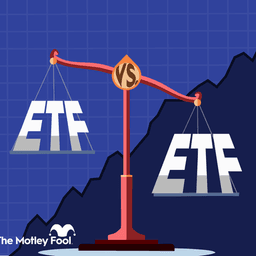
Comparison of FSTA and RSPS Consumer Staples ETFs
- Cost Comparison: FSTA's expense ratio is just 0.08%, significantly lower than RSPS's 0.40%, meaning investors pay only $8 annually for every $10,000 invested in FSTA compared to $40 for RSPS, greatly reducing investment costs.
- Performance Metrics: As of February 3, 2026, FSTA boasts a 1-year return of 8.34%, surpassing RSPS's 7.01%, indicating that FSTA has provided higher returns over the past year, potentially attracting yield-seeking investors.
- Risk Assessment: Over the past five years, FSTA's maximum drawdown stands at 16.57%, lower than RSPS's 18.61%, showcasing FSTA's relative stability during market fluctuations, which may appeal to risk-averse investors.
- Holding Structure: FSTA holds 96 stocks primarily focused on consumer defensive names, while RSPS equally weights 36 stocks, leading to a strategy where FSTA may achieve higher returns when top companies perform well but also faces greater volatility risk.
See More

Comparison Analysis of FSTA and RSPS ETFs
- Expense Ratio Advantage: FSTA boasts a significantly lower expense ratio of 0.08% compared to RSPS's 0.40%, meaning investors pay only $8 annually for every $10,000 invested in FSTA versus $40 for RSPS, enhancing FSTA's cost-effectiveness for long-term investors.
- Return Performance Discrepancy: While RSPS offers a slightly higher dividend yield, FSTA has outperformed in one-year and five-year total returns, indicating that FSTA may provide better capital appreciation opportunities amid market fluctuations.
- Holdings Structure Comparison: FSTA holds 96 stocks, primarily concentrated in large consumer brands like Costco, Walmart, and Procter & Gamble, which account for nearly 37% of its assets, whereas RSPS evenly distributes its 36 holdings, ensuring a balanced risk and return profile.
- Investment Strategy Choice: FSTA's concentrated holdings strategy may yield excess returns when large brands perform well, but it also poses greater risks during market downturns, while RSPS's equal-weight strategy helps mitigate single-stock volatility, making it suitable for risk-averse investors.
See More

Investor Confusion in AI Competition


- Investor Sentiment Shift: Following earnings calls from tech giants like Microsoft, Google, and Amazon, investor confusion about future directions led to Amazon losing over $300 billion in market cap, reflecting strong skepticism regarding its $200 billion AI investment plan.
- Capital Expenditure Comparison: Google announced an increase in capital expenditures to $175 billion to $185 billion, exceeding the expected $115 billion to $120 billion, indicating a proactive approach in AI despite challenges from slowing ad revenues.
- Changing Competitive Landscape: With Alphabet's ongoing investments and successes in AI, YouTube's user base has grown to 750 million, and Waymo's self-driving business is outpacing Tesla, suggesting a strengthening competitive advantage that may attract more investor interest.
- Mixed Market Reactions: Despite OpenAI and Anthropic's strong performance in AI, Microsoft's Copilot sales have been disappointing, highlighting investor concerns about its future growth and reflecting differing levels of confidence across companies.
See More

e.l.f. Beauty Surprises with Q3 Results, Stock Reversal Presents Buying Opportunity

- Significant Sales Growth: e.l.f. Beauty reported a 38% year-over-year sales increase in Q3 2023, reaching $489.5 million, significantly exceeding the analyst consensus of $460 million, indicating robust market demand and brand appeal.
- Enhanced Profitability: Adjusted earnings per share (EPS) surged 68% from $0.74 to $1.24, surpassing the analyst expectation of $0.72, reflecting the company's success in cost control and operational efficiency.
- Market Share Expansion: The e.l.f. brand gained 130 basis points in the mass cosmetics market, with U.S. and international revenues rising 36% and 44% respectively, despite weak consumption in the U.K., showcasing the brand's global appeal.
- Optimistic Outlook: The company raised its fiscal 2026 sales guidance to a growth range of 22% to 33%, expecting Rhode to contribute $260 million to $265 million in revenue, demonstrating confidence in future growth and strategic positioning.
See More
Walmart's Long-Term Investment Value
- Significant Sales Growth: In Q3 of fiscal 2026, Walmart reported net sales of $177 billion, a 5.8% increase, demonstrating resilience and adaptability in uncertain economic conditions, further solidifying its position as the world's largest retailer.
- Strong E-commerce Performance: Global e-commerce sales surged by 27%, indicating Walmart's successful transformation and market share gains in digital retail, enhancing its competitive edge and driving future growth potential.
- Substantial Shareholder Returns: An investment of $16.50 at Walmart's IPO would be worth $786,432 today, illustrating the immense benefits of long-term holding and underscoring the importance of patient investing.
- Outstanding Market Performance: Over the past decade, Walmart's stock has delivered a 480% return, significantly outperforming the S&P 500's 260%, reflecting not only the company's successful transformation in the retail sector but also the trust it has built among investors.
See More
Walmart's Path to Long-Term Investment Success
- Significant Sales Growth: In Q3 of fiscal 2026, Walmart reported net sales of $177 billion, a 5.8% increase, demonstrating resilience and adaptability in the face of economic uncertainty.
- Strong E-commerce Performance: Global e-commerce sales surged by 27%, indicating Walmart's successful digital transformation and further solidifying its market share, enhancing future growth potential.
- Substantial Shareholder Returns: Early investors who purchased Walmart stock at $16.50 during its IPO would now hold shares worth $786,432, illustrating the immense potential of long-term holding.
- Enhanced Market Competitiveness: Despite experiencing stock price fluctuations exceeding 30%, Walmart has successfully maintained its position as the world's largest retailer through multiple strategic pivots and innovations, showcasing its leadership in the retail sector.
See More
Comparison of FSTA and RSPS Consumer Staples ETFs
- Cost Comparison: FSTA's expense ratio is just 0.08%, significantly lower than RSPS's 0.40%, meaning investors pay only $8 annually for every $10,000 invested in FSTA compared to $40 for RSPS, greatly reducing investment costs.
- Performance Metrics: As of February 3, 2026, FSTA boasts a 1-year return of 8.34%, surpassing RSPS's 7.01%, indicating that FSTA has provided higher returns over the past year, potentially attracting yield-seeking investors.
- Risk Assessment: Over the past five years, FSTA's maximum drawdown stands at 16.57%, lower than RSPS's 18.61%, showcasing FSTA's relative stability during market fluctuations, which may appeal to risk-averse investors.
- Holding Structure: FSTA holds 96 stocks primarily focused on consumer defensive names, while RSPS equally weights 36 stocks, leading to a strategy where FSTA may achieve higher returns when top companies perform well but also faces greater volatility risk.
See More
Comparison Analysis of FSTA and RSPS ETFs
- Expense Ratio Advantage: FSTA boasts a significantly lower expense ratio of 0.08% compared to RSPS's 0.40%, meaning investors pay only $8 annually for every $10,000 invested in FSTA versus $40 for RSPS, enhancing FSTA's cost-effectiveness for long-term investors.
- Return Performance Discrepancy: While RSPS offers a slightly higher dividend yield, FSTA has outperformed in one-year and five-year total returns, indicating that FSTA may provide better capital appreciation opportunities amid market fluctuations.
- Holdings Structure Comparison: FSTA holds 96 stocks, primarily concentrated in large consumer brands like Costco, Walmart, and Procter & Gamble, which account for nearly 37% of its assets, whereas RSPS evenly distributes its 36 holdings, ensuring a balanced risk and return profile.
- Investment Strategy Choice: FSTA's concentrated holdings strategy may yield excess returns when large brands perform well, but it also poses greater risks during market downturns, while RSPS's equal-weight strategy helps mitigate single-stock volatility, making it suitable for risk-averse investors.
See More
Investor Confusion in AI Competition
- Investor Sentiment Shift: Following earnings calls from tech giants like Microsoft, Google, and Amazon, investor confusion about future directions led to Amazon losing over $300 billion in market cap, reflecting strong skepticism regarding its $200 billion AI investment plan.
- Capital Expenditure Comparison: Google announced an increase in capital expenditures to $175 billion to $185 billion, exceeding the expected $115 billion to $120 billion, indicating a proactive approach in AI despite challenges from slowing ad revenues.
- Changing Competitive Landscape: With Alphabet's ongoing investments and successes in AI, YouTube's user base has grown to 750 million, and Waymo's self-driving business is outpacing Tesla, suggesting a strengthening competitive advantage that may attract more investor interest.
- Mixed Market Reactions: Despite OpenAI and Anthropic's strong performance in AI, Microsoft's Copilot sales have been disappointing, highlighting investor concerns about its future growth and reflecting differing levels of confidence across companies.
See More
e.l.f. Beauty Surprises with Q3 Results, Stock Reversal Presents Buying Opportunity
- Significant Sales Growth: e.l.f. Beauty reported a 38% year-over-year sales increase in Q3 2023, reaching $489.5 million, significantly exceeding the analyst consensus of $460 million, indicating robust market demand and brand appeal.
- Enhanced Profitability: Adjusted earnings per share (EPS) surged 68% from $0.74 to $1.24, surpassing the analyst expectation of $0.72, reflecting the company's success in cost control and operational efficiency.
- Market Share Expansion: The e.l.f. brand gained 130 basis points in the mass cosmetics market, with U.S. and international revenues rising 36% and 44% respectively, despite weak consumption in the U.K., showcasing the brand's global appeal.
- Optimistic Outlook: The company raised its fiscal 2026 sales guidance to a growth range of 22% to 33%, expecting Rhode to contribute $260 million to $265 million in revenue, demonstrating confidence in future growth and strategic positioning.
See More