ETFs in Focus as U.S. Economy Rebounds in Q2


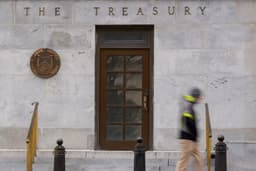
U.S. Economic Growth: The U.S. economy rebounded in Q2 2025 with a GDP growth rate of 3%, surpassing expectations, following a contraction in Q1 due to increased imports before tariff measures were implemented. However, signs of a slowdown are emerging as sales to private domestic purchasers grew at their weakest pace since 2022.
Investment Trends: With stable interest rates and decent economic growth, investors are shifting towards value ETFs, which tend to perform better in higher-rate environments. Notable value ETFs like Vanguard Value ETF (VTV) and Utilities Select Sector SPDR Fund (XLU) have shown positive performance recently, while concerns about recession risks have decreased significantly.
Trade with 70% Backtested Accuracy
Analyst Views on VTV


No data
About the author


Tech Turmoil or Valuation Adjustment? Shifting Focus to Value in 2026


Market Volatility: Recent trading sessions indicate a return of volatility in the market, particularly affecting Nasdaq futures, which are experiencing downward pressure due to uncertainty surrounding the Federal Reserve's interest rate decisions.
Investment Shifts: Investors are moving from high-risk, high-reward assets to safer investments as uncertainty increases, particularly in the technology sector, which has seen a significant shift in focus towards value preservation rather than aggressive growth.
Nasdaq-100 Performance: The Nasdaq-100 index has been a strong performer, driven by major companies in AI and infrastructure, but its high valuation poses risks, as it is trading at a price-to-earnings ratio significantly above historical averages.
Strategic Rebalancing: Investors are encouraged to consider strategic rebalancing of their portfolios, focusing on stable, income-generating funds like the Vanguard Value ETF, which offers a more defensive approach amidst market fluctuations.

Here are the keys to Buffett's investment success, as revealed by this billionaire investor.

Warren Buffett's Retirement Announcement: Warren Buffett, the highly respected investor, announced he will retire as CEO of Berkshire Hathaway by the end of 2025 after a remarkable six-decade tenure.
Succession Plan: Buffett has chosen Greg Abel as his successor to take over the leadership of Berkshire Hathaway, a significant transition for the company and its investors.

Santoli's Wednesday Market Summary: Testing the Market's Capacity to Handle the Unwind of AI-Infrastructure Trades


Market Dynamics: The market is struggling to manage the unwinding of the AI-infrastructure trade, with a shift towards banks, value stocks, and consumer cyclicals facing limitations, leading to a decline in the S&P 500 back to early-October levels.
Investor Sentiment: Companies involved in AI and data-center buildouts are under scrutiny, with Nvidia's stock performance lagging behind large-cap banks, as investors express skepticism about future payoffs and competition in the chip market.
Economic Indicators: Treasury yields remain elevated due to persistent inflation and government deficits, while the upcoming CPI report may influence bond market reactions, although inflation is no longer viewed as a major threat.
Future Outlook: The current stall in the S&P 500 and high investor equity exposure suggest a potential end-of-year rally could occur, despite widespread expectations for a late-year market lift being confounded.

Santoli's Tuesday Market Recap: Slight Decline in Market Momentum and Pro-Cyclical Rotation

Market Performance: The market is experiencing a slowdown in its pro-cyclical rotation, with key indexes struggling to maintain momentum near levels from eight weeks ago, as "real-economy" stocks gain favor over AI-dependent Big Tech.
Investor Sentiment: A recent Bank of America survey indicates record-low cash holdings among professional investors, suggesting aggressive positioning for a year-end market ramp, while concerns about over-investment in new capacity are emerging.
Economic Indicators: Recent data showing a slight increase in the unemployment rate and sluggish labor demand is testing cyclical optimism, raising questions about whether the market has overvalued expectations for a 2026 economic reacceleration.
Oil Prices and Inflation: Oil prices have fallen to early-2021 levels due to persistent supply and weak demand, which may signal economic concerns, but could also contribute to lower market-based inflation expectations, potentially leading to a more dovish Federal Reserve.

The final major Wall Street bank to announce its 2026 projections anticipates double-digit growth for the S&P 500.


Market Volatility: As the bull market enters its fourth year, increased volatility is anticipated, making it harder to identify winners and losers in the AI sector.
Citi's Forecast: Citi strategists predict that an accommodating Federal Reserve, strong earnings growth, and a robust fiscal impulse will lead to a year-end target of 7,700 for the S&P 500.

Stock Market Forecast: Sustaining the Rally Through 2026


AI's Impact on Markets: The ongoing debate for 2026 centers around the influence of artificial intelligence on market performance.
Investment Opportunities: Despite uncertainties, there are potential bargains and foundational elements that could lead to a positive year for stocks and bonds.
Tech Turmoil or Valuation Adjustment? Shifting Focus to Value in 2026
Market Volatility: Recent trading sessions indicate a return of volatility in the market, particularly affecting Nasdaq futures, which are experiencing downward pressure due to uncertainty surrounding the Federal Reserve's interest rate decisions.
Investment Shifts: Investors are moving from high-risk, high-reward assets to safer investments as uncertainty increases, particularly in the technology sector, which has seen a significant shift in focus towards value preservation rather than aggressive growth.
Nasdaq-100 Performance: The Nasdaq-100 index has been a strong performer, driven by major companies in AI and infrastructure, but its high valuation poses risks, as it is trading at a price-to-earnings ratio significantly above historical averages.
Strategic Rebalancing: Investors are encouraged to consider strategic rebalancing of their portfolios, focusing on stable, income-generating funds like the Vanguard Value ETF, which offers a more defensive approach amidst market fluctuations.
Here are the keys to Buffett's investment success, as revealed by this billionaire investor.
Warren Buffett's Retirement Announcement: Warren Buffett, the highly respected investor, announced he will retire as CEO of Berkshire Hathaway by the end of 2025 after a remarkable six-decade tenure.
Succession Plan: Buffett has chosen Greg Abel as his successor to take over the leadership of Berkshire Hathaway, a significant transition for the company and its investors.
Santoli's Wednesday Market Summary: Testing the Market's Capacity to Handle the Unwind of AI-Infrastructure Trades
Market Dynamics: The market is struggling to manage the unwinding of the AI-infrastructure trade, with a shift towards banks, value stocks, and consumer cyclicals facing limitations, leading to a decline in the S&P 500 back to early-October levels.
Investor Sentiment: Companies involved in AI and data-center buildouts are under scrutiny, with Nvidia's stock performance lagging behind large-cap banks, as investors express skepticism about future payoffs and competition in the chip market.
Economic Indicators: Treasury yields remain elevated due to persistent inflation and government deficits, while the upcoming CPI report may influence bond market reactions, although inflation is no longer viewed as a major threat.
Future Outlook: The current stall in the S&P 500 and high investor equity exposure suggest a potential end-of-year rally could occur, despite widespread expectations for a late-year market lift being confounded.
Santoli's Tuesday Market Recap: Slight Decline in Market Momentum and Pro-Cyclical Rotation
Market Performance: The market is experiencing a slowdown in its pro-cyclical rotation, with key indexes struggling to maintain momentum near levels from eight weeks ago, as "real-economy" stocks gain favor over AI-dependent Big Tech.
Investor Sentiment: A recent Bank of America survey indicates record-low cash holdings among professional investors, suggesting aggressive positioning for a year-end market ramp, while concerns about over-investment in new capacity are emerging.
Economic Indicators: Recent data showing a slight increase in the unemployment rate and sluggish labor demand is testing cyclical optimism, raising questions about whether the market has overvalued expectations for a 2026 economic reacceleration.
Oil Prices and Inflation: Oil prices have fallen to early-2021 levels due to persistent supply and weak demand, which may signal economic concerns, but could also contribute to lower market-based inflation expectations, potentially leading to a more dovish Federal Reserve.
The final major Wall Street bank to announce its 2026 projections anticipates double-digit growth for the S&P 500.
Market Volatility: As the bull market enters its fourth year, increased volatility is anticipated, making it harder to identify winners and losers in the AI sector.
Citi's Forecast: Citi strategists predict that an accommodating Federal Reserve, strong earnings growth, and a robust fiscal impulse will lead to a year-end target of 7,700 for the S&P 500.
Stock Market Forecast: Sustaining the Rally Through 2026
AI's Impact on Markets: The ongoing debate for 2026 centers around the influence of artificial intelligence on market performance.
Investment Opportunities: Despite uncertainties, there are potential bargains and foundational elements that could lead to a positive year for stocks and bonds.