Insperity Reports Disappointing Q3 Results, Alongside IAC, Archer-Daniels-Midland, and Other Major Stocks Declining in Tuesday's Pre-Market Trading
Written by Emily J. Thompson, Senior Investment Analyst
Updated: Nov 04 2025
0mins


Should l Buy UUUU?
Source: Benzinga
U.S. Stock Market Trends: U.S. stock futures are down, with the Dow futures dropping over 300 points, indicating a bearish market sentiment.
Insperity Inc Financial Results: Insperity Inc's shares fell 31.3% in pre-market trading after reporting a quarterly loss of 20 cents per share, missing analyst expectations.
Other Notable Stock Movements: Several companies, including Sarepta Therapeutics and Jeld-Wen, experienced significant declines in pre-market trading due to disappointing financial results and lowered guidance.
General Market Sentiment: The overall market is reacting negatively to various companies' earnings reports, leading to widespread declines in stock prices across multiple sectors.
Trade with 70% Backtested Accuracy
Stop guessing "Should I Buy UUUU?" and start using high-conviction signals backed by rigorous historical data.
Sign up today to access powerful investing tools and make smarter, data-driven decisions.
Analyst Views on UUUU
Wall Street analysts forecast UUUU stock price to fall over the next 12 months. According to Wall Street analysts, the average 1-year price target for UUUU is 20.06 USD with a low forecast of 11.50 USD and a high forecast of 26.75 USD. However, analyst price targets are subjective and often lag stock prices, so investors should focus on the objective reasons behind analyst rating changes, which better reflect the company's fundamentals.
4 Analyst Rating
3 Buy
0 Hold
1 Sell
Moderate Buy
Current: 21.220

Low
11.50
Averages
20.06
High
26.75
Current: 21.220
Low
11.50
Averages
20.06
High
26.75
About UUUU
Energy Fuels Inc. is a global critical mineral company. The Company focuses on uranium, rare earth elements (REEs), heavy mineral sands, vanadium and medical isotopes. The Company owns and operates several conventional and in-situ recovery uranium projects in the western United States. The Company has three heavy mineral sands projects: the 100% owned Vara Mada Project in Madagascar; the 100% owned Bahia Project in Brazil, and the Donald Project in Australia. The Vara Mada Project is located in south-west Madagascar, approximately 45-kilometer (km) north of the regional town and port of Toliara, which is rich in ilmenite, rutile, zircon and monazite. Its uranium projects are White Mesa Mill and Pinyon Plain Project. The White Mesa Mill Project is in Utah, which is the only fully licensed and operating conventional uranium processing facility in the United States. Its other projects include Hank Project, Jane Dough Project, Kwale Project, and others.
About the author

Emily J. Thompson
Emily J. Thompson, a Chartered Financial Analyst (CFA) with 12 years in investment research, graduated with honors from the Wharton School. Specializing in industrial and technology stocks, she provides in-depth analysis for Intellectia’s earnings and market brief reports.

Kazakhstan's Uranium Supply Peak Approaches


- Structural Supply Shock: Kazakhstan has historically supplied about 40% of global uranium, but its major mines are nearing peak output, with production expected to decline sharply over the next two decades, leading to a structural supply shock that will impact global uranium prices.
- Rising Demand Context: As governments revive nuclear energy for energy security, grid stability, and carbon reduction, particularly to power AI data centers, the demand for uranium is quietly increasing, exacerbating the supply tightness in the market.
- Cameco's Scale Advantage: Cameco possesses significant scale and strength in the nuclear fuel cycle, with tier-one assets in Canada's Athabasca Basin and long-term contracts that provide a competitive edge in a rising-price environment, positioning it as a strategic fuel supplier.
- Energy Fuels' M&A Optionality: As the leading U.S. uranium producer, Energy Fuels is not only generating yellowcake but also expanding into critical minerals, with a proposed $299 million acquisition of Australian Strategic Materials aimed at strengthening its balance sheet and diversifying its operations, enhancing its market competitiveness.
See More
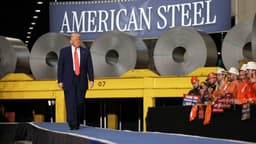
Trump Administration Increases Investments in Critical Minerals


- Surge in Investments: The Trump administration has made unprecedented equity investments in at least 10 companies over the past year, including critical minerals and chipmakers, aiming to build a domestic supply chain and reduce reliance on China, indicating a proactive government role in economic strategy.
- U.S. Steel Golden Share: The administration secured a golden share in U.S. Steel as a condition for approving Nippon Steel's acquisition, granting the president veto power over key business decisions, which ensures stability and growth in the U.S. steel industry, reflecting direct government intervention in vital sectors.
- Strategic Deal with MP Materials: The Defense Department struck a landmark deal with MP Materials, investing $400 million in preferred stock with rights to purchase additional shares, positioning the Pentagon as the largest single shareholder and further solidifying U.S. dominance in the rare earth mining sector.
- L3Harris and Defense Partnership: L3Harris announced a proposed partnership with the U.S. government, where the Pentagon will invest $1 billion in its rocket motor business, with plans for an IPO in the second half of 2026, allowing the Pentagon's investment to convert into common equity, enhancing the capital base of the defense industry.
See More

Trump's 'Project Vault' Boosts Energy Fuels Stock Surge

- Project Vault Overview: President Trump's 'Project Vault' aims to invest $11.7 billion in establishing a strategic reserve of rare-earth metals, covering over 50 minerals deemed critical by the Interior Department, including uranium and rare earths, which could have significant implications for the industry.
- Energy Fuels Stock Performance: Energy Fuels' stock surged 15.6% to $23.40 by noon Tuesday, with a market capitalization of $5 billion, reflecting strong investor confidence in rising uranium demand, particularly in light of government plans for large-scale uranium procurement.
- Sales and Financial Condition: Despite being the leading U.S. producer of natural uranium concentrate, Energy Fuels reported only $80 million in sales over the past 12 months and nearly $100 million in losses, indicating a fragile financial situation with uncertain future profitability.
- Market Outlook Analysis: Analysts project Energy Fuels' sales to soar to $420 million by 2029, but with earnings per share only at $0.45, resulting in a price-to-earnings ratio exceeding 53x, suggesting high investment risk and categorizing the stock as speculative.
See More

Trump's Project Vault to Establish Strategic Uranium Reserve
- Uranium Reserve Initiative: President Trump's announcement of Project Vault includes a strategic uranium reserve, expected to attract over $11.7 billion in government investment, significantly enhancing market prospects for uranium producers, particularly Energy Fuels.
- Strong Market Reaction: Energy Fuels (UUUU) stock surged 15.6% by noon Tuesday, reflecting investor optimism regarding the uranium reserve initiative, despite the company reporting less than $80 million in sales over the past year and nearly $100 million in losses.
- Future Sales Projections: Analysts forecast Energy Fuels' sales to soar to $420 million by 2029, yet even then, projected earnings per share are only $0.45, resulting in a price-to-earnings ratio exceeding 53x, indicating the stock's speculative nature.
- Cautious Investment Advice: While Project Vault may present opportunities for Energy Fuels, its poor cash flow situation leads analysts to recommend it as a “sell,” urging investors to consider other stocks with greater potential for returns.
See More

U.S. Rare Earth Miners' Shares Rise on New Reserve Plan


- Share Price Surge: Shares of U.S. rare earth miners rose in pre-market trading following President Trump's announcement of a $12 billion critical mineral reserve, indicating a positive market response to the initiative.
- Project Context: Known as Project Vault, this critical mineral reserve aims to counter China's dominance in rare earth minerals, protecting U.S. tech firms and automakers from supply shocks while reducing reliance on Chinese resources.
- Funding Structure: The plan combines $2 billion in private funding with a $10 billion loan from the U.S. Export-Import Bank, with Trump stating that American taxpayers are expected to profit from the interest on the loan, highlighting the project's potential economic benefits.
- National Security Strategy: The new reserve is modeled after existing strategic petroleum and critical stockpiles, intended to support U.S. industry and prevent future supply disruptions, thereby enhancing national security and economic resilience.
See More

U.S. Launches Critical Minerals Reserve Initiative

- Strategic Minerals Reserve: President Trump announced the establishment of a critical minerals reserve with an initial funding of $12 billion, aimed at reducing reliance on China for rare earths and enhancing national resource security.
- Positive Market Reaction: Following the announcement, U.S.-listed rare earth mining companies surged in premarket trading, with Critical Metals up 6.3% and USA Rare Earth up 4.7%, indicating strong market optimism regarding the initiative.
- Funding Structure: The plan will pool $1.67 billion in private capital with a $10 billion loan from the U.S. Export-Import Bank, creating a first-of-its-kind strategic minerals reserve to support resource development in the U.S. private sector.
- Global Rare Earth Landscape: China dominates the critical minerals supply chain, accounting for nearly 60% of global rare earth mining and over 90% of magnet manufacturing, highlighting the urgency and strategic significance of the U.S. reserve initiative.
See More
Kazakhstan's Uranium Supply Peak Approaches
- Structural Supply Shock: Kazakhstan has historically supplied about 40% of global uranium, but its major mines are nearing peak output, with production expected to decline sharply over the next two decades, leading to a structural supply shock that will impact global uranium prices.
- Rising Demand Context: As governments revive nuclear energy for energy security, grid stability, and carbon reduction, particularly to power AI data centers, the demand for uranium is quietly increasing, exacerbating the supply tightness in the market.
- Cameco's Scale Advantage: Cameco possesses significant scale and strength in the nuclear fuel cycle, with tier-one assets in Canada's Athabasca Basin and long-term contracts that provide a competitive edge in a rising-price environment, positioning it as a strategic fuel supplier.
- Energy Fuels' M&A Optionality: As the leading U.S. uranium producer, Energy Fuels is not only generating yellowcake but also expanding into critical minerals, with a proposed $299 million acquisition of Australian Strategic Materials aimed at strengthening its balance sheet and diversifying its operations, enhancing its market competitiveness.
See More
Trump Administration Increases Investments in Critical Minerals
- Surge in Investments: The Trump administration has made unprecedented equity investments in at least 10 companies over the past year, including critical minerals and chipmakers, aiming to build a domestic supply chain and reduce reliance on China, indicating a proactive government role in economic strategy.
- U.S. Steel Golden Share: The administration secured a golden share in U.S. Steel as a condition for approving Nippon Steel's acquisition, granting the president veto power over key business decisions, which ensures stability and growth in the U.S. steel industry, reflecting direct government intervention in vital sectors.
- Strategic Deal with MP Materials: The Defense Department struck a landmark deal with MP Materials, investing $400 million in preferred stock with rights to purchase additional shares, positioning the Pentagon as the largest single shareholder and further solidifying U.S. dominance in the rare earth mining sector.
- L3Harris and Defense Partnership: L3Harris announced a proposed partnership with the U.S. government, where the Pentagon will invest $1 billion in its rocket motor business, with plans for an IPO in the second half of 2026, allowing the Pentagon's investment to convert into common equity, enhancing the capital base of the defense industry.
See More
Trump's 'Project Vault' Boosts Energy Fuels Stock Surge
- Project Vault Overview: President Trump's 'Project Vault' aims to invest $11.7 billion in establishing a strategic reserve of rare-earth metals, covering over 50 minerals deemed critical by the Interior Department, including uranium and rare earths, which could have significant implications for the industry.
- Energy Fuels Stock Performance: Energy Fuels' stock surged 15.6% to $23.40 by noon Tuesday, with a market capitalization of $5 billion, reflecting strong investor confidence in rising uranium demand, particularly in light of government plans for large-scale uranium procurement.
- Sales and Financial Condition: Despite being the leading U.S. producer of natural uranium concentrate, Energy Fuels reported only $80 million in sales over the past 12 months and nearly $100 million in losses, indicating a fragile financial situation with uncertain future profitability.
- Market Outlook Analysis: Analysts project Energy Fuels' sales to soar to $420 million by 2029, but with earnings per share only at $0.45, resulting in a price-to-earnings ratio exceeding 53x, suggesting high investment risk and categorizing the stock as speculative.
See More
Trump's Project Vault to Establish Strategic Uranium Reserve
- Uranium Reserve Initiative: President Trump's announcement of Project Vault includes a strategic uranium reserve, expected to attract over $11.7 billion in government investment, significantly enhancing market prospects for uranium producers, particularly Energy Fuels.
- Strong Market Reaction: Energy Fuels (UUUU) stock surged 15.6% by noon Tuesday, reflecting investor optimism regarding the uranium reserve initiative, despite the company reporting less than $80 million in sales over the past year and nearly $100 million in losses.
- Future Sales Projections: Analysts forecast Energy Fuels' sales to soar to $420 million by 2029, yet even then, projected earnings per share are only $0.45, resulting in a price-to-earnings ratio exceeding 53x, indicating the stock's speculative nature.
- Cautious Investment Advice: While Project Vault may present opportunities for Energy Fuels, its poor cash flow situation leads analysts to recommend it as a “sell,” urging investors to consider other stocks with greater potential for returns.
See More
U.S. Rare Earth Miners' Shares Rise on New Reserve Plan
- Share Price Surge: Shares of U.S. rare earth miners rose in pre-market trading following President Trump's announcement of a $12 billion critical mineral reserve, indicating a positive market response to the initiative.
- Project Context: Known as Project Vault, this critical mineral reserve aims to counter China's dominance in rare earth minerals, protecting U.S. tech firms and automakers from supply shocks while reducing reliance on Chinese resources.
- Funding Structure: The plan combines $2 billion in private funding with a $10 billion loan from the U.S. Export-Import Bank, with Trump stating that American taxpayers are expected to profit from the interest on the loan, highlighting the project's potential economic benefits.
- National Security Strategy: The new reserve is modeled after existing strategic petroleum and critical stockpiles, intended to support U.S. industry and prevent future supply disruptions, thereby enhancing national security and economic resilience.
See More
U.S. Launches Critical Minerals Reserve Initiative
- Strategic Minerals Reserve: President Trump announced the establishment of a critical minerals reserve with an initial funding of $12 billion, aimed at reducing reliance on China for rare earths and enhancing national resource security.
- Positive Market Reaction: Following the announcement, U.S.-listed rare earth mining companies surged in premarket trading, with Critical Metals up 6.3% and USA Rare Earth up 4.7%, indicating strong market optimism regarding the initiative.
- Funding Structure: The plan will pool $1.67 billion in private capital with a $10 billion loan from the U.S. Export-Import Bank, creating a first-of-its-kind strategic minerals reserve to support resource development in the U.S. private sector.
- Global Rare Earth Landscape: China dominates the critical minerals supply chain, accounting for nearly 60% of global rare earth mining and over 90% of magnet manufacturing, highlighting the urgency and strategic significance of the U.S. reserve initiative.
See More