VanEck Semiconductor ETF Heavily Invested in Nvidia and TSMC, Up 59% Yearly
Written by Emily J. Thompson, Senior Investment Analyst
Updated: Jan 23 2026
0mins

Should l Buy INTC?
Source: NASDAQ.COM
- ETF Holdings Analysis: The VanEck Semiconductor ETF (NASDAQ: SMH) heavily invests in 25 semiconductor companies, including Nvidia and TSMC, achieving a 59% annual increase, highlighting its strong performance in the generative AI sector and attracting investor interest.
- Diversified Investment Options: The State Street SPDR S&P Semiconductor ETF (NYSEMKT: XSD) offers balanced exposure to 43 companies with a 41% annual increase, and its equal-weight strategy allows investors to maintain stable returns even when large firms decline.
- Market Outlook: According to MarketsandMarkets.com, the generative AI market is projected to grow from $71.4 billion in 2025 to $890.6 billion by 2032, with a compound annual growth rate of 43.4%, presenting significant investment opportunities for investors.
- Investment Recommendations: The iShares Semiconductor ETF (NASDAQ: SOXX) focuses on U.S. companies and has a 56% annual increase, with a lower expense ratio of 0.34%, making it an ideal choice for investors looking to minimize foreign exposure.
Trade with 70% Backtested Accuracy
Stop guessing "Should I Buy INTC?" and start using high-conviction signals backed by rigorous historical data.
Sign up today to access powerful investing tools and make smarter, data-driven decisions.
Analyst Views on INTC
Wall Street analysts forecast INTC stock price to fall
29 Analyst Rating
5 Buy
19 Hold
5 Sell
Hold
Current: 46.480

Low
20.00
Averages
39.30
High
52.00
Current: 46.480
Low
20.00
Averages
39.30
High
52.00
About INTC
Intel Corporation is a global designer and manufacturer of semiconductor products. The Company operates through three segments: Intel Products, Intel Foundry, and All Other. Its Intel Products segment includes Client Computing Group (CCG), Data Center and AI (DCAI), Network and Edge (NEX). The CCG is bringing together the operating system, system architecture, hardware, and software application integration to enable PC experiences. DCAI delivers workload-optimized solutions to cloud service providers and enterprises, along with silicon devices for communications service providers, network and edge, and HPC customers. NEX helps networks and edge compute systems from fixed-function hardware to general-purpose compute, acceleration, and networking devices running cloud native software on programmable hardware. The Intel Foundry segment comprises technology development, manufacturing and foundry services. All Other segments include Altera, Mobileye, Other.
About the author

Emily J. Thompson
Emily J. Thompson, a Chartered Financial Analyst (CFA) with 12 years in investment research, graduated with honors from the Wharton School. Specializing in industrial and technology stocks, she provides in-depth analysis for Intellectia’s earnings and market brief reports.
Intel Stock Rebounds but Fundamentals Lag Behind

- Stock Rebound: Intel's stock nearly doubled in 2025, yet the company's fundamental business metrics remain unhealed, indicating disappointment among long-term shareholders.
- Revenue and Profit Decline: In 2022, Intel's revenue plunged by 20% and net income fell nearly 40%, with a further 80% drop in net income in 2023, reflecting the impact of high inflation and macroeconomic pressures on demand.
- Management Changes: Following $15.9 billion in impairment and $2.8 billion in restructuring charges, Intel's board forced former CEO Pat Gelsinger to resign, appointing Lip-Bu Tan as the new CEO in hopes of revitalizing performance.
- Future Outlook: Despite a rise in gross margin to 34.8% in 2025, Intel reported a GAAP loss of approximately $300 million, as weakness in the PC segment offset gains in data center and AI sales, leaving the success of its rebound uncertain.
See More

Live Nation's Fourth Quarter Earnings Outlook


- Stock Performance: Live Nation's shares have declined by 4% over the past year while the broader market gained about 12%, indicating a classic investor dilemma ahead of the upcoming earnings report that could impact short-term investment decisions.
- Global Show Growth: In Q3 2025, the global show count surged by 60% year-over-year, with 120 additional events generating approximately $40 million in extra profit from the concert segment, and management remains optimistic about ticket sales continuing to grow in 2026.
- Ticketing Reform Support: Live Nation has cracked down on scalpers and bots, canceling over a million risky accounts in October, which will slightly dent near-term profits but is beneficial for long-term brand health and consumer trust.
- Legal Risks: The upcoming antitrust trial set for March introduces regulatory uncertainty; while the company is confident in its legal position, this uncertainty may dampen investor enthusiasm and affect stock performance.
See More

Duolingo Achieves Significant Milestones in 2025

- User Growth Milestone: In 2025, Duolingo surpassed 50 million daily active users and over 135 million monthly active users, indicating its status as one of the world's most popular freemium platforms, with sustained user growth translating into increased paid subscriptions.
- Revenue and Profitability Peaks: Duolingo achieved over $1 billion in annual revenue for the first time in 2025, with guidance of $1.028 billion to $1.032 billion, marking a significant milestone for consumer subscription businesses, while adjusted EBITDA margin improved from 24.7% to 29.5%.
- AI-Driven Economic Benefits: AI is not just a buzzword for Duolingo; it has lowered content development costs and increased average revenue per user (ARPU) by encouraging subscriptions to higher-tier plans, demonstrating AI's tangible impact on operational efficiency and revenue growth.
- Stock Price Volatility and Investor Focus: Despite strong operational improvements in 2025, Duolingo's stock price experienced volatility, primarily due to investor concerns over growth rate normalization and prioritizing product investment, highlighting that strong operational results do not always correlate with stock performance.
See More

Micron Technology's Significant Growth Potential Ahead

- Surging Market Demand: RAM prices are expected to rise by 50% by the end of Q1 2026 compared to Q4 2025, directly boosting Micron Technology's revenue growth, particularly in light of the surging demand in the AI sector.
- Impressive Financial Performance: Micron reported $13.6 billion in revenue for Q1 of fiscal 2026, a 57% year-over-year increase, with DRAM accounting for 79% of that revenue, highlighting its strong growth potential in the AI memory market.
- Strategic Investment Initiatives: The $100 billion semiconductor factory being built in upstate New York will become the largest semiconductor facility in the U.S., further solidifying Micron's leadership position in the global memory market and addressing future memory shortages.
- Optimistic Stock Price Forecast: Based on its current P/E ratio of 39.31 and projected EPS for fiscal 2026, analysts predict Micron's stock price could exceed $1,200 by August 2026, indicating significant investment value in its shares.
See More
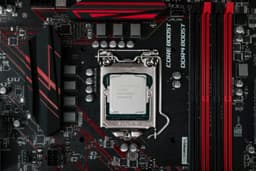
Intel's Transformation Faces Challenges and Opportunities
- Declining Leadership: Intel, once the key producer of microprocessors in the 1990s, has seen its market leadership slip due to a series of missteps, and is now scrambling to catch up with rivals Nvidia and AMD, highlighting the uncertainty surrounding the company's position in the tech industry.
- Strategic Transformation: New CEO Lip-Bu Tan has outlined a three-pronged strategy: leveraging the x86 CPU architecture to meet hyperscaler demands, catching up in the GPU market, and establishing Intel as a U.S. semiconductor foundry, attracting investments from both government and private sectors, indicating a strong focus on future growth.
- Financial Pressures: Despite the foundry segment generating $4.5 billion in revenue in Q4 2025, it reported $2.5 billion in operating losses, illustrating the significant financial challenges faced during the transformation, with operating margins consistently negative.
- Overly Optimistic Market Expectations: Although Intel's stock has surged over the past year, its forward P/E ratio is nearing 50, reflecting excessive optimism about the company's ability to quickly turn around, and investors should be cautious of potential disappointment given the slow progress of the transformation.
See More

Ethereum Price Plummets Amid Stablecoin Optimism
- Price Drop: Ethereum has fallen 40% in the past three months to $1,909.74, down over 60% from its all-time high of $4,946.05, raising investor concerns about its future performance amid such volatility.
- Stablecoin Market Outlook: The U.S. government's stablecoin legislation legitimizes tokenized versions of traditional currencies, with Citigroup analysts predicting the market could reach between $1.9 trillion and $4 trillion by 2030, up from about $307 billion currently, indicating a potential growth of around 1,200%.
- Ethereum's Market Share: Over 50% of stablecoins are currently issued on Ethereum, suggesting that as stablecoins gain traction, the value and transaction volume on the Ethereum blockchain are likely to increase significantly, although it may face competition from new entrants.
- Tokenization Trend: Beyond stablecoins, the potential for tokenized assets is rising, with Nasdaq and the New York Stock Exchange exploring ways to tokenize stocks, which could accelerate Ethereum's usage, although further regulatory steps and systemic changes are necessary.
See More
Intel Stock Rebounds but Fundamentals Lag Behind
- Stock Rebound: Intel's stock nearly doubled in 2025, yet the company's fundamental business metrics remain unhealed, indicating disappointment among long-term shareholders.
- Revenue and Profit Decline: In 2022, Intel's revenue plunged by 20% and net income fell nearly 40%, with a further 80% drop in net income in 2023, reflecting the impact of high inflation and macroeconomic pressures on demand.
- Management Changes: Following $15.9 billion in impairment and $2.8 billion in restructuring charges, Intel's board forced former CEO Pat Gelsinger to resign, appointing Lip-Bu Tan as the new CEO in hopes of revitalizing performance.
- Future Outlook: Despite a rise in gross margin to 34.8% in 2025, Intel reported a GAAP loss of approximately $300 million, as weakness in the PC segment offset gains in data center and AI sales, leaving the success of its rebound uncertain.
See More
Live Nation's Fourth Quarter Earnings Outlook
- Stock Performance: Live Nation's shares have declined by 4% over the past year while the broader market gained about 12%, indicating a classic investor dilemma ahead of the upcoming earnings report that could impact short-term investment decisions.
- Global Show Growth: In Q3 2025, the global show count surged by 60% year-over-year, with 120 additional events generating approximately $40 million in extra profit from the concert segment, and management remains optimistic about ticket sales continuing to grow in 2026.
- Ticketing Reform Support: Live Nation has cracked down on scalpers and bots, canceling over a million risky accounts in October, which will slightly dent near-term profits but is beneficial for long-term brand health and consumer trust.
- Legal Risks: The upcoming antitrust trial set for March introduces regulatory uncertainty; while the company is confident in its legal position, this uncertainty may dampen investor enthusiasm and affect stock performance.
See More
Duolingo Achieves Significant Milestones in 2025
- User Growth Milestone: In 2025, Duolingo surpassed 50 million daily active users and over 135 million monthly active users, indicating its status as one of the world's most popular freemium platforms, with sustained user growth translating into increased paid subscriptions.
- Revenue and Profitability Peaks: Duolingo achieved over $1 billion in annual revenue for the first time in 2025, with guidance of $1.028 billion to $1.032 billion, marking a significant milestone for consumer subscription businesses, while adjusted EBITDA margin improved from 24.7% to 29.5%.
- AI-Driven Economic Benefits: AI is not just a buzzword for Duolingo; it has lowered content development costs and increased average revenue per user (ARPU) by encouraging subscriptions to higher-tier plans, demonstrating AI's tangible impact on operational efficiency and revenue growth.
- Stock Price Volatility and Investor Focus: Despite strong operational improvements in 2025, Duolingo's stock price experienced volatility, primarily due to investor concerns over growth rate normalization and prioritizing product investment, highlighting that strong operational results do not always correlate with stock performance.
See More
Micron Technology's Significant Growth Potential Ahead
- Surging Market Demand: RAM prices are expected to rise by 50% by the end of Q1 2026 compared to Q4 2025, directly boosting Micron Technology's revenue growth, particularly in light of the surging demand in the AI sector.
- Impressive Financial Performance: Micron reported $13.6 billion in revenue for Q1 of fiscal 2026, a 57% year-over-year increase, with DRAM accounting for 79% of that revenue, highlighting its strong growth potential in the AI memory market.
- Strategic Investment Initiatives: The $100 billion semiconductor factory being built in upstate New York will become the largest semiconductor facility in the U.S., further solidifying Micron's leadership position in the global memory market and addressing future memory shortages.
- Optimistic Stock Price Forecast: Based on its current P/E ratio of 39.31 and projected EPS for fiscal 2026, analysts predict Micron's stock price could exceed $1,200 by August 2026, indicating significant investment value in its shares.
See More
Intel's Transformation Faces Challenges and Opportunities
- Declining Leadership: Intel, once the key producer of microprocessors in the 1990s, has seen its market leadership slip due to a series of missteps, and is now scrambling to catch up with rivals Nvidia and AMD, highlighting the uncertainty surrounding the company's position in the tech industry.
- Strategic Transformation: New CEO Lip-Bu Tan has outlined a three-pronged strategy: leveraging the x86 CPU architecture to meet hyperscaler demands, catching up in the GPU market, and establishing Intel as a U.S. semiconductor foundry, attracting investments from both government and private sectors, indicating a strong focus on future growth.
- Financial Pressures: Despite the foundry segment generating $4.5 billion in revenue in Q4 2025, it reported $2.5 billion in operating losses, illustrating the significant financial challenges faced during the transformation, with operating margins consistently negative.
- Overly Optimistic Market Expectations: Although Intel's stock has surged over the past year, its forward P/E ratio is nearing 50, reflecting excessive optimism about the company's ability to quickly turn around, and investors should be cautious of potential disappointment given the slow progress of the transformation.
See More
Ethereum Price Plummets Amid Stablecoin Optimism
- Price Drop: Ethereum has fallen 40% in the past three months to $1,909.74, down over 60% from its all-time high of $4,946.05, raising investor concerns about its future performance amid such volatility.
- Stablecoin Market Outlook: The U.S. government's stablecoin legislation legitimizes tokenized versions of traditional currencies, with Citigroup analysts predicting the market could reach between $1.9 trillion and $4 trillion by 2030, up from about $307 billion currently, indicating a potential growth of around 1,200%.
- Ethereum's Market Share: Over 50% of stablecoins are currently issued on Ethereum, suggesting that as stablecoins gain traction, the value and transaction volume on the Ethereum blockchain are likely to increase significantly, although it may face competition from new entrants.
- Tokenization Trend: Beyond stablecoins, the potential for tokenized assets is rising, with Nasdaq and the New York Stock Exchange exploring ways to tokenize stocks, which could accelerate Ethereum's usage, although further regulatory steps and systemic changes are necessary.
See More