The Automotive Industry Is Evolving: 5 Stocks Poised for Success in 2026.
Written by Emily J. Thompson, Senior Investment Analyst
Updated: Dec 09 2025
0mins


Should l Buy GM?
Source: Barron's
- Positive Outlook for 2025: The car industry experienced better-than-expected results in 2025, surpassing most forecasts.
- Investor Focus on 2026: Following the success of 2025, investors are now looking for insights and projections regarding the performance of the car industry in 2026.
Trade with 70% Backtested Accuracy
Stop guessing "Should I Buy GM?" and start using high-conviction signals backed by rigorous historical data.
Sign up today to access powerful investing tools and make smarter, data-driven decisions.
Analyst Views on GM
Wall Street analysts forecast GM stock price to rise
19 Analyst Rating
14 Buy
4 Hold
1 Sell
Moderate Buy
Current: 79.930

Low
57.00
Averages
95.06
High
122.00
Current: 79.930
Low
57.00
Averages
95.06
High
122.00
About GM
General Motors Company designs, builds and sells trucks, crossovers, cars and automobile parts and provides software-enabled services and subscriptions worldwide. The Company's segments include GMNA, GMI, Cruise and GM Financial. Its GM North America (GMNA) and GM International (GMI) develop, manufacture and/or markets vehicles under the Buick, Cadillac, Chevrolet and GMC brands. The Company provides automotive financing services through its General Motors Financial Company, Inc. (GM Financial) segment. Its Cruise segment is engaged in the development and commercialization of autonomous vehicle technology. Its software-enabled services and subscriptions, including OnStar, its advanced driver-assistance systems (ADAS), including Super Cruise driver assistance technology, and its end-to-end software platform. The Company is also focused on investing in electric vehicles (EVs) and AVs, software-enabled services and subscriptions and new business opportunities.
About the author

Emily J. Thompson
Emily J. Thompson, a Chartered Financial Analyst (CFA) with 12 years in investment research, graduated with honors from the Wharton School. Specializing in industrial and technology stocks, she provides in-depth analysis for Intellectia’s earnings and market brief reports.
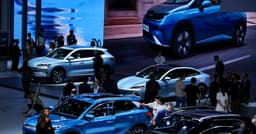
General Motors Reaffirms Commitment to Silverado EV


- Production Commitment: GM spokesperson Shad Balch emphasized that despite the Trump administration rolling back the EPA's 2009 Endangerment Finding, there are no plans to discontinue the Chevrolet Silverado EV, demonstrating the company's strong confidence in the electric pickup market.
- Marketing Investment: Balch revealed that GM is offering additional trims for the Silverado EV and increasing marketing efforts to enhance the model's market visibility and sales potential, aiming to strengthen brand competitiveness.
- Production Stability: Balch clearly stated that there are currently no plans to cut production of the Silverado EV, a decision that helps ensure supply chain stability and meet the growing demand for electric vehicles, thereby boosting the company's overall performance.
- Stock Performance: On February 13, GM's stock price rose by 1.44% to $81.08, although it slightly declined by 0.07% to $81.02 in after-hours trading, reflecting the market's positive response to its electric vehicle strategy.
See More

Tesla's $20 Billion Investment Reshapes Transportation Market


- Surge in Capital Expenditure: Tesla plans to invest over $20 billion in capital spending by 2026, more than double last year's expenditure, highlighting its ambitious vision for the electric vehicle market, especially as competitors scale back their investments.
- Diversified Factory Investments: Among the six new factories, three are dedicated to electric vehicle production, including a lithium refinery and a low-cost lithium iron phosphate battery factory, directly supporting EV growth and strengthening Tesla's market position.
- Autonomous Driving Vision: CEO Elon Musk clearly stated in the recent earnings call that only 1% to 5% of miles driven will be by humans in the future, indicating Tesla's leadership in autonomous driving, with expectations that Cybercab production will surpass all other models combined.
- Significant Market Potential: The Cybercab is expected to cost under $30,000 and have a significantly lower cost per mile than traditional taxis; if regulatory approval is achieved, Tesla's robotaxi could present a compelling market opportunity, further solidifying its leadership in the EV sector.
See More
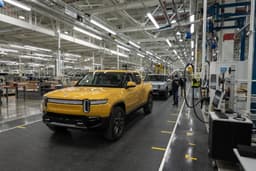
Analysis of Current Electric Vehicle Market Trends

- Sales Growth: Global EV sales surged 21% in 2025, with a notable 33% increase in Europe, indicating strong demand that could enhance market share for related companies.
- China's Market Dominance: EV sales in China grew by 19%, with Tesla holding a 4.4% market share, surpassing Nio, which highlights increasing competitive pressure on Nio in a rapidly consolidating market.
- Challenges for Nio: Nio reported a 15% year-over-year increase in vehicle sales in the latest quarter, yet its net losses reached $488.9 million, indicating a precarious position amid market consolidation and a lack of profitability.
- Rivian's Market Opportunity: Rivian ranks sixth in the U.S. market, achieving an 8% revenue growth in 2025, and while still unprofitable, it is approaching profitability faster than Nio, suggesting a stronger competitive position.
See More

Tesla's Diversification Strategy Faces Challenges
- Stagnant EV Business: Despite a reduction in average production costs, Tesla's net profit per vehicle fell to just $4,000 by the end of 2023, significantly lower than the $10,000 achieved in 2022, indicating the adverse impact of intensified competition on profitability.
- New Business Ventures: Tesla plans to launch household robots priced between $20,000 and $30,000 by the end of 2027, a move that may be driven by the stagnation of its EV business, highlighting the company's urgent need for diversification.
- Intensified Market Competition: Global EV sales reached 20.7 million in 2023, a 21% increase, with competitors like BYD and Volkswagen capturing significant market share, suggesting that Tesla's dominance in the EV market is being challenged.
- Uncertain Future Outlook: While Tesla's prospects in autonomous driving and solar energy are promising, market skepticism remains regarding the profitability and timelines of its new ventures, as analysts generally value TSLA stock at only $422.09, reflecting investor uncertainty about future growth.
See More

Tesla's Diversification Strategy Faces Challenges
- New Business Expansion: Tesla plans to launch household robots priced between $20,000 and $30,000 by the end of 2027, although the company's leadership in electric vehicles faces competitive pressures, and the profitability of these new ventures may take longer to materialize.
- Declining EV Profitability: As of the end of last year, Tesla's net profit per vehicle was only $4,000, significantly down from $10,000 in 2022, indicating severe challenges to profitability amid the ongoing EV price wars.
- Intensifying Market Competition: Global EV sales reached 20.7 million units in 2023, a 21% increase, with Tesla losing market share to competitors like BYD and Volkswagen, undermining its position in a rapidly growing market.
- Investor Confidence Shaken: Despite Musk's continued optimism about the future, analysts have set a target price of only $422.09 for Tesla stock, reflecting concerns about the outlook for its EV business, leading investors to adopt a cautious stance regarding the company's diversification strategy.
See More

Ford's Turnaround Strategy in Europe
- Market Challenges: Ford faces weak passenger vehicle demand, slower-than-expected EV adoption, and fierce competition from Chinese EV makers, which threaten its market share and profitability in Europe.
- Profitability Volatility: Although Ford returned to profitability through restructuring in late 2020, its subsequent quarterly performance has been unstable, compounded by the cancellation of popular models like the Fiesta and Focus, increasing labor and energy costs.
- Three-Pronged Strategy: Ford's plan to tackle European challenges includes focusing on its higher-margin Ford Pro commercial vehicle division, refreshing its passenger vehicle lineup, and improving operational efficiencies, which are crucial for its business turnaround.
- Partnership Potential with Geely: Ford's potential collaboration with China's Geely, leveraging its excess production capacity to manufacture vehicles for Geely, could help avoid high tariffs and enhance Ford's competitiveness through shared technology, positioning it better in the EV market.
See More
General Motors Reaffirms Commitment to Silverado EV
- Production Commitment: GM spokesperson Shad Balch emphasized that despite the Trump administration rolling back the EPA's 2009 Endangerment Finding, there are no plans to discontinue the Chevrolet Silverado EV, demonstrating the company's strong confidence in the electric pickup market.
- Marketing Investment: Balch revealed that GM is offering additional trims for the Silverado EV and increasing marketing efforts to enhance the model's market visibility and sales potential, aiming to strengthen brand competitiveness.
- Production Stability: Balch clearly stated that there are currently no plans to cut production of the Silverado EV, a decision that helps ensure supply chain stability and meet the growing demand for electric vehicles, thereby boosting the company's overall performance.
- Stock Performance: On February 13, GM's stock price rose by 1.44% to $81.08, although it slightly declined by 0.07% to $81.02 in after-hours trading, reflecting the market's positive response to its electric vehicle strategy.
See More
Tesla's $20 Billion Investment Reshapes Transportation Market
- Surge in Capital Expenditure: Tesla plans to invest over $20 billion in capital spending by 2026, more than double last year's expenditure, highlighting its ambitious vision for the electric vehicle market, especially as competitors scale back their investments.
- Diversified Factory Investments: Among the six new factories, three are dedicated to electric vehicle production, including a lithium refinery and a low-cost lithium iron phosphate battery factory, directly supporting EV growth and strengthening Tesla's market position.
- Autonomous Driving Vision: CEO Elon Musk clearly stated in the recent earnings call that only 1% to 5% of miles driven will be by humans in the future, indicating Tesla's leadership in autonomous driving, with expectations that Cybercab production will surpass all other models combined.
- Significant Market Potential: The Cybercab is expected to cost under $30,000 and have a significantly lower cost per mile than traditional taxis; if regulatory approval is achieved, Tesla's robotaxi could present a compelling market opportunity, further solidifying its leadership in the EV sector.
See More
Analysis of Current Electric Vehicle Market Trends
- Sales Growth: Global EV sales surged 21% in 2025, with a notable 33% increase in Europe, indicating strong demand that could enhance market share for related companies.
- China's Market Dominance: EV sales in China grew by 19%, with Tesla holding a 4.4% market share, surpassing Nio, which highlights increasing competitive pressure on Nio in a rapidly consolidating market.
- Challenges for Nio: Nio reported a 15% year-over-year increase in vehicle sales in the latest quarter, yet its net losses reached $488.9 million, indicating a precarious position amid market consolidation and a lack of profitability.
- Rivian's Market Opportunity: Rivian ranks sixth in the U.S. market, achieving an 8% revenue growth in 2025, and while still unprofitable, it is approaching profitability faster than Nio, suggesting a stronger competitive position.
See More
Tesla's Diversification Strategy Faces Challenges
- Stagnant EV Business: Despite a reduction in average production costs, Tesla's net profit per vehicle fell to just $4,000 by the end of 2023, significantly lower than the $10,000 achieved in 2022, indicating the adverse impact of intensified competition on profitability.
- New Business Ventures: Tesla plans to launch household robots priced between $20,000 and $30,000 by the end of 2027, a move that may be driven by the stagnation of its EV business, highlighting the company's urgent need for diversification.
- Intensified Market Competition: Global EV sales reached 20.7 million in 2023, a 21% increase, with competitors like BYD and Volkswagen capturing significant market share, suggesting that Tesla's dominance in the EV market is being challenged.
- Uncertain Future Outlook: While Tesla's prospects in autonomous driving and solar energy are promising, market skepticism remains regarding the profitability and timelines of its new ventures, as analysts generally value TSLA stock at only $422.09, reflecting investor uncertainty about future growth.
See More
Tesla's Diversification Strategy Faces Challenges
- New Business Expansion: Tesla plans to launch household robots priced between $20,000 and $30,000 by the end of 2027, although the company's leadership in electric vehicles faces competitive pressures, and the profitability of these new ventures may take longer to materialize.
- Declining EV Profitability: As of the end of last year, Tesla's net profit per vehicle was only $4,000, significantly down from $10,000 in 2022, indicating severe challenges to profitability amid the ongoing EV price wars.
- Intensifying Market Competition: Global EV sales reached 20.7 million units in 2023, a 21% increase, with Tesla losing market share to competitors like BYD and Volkswagen, undermining its position in a rapidly growing market.
- Investor Confidence Shaken: Despite Musk's continued optimism about the future, analysts have set a target price of only $422.09 for Tesla stock, reflecting concerns about the outlook for its EV business, leading investors to adopt a cautious stance regarding the company's diversification strategy.
See More
Ford's Turnaround Strategy in Europe
- Market Challenges: Ford faces weak passenger vehicle demand, slower-than-expected EV adoption, and fierce competition from Chinese EV makers, which threaten its market share and profitability in Europe.
- Profitability Volatility: Although Ford returned to profitability through restructuring in late 2020, its subsequent quarterly performance has been unstable, compounded by the cancellation of popular models like the Fiesta and Focus, increasing labor and energy costs.
- Three-Pronged Strategy: Ford's plan to tackle European challenges includes focusing on its higher-margin Ford Pro commercial vehicle division, refreshing its passenger vehicle lineup, and improving operational efficiencies, which are crucial for its business turnaround.
- Partnership Potential with Geely: Ford's potential collaboration with China's Geely, leveraging its excess production capacity to manufacture vehicles for Geely, could help avoid high tariffs and enhance Ford's competitiveness through shared technology, positioning it better in the EV market.
See More